Showing posts with label reviews. Show all posts

Monday, February 11, 2019

Movie Monday Instead of Music Monday: Aniara

One of the books I read in my Modernist Swedish Literature course a million years ago was Aniara. Since we were still babies in the Swedish language, everything we read was an English translation. To this day I don't know how The Swedish Program at Stockholm University managed to find enough copies—actual proper hardback copies, not dodgy spiral-bound printouts—of the English translation for all of us. These days the only English version available anywhere seems to be an ugly paperback edition that fetches a whopping $225 on Amazon.


I wish this would go back into print so my anglophone sci-fi fan friends could afford to read it.


I'll be the first to admit that I didn't quite appreciate reading Aniara at the time. I love sci fi but I'm extremely unconvinced by poetry, so the whole thing left me tepid. Now that I'm older, I appreciate not only the weirdness of the project (an epic poem about a pioneer ship lost in space!) but the metaphorical aspect of the whole piece in the face of the threat of nuclear winter and environmental annihilation.

I only learned that there was an Aniara movie after I saw a poster for it at ABF after my writing Meetup. My timing was excellent: Bio Rio only has two showings and both of them are in February. There's one more screening on 15 February, for those of you in Stockholm who are free at 3 in the afternoon on a weekday. I'm not, so I had to grab last-minute tickets to the evening showing this past Saturday. I also, at the very last minute, tracked down a copy of the Swedish original from the library so I could go into the movie with a refreshed memory.

Aniara the movie is a graceful companion to Aniara the epic poem, if not least to provide visuals that help anchor the story (as much as there is one). Specifically, the movie illustrates the sheer vastness of everything far better than words maybe ever could. Martinson gives some details—a ship with 8,000 people on board, 15,580 feet long and 2,923 feet wide—but it's hard to really appreciate, on the emotional and intuitive level, what those numbers really mean. The establishing shots of huge milling crowds in a huge, outsized version of a Viking Line cruise ship, however, suddenly makes it crystal clear.  The poem also does very little to specify the actual specifics of the ship, aside from the fact that it has crystal-clear windows and walls over must of it. Thanks to a steady childhood diet of mid-century science fiction movies, I always imagined the interior of Aniara as a very minimalist, brushed chrome sort of space ship; the option to represent the ship as an opulent, futuristic echo of today's booze cruises was an inspired one and provided a nice visual irony in the later years of the ship's voyage.

References and quotations from the poem fit into the movie quite elegantly, whether in events and plot points or pieces of dialogue. The screenwriters opted to ground things in the particular story arc of the Mimarob—the employee who operates the Mima, which in the movie is the equivalent of the holodeck from Star Trek but in the poem is more like a fancy movie theater. The change works well; the vague nameless "we" in many of the poems is enough to track when you read, but in a movie it helps to have at least one central character we can follow throughout. The choice of the Mimarob for such a protagonist also makes sense; on the rare occasion a singular "I" turns up in the poem, it's usually the Mimarob.

I didn't finish re-reading Aniara entirely beforehand, so I can't say whether some of the grimmer plot points were also alluded to in the poem or if they were added for dramatic purposes. But it doesn't seem worth harping on grimness when we're talking about an adaption of an epic poem where everyone ends up lost in space forever.

Like 2001 and Arrival, the film version of Aniara succeeds in complementing the original text it's based on, so that instead of competing to tell the singular best version of an idea, both versions become one cohesive whole. Watch the movie and, if you can, read the book.

Wednesday, February 6, 2019

What I Read: The Boggart

I originally read The Boggart in elementary school, and then re-read it back in December, so no matter how you slice it I'm cheating a bit (or have fallen quite far behind) to bring it up for a book post in February. To which I say: come at me, bro.


My occasion for re-reading this one was actually for work. One of my younger (former) students is very much into ghost stories and the like, and while I was trying to figure out the next thing I wanted to read, my eyes lighted on my battered Scholastic book fair edition of The Boggart. Mischievous ghosts and drafty Scottish castles? On brand!

I was right -- it was a bigger hit than the other books I'd brought in -- but my point here isn't how I'm awesome at picking out books for students but about how much I haven't grown out of this book.

I didn't remember that much about it, except that it had a ghost and that ten-year-old me loved it. (How else would it survive countless book purges and a trip across the ocean?) The perfect time to re-read a book!

The first or second lesson I read along with my student, we got to a section about the titular boggart mourning the death of their very first human friend, and it choked me up. If your middle grade fantasy novel brings grown-ups to tears, then you're a competent and accomplished writer. Also, points for using semicolons (happy semikolonets dag!) and having the characters' mother apologize to another adult for being "bitchy." We don't have to banish semantic complexity or linguistic realism from children's literature!

While charming, The Boggart still isn't as effortless as The Dark is Rising; Cooper has to do a lot of heavy lifting to get her modern Canadian family to clue in to the ancient Scottish spirit turning their lives upside down, and it gets clumsy in places. A couple of moments are clearly meant to be whimsical or wonderful but feel a bit much, and a third act bad guy appears out of nowhere, to no end except to be a vague menace. What is considered the latest technology is also a key plot point, but this was the latest technology back in 1993, so there are also portions that are incredibly dated when you're reading in 2019.

Wednesday, January 30, 2019

What I Read: Gods, Monsters and the Lucky Peach

The Austin Feminist Sci-Fi Book Club kicked off the year with Gods, Monsters, and the Lucky Peach. I had trucked through the weirdness that was Amatka and was hoping to start the new year off with something a little more straightforward, or at least more comprehensible.


Gods, Monsters, and the Lucky Peach did not disappoint in that respect. It's a distant, post-apocalyptic future and the powers that be have just figured out time travel. Minh is an expert in rivers restoration and travels to ancient Mesopotamia to collect data that will help restore the Tigris and Euphrates river regions. Things go wrong. (Of course, reading it in English instead of Swedish, like I did with Amatka, might have also made it clearer.)

Overall, Gods, Monsters and the Lucky Peach is a pretty quick read. My only complaint is that it's too quick: the beginning of the story sets up a lot of intrigue and possible plot points that are never really pursued or resolved. Given how abrupt the ending is, and how much is left unfinished, it feels like Robson left the door open for a sequel, but who knows if that will materialize. What's there is fun, good writing -- I just want there to be more of it!

Thursday, January 24, 2019

What I Read: LÉtranger

I read L'Étranger because I want to keep my French from slipping. I figured it would be a good choice because I've already read it twice and the language is quite sparse and accessible for non-native speakers.

Cover of L'Étranger
Image courtesy Gallimard

It's L'Étranger. You've either read it or you haven't and there's not much need for me to weigh in on my opinion on the book, except that I'll be balancing my (re)reading of this with a novel by an Algerian author. If you spend too long thinking about how the non-white characters in the book exist as plot devices to put Meursault on trial and then in prison (sorry for spoilers for a book that was published in 1942 I guess?????), it leaves an uncomfortable taste in your mouth, and the best remedy for that is to broaden your own horizons.

Otherwise I'm already falling behind on my Goodreads Challenge for the year. The falling behind doesn't bother me as much as the not reading bothers me. Whenever I'm in a bad way, my reading drops off—or maybe a drop off in reading leads to grumpiness and depression. Impossible to tell; I've never paid close enough attention to notice which starts first. The two definitely feed into each other, regardless. But now I'm off the blocks and hopefully my momentum (and mood) will pick up a little bit going into February.

Wednesday, January 16, 2019

What I Read Backlog: Ancillary Justice

My reading this year is shaping up to be NOT AWESOME but while I rectify that, here's a blast from the past: a bunch of book reviews I never posted here!

Ancillary Justice cover, Ann Leckie
Image courtesy Orbit


The entire book-o-sphere that I bother following (mostly book blogs, sometimes Twitter, sometimes YouTube) had just the right amount of awesome things to say about Ancillary Justice that when Austin Feminist Sci Fi Book Club chose it I was cautiously optimistic. Then I read it and it BLEW MY MIND and I could barely contain myself and I ended up buying a copy for a friend for his birthday.

THE HYPE. THE HYPE WAS REAL. Ancillary Justice is how space opera science fiction should be and it was a welcome palate cleanser from whatever else I was reading at the time and probably a subpar book club selection before that. (The Long Way to a Small, Angry Planet? Gena/Finn? I can't be bothered to look it up.) Space opera at its absolute best, where the opera is an excuse to posit a culture familiar to our own and then to examine its accomplishments and pitfalls and reflect on how we're doing.

Ancillary Justice in particular is also a great technical achievement in perspective and characterization. The great technological marvel of the science fiction empire in question is ancillaries: human bodies used as a extensions of a starship's AI, something like a miniature Borg collective. Leckie very skillfully navigates this single-but-multiple perspective and, more than being a cool gimmick, this splintering of awareness is also an important story element. Leckie's writing is also polished and economical, with enough details to keep the reader anchored but not so many you become overwhelmed; in a way, it's exactly how you can imagine a very sophisticated AI would describe and process the world: picking out one or two concrete and salient details out of an input of thousands or even millions, but at the same time failing to make distinctions that humans can sort in an instant. In this case, the AI has difficulty with all of the different gender markers in the assorted cultures they encounter.

Wednesday, January 9, 2019

What I Read: The Short, Sad List of the Best Books I Read in 2018

Other years I've had to split my 5-star books into two posts, but this year I think they can comfortably be combined into one. Here were my reading highlights of 2018!


Zealot: The Life and Times of Jesus of Nazareth

My criterion for rating a nonfiction book 5 stars on GoodReads is that it has the potential for widespread appeal, or that it masterfully addresses a major social or everyday question. Reza Aslan has done an excellent job of outlining the historical context of early Christianity and Jesus Christ.


Rien où poser sa tête

I stumbled across this thanks to the review of the English translation in Asymptote. Its chance rescue from obscurity mirrors, almost too well, Frenkel's own brushes with death in Vichy France. Out of all my reading in 2018, this one was probably the most relevant to today's events and politics.

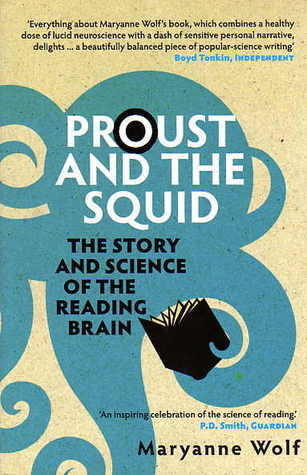
Cover of Proust and the Squid by Maryanne Wolf

Proust and the Squid

I waffled on whether to give Proust and the Squid 5 stars rather than 4, but decided in the end to be generous. While the story of the brain learns how to read isn't the same urgent issue as Nazis or Christianity, it's something almost all of us do and whose complexity we should all appreciate.


Sacred Economics

While Eisenstein might be more optimistic and naive than warranted, his explanation of economics, credit and inflation is the most cogent I've read and he dramatically shifted my attitude towards money and how I save and spend it. That's what earned this book 5 stars from me, despite Eisenstein's occasional lapse into conspiracy-adjacent tangents.


Ancillary Justice

This one was a selection for Austin Feminist Sci-Fi Book Club, and it's books like this that make me glad I'm allowed to lurk as a satellite member in Stockholm. Leckie's world building and vision of technology is polished and nuanced. This is how space opera should be.

I mentioned before that 2018 was a weird year for my reading, and that's reflected pretty clearly in the fact that I only gave one novel a 5-star rating. Historically, I've done much better than that. Thanks to studying for DipTrans and Kammarkollegiet, my way forward in nonfiction is pretty clear and structured at this point (though ironically none of those 5-star titles are related to translation!); my way forward in fiction is still grasping at random and hoping to find something good. All while trying to finish Ulysses, at that!

Wednesday, July 4, 2018

What I Read: Proust and the Squid

I looked back at my Goodreads a couple days ago and realized I hadn't finished anything in June. I don't know what happened—a combination of the worldwide dumpster fire getting worse, reading too many books at once, getting ready to move—but I didn't like it. There's a pretty strong correlation between "not finishing books" and "not feeling well" when it comes to my mood, so it was a relief to finish up Proust and the Squid.

Also it was fucking delightful and a welcome distraction from said dumpster fire. There's a lot to despair of when it comes to humanity, but have you ever realized how incredible it is that we came up with written language and taught ourselves to read?

Image courtesy Icon Books, Limited
Wolf tackles the subject from three perspectives: the history of reading and written languages, what happens in the developing brain when it learns to read, and what goes wrong in some brains that makes reading hard (dyslexia and other reading disorders).

Wolf is a neuroscientist by trade, so Proust and the Squid draws heavily on her research and the research of her peers. However, she's also an engaging writer (perhaps unsurprising for someone who is also an avid reader) and presents the research with clarity, so that the non-neuroscientst layperson can also follow along. (Shout-out to the copyeditor who worked with her; I'm sure they contributed a great deal to this book's engaging readability!) I also appreciate her casually mentioning the titles of other interesting books as they pertained to the subject, because I could add them to my own reading list. (As if it weren't long enough...)

The one downside is that Proust and the Squid was published in 2007, which means it's over ten years old, and a lot of research can happen in that time! I don't know if there's an updated edition but I'd love to read one either way.

Wednesday, June 27, 2018

What I Read: Rien où poser sa tête (Nowhere to Lay One's Head)

If you're not subscribed to Asymptote's newsletter or following their blog, you're missing out. Their staff are like magical book sprites who leave little gifts of international literature in your RSS feed or email inbox. Rien où poser sa tête was one of those little gifts.

The cover of Francoise Frenkel's "Nowhere to Lay One's Head"
Image courtesy Gallimard


Of course, Nowhere to Lay One's Head turned up in Asymptote thanks to Brigitte Manion's review of the English translation. But since I have a passing familiarity with French, and really should practice a little now and then to keep it up, I opted to read the French original rather than the English or Swedish translations.

As a student, I had a hard time connecting with the books we read about Nazi Germany and the Holocaust. Fortunately I'm not a psychopath and so I can understand, on an intellectual level, why these books are important. I could then, too. I just resented them for not being better, considering the topic matter. (No, I'm not going to name them, because then I'll get a bunch of HOW COULD YOU NOT LIKE XXXXX in the comments. :P) Now that we're apparently willing to give Nazis the benefit of the doubt, I've been wondering lately: what do I think students should read instead of what I read in school?

I'd argue that Rien où poser sa tête is a good candidate. Trying to convey the horror of what happened through the concentration camps can be a bit much to take in. (Not that it should be forgotten, either.) It's so horrible as to be unreal, unfathomable. But because Frenkel's memoirs handle the slow agony of daily life under the Nazi regime, with rations and visa applications and constant upheaval (including children ripped away from their parents, I wonder if that sounds familiar at all?), it becomes easier to understand how these things were able to come to pass, and how they could easily come to pass again and how they already are again holy fucking shit.

Nowhere to Lay One's Head was saved from obscurity thanks to an incredible stroke of luck. I think we need to take advantage of that luck and get this in front of all of the eyeballs we can. Out of all of the books you're going to see reviewed on blogs and YouTube and wherever else this year, please make Nowhere to Lay One's Head the book you actually follow up on. Get it on Amazon, ask your library to order it, whatever. It's my birthday tomorrow; consider it your birthday present to me.

Plus ça change...

Wednesday, June 20, 2018

What I Read: 2023

I'm planning on doing a buddy read of Ulysses this year, and much as I love and patronize libraries, some books are impossible to read unless you own them and have access to them at your leisure. (How many times did I try reading a library copy of The Second Sex, for example?) I spent the afternoon in town browsing The English Bookshop, and while I ended up having to special order Ulysses from their Uppsala store, the chance to browse the random selection led to me finding books I wouldn't have otherwise. 2023: A Trilogy was one of them.


A boy I had a crush on in high school thought the Illuminatus! trilogy was one of the best books ever written and so I devoted a summer to trying to read it. I made it halfway through and never finished, but it was enough that even years later I can recognize the countercultural significance of things like 23, 17, and fnords.

This is important because 2023 is full of Illuminatus! references (mixed in with nods to pop music and other literature). If I hadn't been able to call back to those particular references, I might well have been too lost to appreciate the book.

It's a fun read if you're either in the know or thirsty for meta, slightly experimental satirical science fiction. If you're not, then you're probably going to enjoy it as much as Jake Arnott.

Wednesday, May 16, 2018

What I Read: The Spider King's Daughter

The June selection for my Facebook book club was The Spider King's Daughter, the debut novel by Chibundo Onuzo. I went in hoping that it would pull me out of the book slump brought on by RadianceHow I Became A North Korean, Gena/Finn, and the middle grade books I previewed for some of my students. The Facebook book club has the best hit/miss ratio out of all three that I'm in, after all.


Onuzo is an engaging writer and I hope she continues down that path. (Her second book, Welcome to Lagos, came out last year. Hurrah!) This was engaging at a time when nothing else I was reading could capture my interest and Onuzo deserves a lot of praise just for that.

My favorite parts of the book all involve spoilers. I will say this: what starts as a meet cute adolescent love story takes on an unexpectedly darker tone. Or maybe I should have been expecting that, considering that the book opens with Abike telling us about how her father had her beloved dog deliberately run over.

Most of the reveals were more or less obvious, but the book doesn't rely on the shock of those reveals for impact. I think, even, Onuzo expects readers to already know the truth from the very beginning. It's how the characters react to these reveals that's engaging and unexpected.

The book switches between Abike and Runner G's perspectives, with Abike's in italics. Reading extended passages in italics is straining, at best, but Onuzo's prose (and the short paragraphs) make it much easier than in other books (James Agee's posthumous A Death in the Family, for example). At the book's climax, when we switch between Abike's and Runner G's perspectives rapidly—at every line, for a short while—this typesetting choice proves very necessary.

The Spider King's Daughter was engaging, it was readable, it was a diverting and fun read. I didn't love it, but I'm glad I read it. It certainly was a bad book combo breaker, and for that I'm grateful.

Wednesday, May 9, 2018

What I Read: Radiance

This was a selection for Feminist Science Fiction Book Club. I picked it up on a whim from SF Bokhandeln when I was out during Kulturnatt because I'm weak (and because it was constantly checked out of the library).

This gif is turning up in a lot of my reviews recently.
If I had to pick one word to describe Radiance, it would be "overindulgent." The structure Valente chooses (or rather, the lack of structure) does nothing to contain this tendency towards overblown wordiness or direct us to an understanding either of events or character.

Take, for example, Where'd You Go, Bernadette? (Did I only read that in January? Jesus, it feels like ages ago. The political climate really is aging us in dog years.) There is a whole bunch of documentation (rather than narration), but it all works to move the story forward. Could everything in the documentation have been written as narrative? Yes, probably, but the documentation is actually a pretty efficient way to set up the later events of the story. Conversely: every single scrap in there contributes something to the story.

I'll be real: I think I skipped about half of Radiance and yet that did not affect my understanding of what actually happened. Life is too short to keep reading books you don't enjoy; I find skimming to be an acceptable compromise when you want to know what happens but don't want to sift through a bunch of nonsense. I quickly sorted out the bits of Radiance that were most likely to move the plot along, read those, skipped the rest. At least the book is well labeled, which makes for easy skimming.

The other thing that makes Radiance overindulgent is the style. Valente's writing is, as another reviewer put it, "high-octane purple prose." It's overwrought, it's too much, and while I get it's supposed to be an art deco gothic and therefore can be expected to be a bit much, it's a bit much everywhere. Most tedious of all were the screenplays. Take, for example, the first extract from the "White Pages" section of the book (that is, very early on); the following quotes are taken from what's given as the "action" portion of any given screenplay. 

Open on the pristine streets of sunny Moscow, lined with popsicle-carts, jugglers, dazzled tourists. The streetlamps are garlanded with lime-blossoms, sunflowers, carnations. The joyful throng crowds in fierce and thick; the camera follows as they burst into Red Square. The splendid ice-cream towers of the Kremlin beam down benignly. The elderly TSAR NICHOLAS II, his still-lovely wife, and their five children, hale in their glittering sashes, wave down at the cannoneers standing at attention on the firing pad at the 1944 Worlds' Fair. The launch site is festooned with crepe and swinging summer lanterns, framed by banners wishing luck and safe travel in English, Russian, Chinese, German, Spanish, and Arabic.
So far so good, right? But then it continues.

SEVERIN UNCK and her CREW wave jerkily as confetti sticks to their sleek skullcaps and glistening breathing apparatuses. Her smile is immaculate, practiced, the smile of the honest young woman of the hopeful future. Her copper-finned helmet gleams at her feet. SEVERIN wears feminine clothing with visible discomfort and only for this shot, which she intends, in the final edit, to be ironic and wry: She is performing herself, not performing herself in order to tell a story about something else entirely. The curl of her lip betrays, to anyone who knows her, her utter disdain of the bizarre, flare-skirted, swimming-cum-trapeze-artist costume that so titillates the crowd. The wind flutters the black silk around her hips. She tucks a mahogany case—which surely must contain George, her favorite camera—smartly under one arm. All of her crewmen strap canisters of film, a few steamer trunks of food, oxygen tanks, and other minor accouterments to their broad backs. The real meat of the expedition, supplies and matériel meticulously planned, acquired, logged, and collected, was loaded into the cargo bays overnight. What Severin and her crew carry, they carry for the camera, for the film being shot of this film being shot.
It's hard to imagine 90% of this being included in any actual screenplay. Take, for example, The Matrix:


INT.  CHASE HOTEL - NIGHT 
The hotel was abandoned after a fire licked its way across
the polyester carpeting, destroying several rooms as it
spooled soot up the walls and ceiling, leaving patterns of
permanent shadow. 
We FOLLOW four armed POLICE OFFICERS using flashlights as
they creep down the blackened hall and ready themselves on
either side of Room 303. 
The biggest of them violently kicks in the door --
The other cops pour in behind him, guns thrust before
them. 
BIG COP
Police!  Freeze! 
The room is almost devoid of furniture.  There is a fold-
up table and chair with a phone, a modem, and a Powerbook
computer.  The only light in the room is the glow of the
computer. 
Sitting there, her hands still on the keyboard, is
TRINITY; a woman in black leather. 
BIG COP
Hands behind your head!  Now!  Do
it! 
She slowly puts her hands behind her head... 
The Big Cop flicks out his cuffs, the other cops holding a
bead.  They've done this a hundred times, they know
they've got her, until the Big Cop reaches with the cuffs
and Trinity moves -- 
It almost doesn't register, so smooth and fast, inhumanly
fast. 
The eye blinks and Trinity's palm snaps up and his nose
explodes, blood erupting.  Her leg kicks with the force of
a wrecking ball and he flies back, a two-hundred-fifty
pound sack of limp meat and bone that slams into the cop
farthest from her. 
Trinity moves again, BULLETS RAKING the WALLS, flashlights
sweeping with panic as the remaining cops try to stop a
leather-clad ghost. 
A GUN still in the cop's hand is snatched, twisted and
FIRED.  There is a final violent exchange of GUNFIRE and
when it's over, Trinity is the only one standing. 
A flashlight rocks slowly to a stop.


Is Valente deliberately writing something narrative-like in the guise of a screenplay as a means to play with form? Or does she think she's writing a good screenplay? It's impossible to tell! On the one hand, Valente should know the difference, if her biography is any indication; she says straight up in the acknowledgments that her father was a filmmaker. Yet as the book continues, it's clear that Valente really only has one writing mode, or is choosing only one mode for this story, and that is overwrought. It works in some situations (gossip columns, a few personal diaries) and falls flat in others (transcripts of conversations: actual human beings don't talk like that). So many people write breathlessly about Valente's amazing prose in reviews that I can't tell if I don't know what's good anymore, or if people are just confusing wordiness and faux-profundity with good writing. Maybe both?

There's another layer to Radiance, or at least there's supposed to be, about how the narratives of our lives and celebrity lives are constructed and so on and so forth, but it was just really hard to care because the writing and presentation is so distant from what it's conveying that it's impossible to care about any of the characters.

Valente is clearly a competent, if not talented, writer, but in Radiance she gets caught up in her own hype and it feels like no one around her told her no

Wednesday, April 25, 2018

What I Read: The Bad-Ass Librarians of Timbuktu

Time for the Hercules gif.


Okay, so here's the cool part: Abdel Kader Haidara, after years of careful negotiations and curation, managed to assemble a peerless collection of ancient Malian manuscripts, both Islamic and secular. But when Al Qaeda took over Timbuktu, the manuscripts—works of art in themselves that also advocated for religious tolerance and scientific curiosity, even in the 13th century CE—became a target of Islamic extremists. Haidara and other archivists worked hard to smuggle these literary treasures to a safety.


And the book starts off with a satisfying and easy to follow history of Timbuktu and its cultural heritage in the larger Islamic world, as well as a brief history of Haidara's work hunting down and negotiating with families, convincing them to entrust these priceless artifacts with him so that they could be preserved and studied.

And of course you get snatches of Haidara and his helpers smuggling books out of Timbuktu and into safety.

But.

In reality, the focus (at least in the middle and end of the book) is more on the sectarian violence in Mali in the early 2010s. An extraordinary amount of detail about developments and actors in the political situation is provided when a simple summary would have sufficed. I suspect that these lefthand turns are the reason that I kept falling out of the book and why it took me several months to finish. Maybe even years? I remember reading it in an airport on the way back from a wedding, but I can't say for sure if it was Aaron's wedding in 2017 or my brother's wedding in 2016. Either way: it doesn't usually take me that long to finish your stand popular journalism kind of book. (Reading an ebook version probably didn't help, either.)

Wednesday, April 18, 2018

What I Read: Gena/Finn

I had really personal reasons for being interested in Gena/Finn and for recommending it for my Discord book club and then it fucking disappointed me.


Most of my friends in high school were of the Internet variety, out of a group of fans of a particular TV show. Even though I was never really active in "fandom" as such (I don't write or read fanfiction, I don't hoard fanart, I'm not really interested in making the things I like the be-all, end-all of my identity...I just wanted to find the rest of the episodes online that I hadn't already seen), the way those friendships formed online were really important to how I grew up and where I ended up in life. I don't think there are many books that really tackle the importance (and also weirdness) of online friendships; the last time I'd read about that sort of thing was in Pattern Recognition of all things, and that was just a brief aside in what was otherwise a cyberpunk thriller.


I was expecting a story that chronicled the kind of awkward budding friendships I was cultivating in front of the computer screen in high school, and what I got was something else. Those were the bits Moskowitz and Helgeson skipped right over in favor of the kind of melodrama that could happen between any two friends, regardless of where or how they met, but with a sprinkling of unrealistic lefthand turn plot points for good measure (former child actors! shoehorned romance! tragic deaths!).

And the nail in the coffin for me was reading the book summary after I had read the book.
Gena (short for Genevieve) and Finn (short for Stephanie) have little in common. Book-smart Gena is preparing to leave her posh boarding school for college; down-to-earth Finn is a twenty-something struggling to make ends meet in the big city.
If I've read the book and I still need the GoodReads book description to tell me that Gena and Finn have nothing in common, and that one is "book-smart" while the other is "down-to-earth," then you've failed in your writing. In the book they come across as quite samey, except that one of them has a history of mental health issues.

Anything more specific than that will veer into spoiler territory so I'll save those complaints for book club where I know that people will either have read it or not care about it.

Wednesday, April 11, 2018

My Real Children: Book Review

I decided that I'm no longer bound by space and time when it comes to book club reads. In other words, I don't have to wait for a respective book's month, or even read them in order! Which is why I dug into My Real Children last week, even though it's not on the Austin Feminist Sci-Fi Book Club docket until June.

Image courtesy Tor


My Real Children takes a very personal, intimate look at history and chaos theory. Walton gives us two (alternate?) lives of Patricia Cowan, with different spouses and different struggles and different triumphs.

Of course, it's not just Patricia's life that's different between the two. History also takes two different tracks (though both are different from history as it tracked in our world). Walton sets up a delicious little tension there that's never entirely resolved: did Patricia's choices in any way affect larger world events? Or did those larger world events have any effect on her? Another author might have been tempted to draw a line between Patricia's choices and world events (like Charles Wallace body-hopping through different people in A Swiftly Tilting Planet), but Walton just leaves those differences there.

While My Real Children is put out by Tor, an imprint famous for fantasy and science fiction, I wouldn't classify it as science fiction myself. (I was actually surprised to see it was a Tor book!) But maybe that's because I already comfortably half-accept the idea of there being alternate reality versions of myself leading different versions of my life. There's no attempt to explain why those lifetimes are converging in Patricia's memory, or why she's drifting between two timelines. It's most certainly not a metaphor for dementia; she has dementia in both lifetimes, unrelated to the timelines crossing. The dual lives are simply a narrative device that shows how differently things can turn out on the micro- and macro-scale.

On a really personal level, I read this either at exactly the wrong point in my life or exactly the right point. (I'm not entirely sure which, yet.) Some days I'm cool with the idea of those alternate versions of myself being out there, hopefully living their best lives while I'm trying to live my best life in this timeline; some days I hate and regret everything and want nothing more than to tour through the different timelines and pick one where things are going a little (okay, a lot) better for me. I might have texted Austin Feminist Sci Fi Book Club Co-Founder Friend in tears over that. (Spoiler: I did.)

There's a moment where Patricia contemplates the differences in her two worlds: not in her life choices, but in the history. The lifetime where she had a long and happy marriage was in a world marred by multiple exchanges of nuclear warheads and the ensuing radioactive fallout; the lifetime where she had a shorter but deeply unhappy marriage was much more peaceful on the global scale. And there's an element of bitterness (why did cancer and violence have to wreck her storybook life?) there's also an element of hope (the sacrifices she made, even unknowingly, perhaps tilted the scales towards world peace). And at the end of the day, you can choose: bitterness or hope? This is the importance of stories: I can choose a story for myself where my struggles and my choices make the world a better place. Whether or not it's true is secondary (how could I possibly empirically test or measure that?); the fact that it's possible is what counts. It's perhaps hackneyed to quote David Foster Wallace at this point, but he hit the nail on the head:

But most days, if you're aware enough to give yourself a choice, you can choose to look differently at this fat, dead-eyed, over-made-lady who just screamed at her little child in the checkout line—maybe she's not usually like this; maybe she's been up three straight nights holding the hand of her husband who's dying of bone cancer, or maybe this very lady is the low-wage clerk at the Motor Vehicles Department who just yesterday helped your spouse resolve a nightmarish red-tape problem through some small act of bureaucratic kindness. Of course, none of this is likely, but it's also not impossible—it just depends on what you want to consider. If you're automatically sure that you know what reality is and who and what is really important—if you want to operate on your default-setting—then you, like me, will not consider possibilities that aren't pointless and annoying. But if you've really learned how to think, how to pay attention, then you will know you have other options. It will actually be within your power to experience a crowded, loud, slow, consumer hell-type situation as not only meaningful but sacred, on fire with the same force that lit the stars—compassion, love, the sub-surface unity of all things. Not that that mystical stuff's necessarily true: The only thing that's capital-T True is that you get to decide how you're going to try to see it. You get to consciously decide what has meaning and what doesn't.

And since it rankles, a bit, to close a review of a book deliberately chosen for a feminist book club with a quote by a man (who has, unfairly, become the catch-all representative of obnoxious litbros everywhere), I'll actually close this review with a quote from A Tale for the Time Being, which is still one of my favorite books that I've read recently, and that feels very relevant to this act of choosing:

Do not think that time simply flies away. Do not understand “flying” as the only function of time. If time simply flew away, a separation would exist between you and time. So if you understand time as only passing, then you do not understand the time being. To grasp this truly, every being that exists in the entire world is linked together as moments in time, and at the same time they exist as individual moments of time. Because all moments are the time being, they are your time being.

Wednesday, March 28, 2018

What I Read: The Power

I first heard of The Power thanks to the half-dozen book bloggers I follow. A while ago, I started using GoodReads' "to-read" function as a storehouse for all of the books I heard about that sounded really cool but that I would otherwise forget after a couple days, and dumped The Power in there. Then the universe aligned: a book club buddy picked The Power off my GoodReads TBR to send to me in a New Year's book club exchange, and then my feminist science fiction club decided on it for February's book.

(Fun fact: today is the birthday one of the founding members of said feminist science fiction book club! Good job getting older, my dude!)
Image courtesy Penguin

The Power posits that if you give women the ability to produce electricity out of nowhere, thereby making them all walking weapons, within less than a decade you'll see an entire global culture shift. That's really the point that the book turns on, and how much you enjoy the book is probably based on how much you buy into Alderman's thesis. Less central to the story is that it's pure power (hah, hah) that drives sexual objectification and sexual entitlement. Still, if you disagree with Alderman's implied stance on this, there will be moments of characterization that fall flat for you.

Speaking of characterization, this is another book with an ensemble cast, a total of five major perspective characters (plus asides here and there). I'm not entirely convinced that all of those characters were entirely necessary to the story. And while Alderman included a graceful nod to the complexities of biological sex with how inconsistently the physiological source of the power manifests (i.e. some men have semi-developed skeins, and some women don't have skeins as developed as other women), the absence of any trans characters or an examination of what this development would mean for them is notable.

Despite these small bumps, the important thing about The Power is that it's just damn good hard(ish) sci-fi. I'm a perpetual Slowpoke about reading the new hot thing in books (unless the stars align and I get an early crack it at it thanks to NetGalley), so I suspect most of my readers (hi, Mom) will have already read this if they were going to read it at all, but nonetheless I want my opinion to go on the record: this is good.

Monday, March 5, 2018

Capitalism Alternatives: Simbi

Around Christmas last year, I stumbled on the website Simbi. The idea is simple: connecting people around the world to trade and exchange via bartering instead of money. Users list the services they can provide and the help that they need, and the rest is self-explanatory.


I'm not naive enough to believe that we can build a complex and thriving society based purely on trade and bartering. We live in a global economy and you can't PayPal an order of groceries across the globe; much as I love freshly-baked bread, it would get pretty tiring to cart bags of it on the bus and then subway on my way home from a lesson every week. Thus, the utility of money.

At the same time, there's still plenty that can be traded or bartered for, as money is a way to value things, not a value in and of itself. (Though I'm sure most minor and mid-level bloggers and YouTubers reach a point where they'd rather get paid money than get a free monthly subscription box or bag of cat food or whatever.) Enter Simbi.

I joined as a favor to a friend of a friend, part of a holiday wishlist granting event. If you join Simbi through someone's affiliate-ish link, they get site credits ("simbis"). That's why I did it, originally; it was a free and easy thing to do, and it got someone else something that they valued. But then I stumbled on to a huge community of people with a variety of skills, services, and sometimes even goods to trade. Before the calendar rolled over to 2018 I'd already completed my first major deal—critiquing someone's sci-fi novella. Good practice for me as an editor, and while I wasn't paid in fungible government-backed currency, I still got something out of it. (In this case, the simbis I earned through novella critiquing were enough to cover the cost of social media promotion for my Etsy.)

Full disclosure: The links to Simbi I use throughout this post are my own affiliate-ish link, so if you join by clicking one of them, I'll get 25 simbis. I'll get another 25 if or when you complete your first deal. But it's not a pyramid scheme setup, so I don't take any cut of your deals.

When I first signed up, I was ambivalent about it; I will fully admit that it was the gamification aspect they added, with badges and completion percentages, that got me to set up my profile as thoroughly as I did and to offer as many initial services as I did. But then I was surprised when people immediately flagged interest in what I had to offer, including people who had knowledge that could really benefit me!

I can see how Simbi would be a really valuable platform for artists. Anyone trying to sell art or other indulgences (like, I don't know, STEM-inspired jewelry...?) knows that it's really hard to navigate the shark-infested reefs of consumer capitalism. Too much money and you price yourself out of the market; too little money and you're working for less than minimum wage. Psychology also means that sometimes things sell better when they're more expensive, because people perceive it as being of high quality (but not too much more expensive, or you have the problem of pricing yourself out of the market), but somehow you're still always trying to convince people that your art is "worth" the price you've put on it, whatever "worth" means.

But trading on Simbi can simplify that process. There are quite a few tax specialists on the site; maybe one of them could help settle your accounts with the tax man in exchange for a painting, sculpture, or photograph? Maybe you can find someone local to fix that creaky porch step in exchange for a custom portrait? One of my favorite Simbi deals was a custom piece of high-res digital art (which will shortly be professionally printed, framed, and up on my wall) in exchange for a few simbis, some Swedish candy, and one of my gel electrophoresis bracelets. I was able to work with an incredible artist and scratch an art itch that I've had for years.

Is it a substitute for being paid (like, actually paid) for your work? No, definitely not. But I've found it to be a meaningful supplement. Not the least because Simbi provides an environment for anxiety-free, meaningful social interaction. There are two factors at play here, I think. One is that because so much of the interaction around Simbi is based on negotiating deals and transactions, conversations with people are goal-oriented rather than open-ended. For me, that removes like 95% of the anxiety I have around talking to people. Smalltalk is hell, but transactions are easy. The other is that people on the site, by and large, have a healthy balance of idealism and practicality.* I'm an idealist at heart and at the end of the day that's where my inner compass points, but I won't deny that frou-frou hippie types can be (willfully?) ignorant and frustrating to work with.


*There definitely some weirdos, though. But there are always weirdos, and the Internet means you can just choose not to engage with the weirdos.

Real talk: sometimes I get tired of the Kokoba Etsy. Like, really super ultra tired. (And I realize it's the height of melodrama to say this when I haven't listed anything new in, uh, a long-ass time. It's still true. Peep my pretty high-key inactivity here.) But I've always been more interested in sending my jewelry to appreciative nerds than making this a 24/7 job. Hobby artists and crafters who sell their stuff will spend 90% of their hobby time creating and 10% of it marketing; pros will spend 90% of their time marketing and 10% creating to be able to sustain themselves. That doesn't sound like an awesome work-life balance to me, and frankly I'm not cut out for that.

Simbi, for me, represents an alternative. I can keep cranking out pi bracelets and DNA necklaces to keep my hands busy, but now my only option to offload them isn't to market myself. If I can trade them for cool things (like custom digital map art, recipes, ASL lessons, help with my complicated expat taxes, or houseplant caretaking tips), why not?

Wednesday, February 28, 2018

What I Read: The Sky is Yours

We should all know better than to judge a book by its cover, but when I saw The Sky is Yours in my NetGalley menu, with the neon dragons in the ouroboros pattern against a brick wall backdrop, I was instantly intrigued. The premise only further cemented my interest, and I was lucky enough to get a review copy.


Smith's world building is par excellence and the way she incorporates elements of our present and past is seamless and, of course, entirely plausible. Small things like: one character happens to find a book of poetry by her father and notes in the copyright page that it was "print on demand." Her immediate thought is that he must have been a writer of incredible renown, to have his book so constantly in demand. Or another character suffering "affluenza" that needs the occasional administrations of an inhaler.

What kept me from rating it any higher is how much of it there is. Smith includes a lot of asides and multiple perspectives, which results in a complex and gritty world that feels very real, even though there are a pair of dragons flying around and laying waste to New York City. The multiple voices are handled deftly, so that you can always tell which character with you're with. It's an altogether big project and Smith pulls it off well. Nothing wrong with any of that.

On the other hand, much of it doesn't serve the plot in any significant way. I don't think plot should be the be-all, end-all of novels, but there's a fine line between complexity and getting lost in your own head. There are bits and asides here and there that mostly seem to be written for the sake of a gag or two, and whether the payoff is worth it will always be a subjective issue. Not all of the characters Smith chooses to develop in their own chapters are interesting enough to warrant the attention, either. (Spoiler alert: some of them end up dead pretty quickly, so there's not much point in getting to know them.)

Still, sometimes I read a book and even if it's not entirely my cup of tea, I stand in awe of the craftsmanship. So it is with The Sky is Yours.

Wednesday, February 21, 2018

What I Read: Dark Places

The Facebook book club I mentioned in my last review also organizes a yearly book swap around New Year's. My book swap partner in 2016 (going into 2017) was incredibly gracious and sent me not one but two books! One was Both Flesh and Not, which they sent based on the prodigious amounts of David Foster Wallace in my GoodReads, and one book they had really enjoyed during the year: Gillian Flynn's Dark Places. I tore into Both Flesh and Not right away, but kept on putting off Dark Places. I don't normally read thrillers (though I love mysteries, so go figure) and everything I knew about Gone Girl was so unappealing that I was afraid Dark Places would be more of the same.

It's not, at least not entirely (false accusations of sexual misconduct are still a major plot point, things that make you go "Hmmmmmmmmmmmmm"), but if I've understood the chatter around Gone Girl correctly, there's still equivalent gore and gruesomeness. Be prepared for some unflinching descriptions of a triple homicide and some serious violence done to cattle.

I put off reading Dark Places for so long that it became eligible for my 101 in 1001 goal of "read one book that you've owned for over a year but never read," and so in the absence of anything else left on that list (which also included Journal of a SolitudeGösta Berling's Saga, and Bödeln, among others), I finally picked it up on New Year's and finished it within a few days.

The cover of "Dark Places" by Gillian Flynn. The title is in a lime green sans-serif font on a black back background, with a photo negative image of weeds in the bottom left corner.
Image courtesy Phoenix
 Ultimately, I'm glad that I finally got around to reading Dark Places. I'm still not much of a thriller fan, but there's a neat symmetry to the way that Flynn builds the story as it alternates between present-day and the day of the murder. It's worth reading just for the structure alone, to see the way things are set up and subverted, to see how clues are revealed, to see how even small things turn up again in the end when you least expect them, to see how people can interpret the same events or scenes or scrap of evidence completely differently (sometimes tragically so). Dark Places is an excellent book to dissect if you're writing your own story in a similar genre.

Wednesday, February 14, 2018

What I Read: Where'd You Go, Bernadette?

Or rather, Var blev du av Bernadette, since I read it in Swedish.

Image courtesy Wahlström & Widstrand

Stockholm Library has ongoing book sales (rather than the yearly binge that US libraries seem to favor) and I always check the "for sale" shelves at my closest branch for anything of interest. It's usually spotty, but there have been some bright spots. This Swedish translation of Where'd You Go, Bernadette? is one of them. I'm really bad about keeping up my Swedish reading now that I'm not in class anymore, so I figured this would be a cute, easy thing to help maintain my Swedish.

If you were going to run my book reviews through an algorithm to count up the words and phrases I use the most, "I realize I'm late to the party on this one" would probably be near the top. Where'd You Go, Bernadette? was first published in 2012 and here I am, like with so many other books, just getting around to it now.

It's surprising that I didn't pick this up sooner (well, I bought my library edition back in 2016, for what it's worth), considering that the hype is in the sweet spot of "enough to get me interested, not enough to make me cynical." And book bloggers and vloggers I followed seemed to be relatively mixed—Natalie didn't care much for this book, for example. Yes, I'm way more likely to be interested in a book that some people dislike than in a book that everyone loves. That's just how I roll!

Bearing in mind that I read it in Swedish—and I say that not to poo-poo Samuelsson's translation, but rather to highlight my own lack of nuance in Swedish—I had a great time. Some of the complaints that Natalie had might have also bothered me if I'd read in English, but the gauzy veil of reading in a foreign language (even one I understand reasonably well) smoothed out some of those peaks and valleys so that I didn't mind switching back and forth from documents to Bee's narration to documents again. Bee, especially was fun to read. The best kind of teenage protagonist: sometimes insightful, sometimes naive, never stupid. (I have THOUGHTS about adults who write teenage or child protagonists and make them needlessly stupid.) And I appreciate Semple staying away from working in any kind of shoehorned romance or love interest for Bee. It's like adults who write for teenagers can only remember the boy- or girl-crazy part of teenagerdom angst, nothing else.

I will agree that the one thing that makes the transitions between sections feel sloppy is that, out of necessity, the chronology is out of whack. When the book starts, Bee's mother is still missing, and her little bit about talking to her father about Bernadette's disappearance makes it seem like Bernadette went missing years ago, rather than....weeks? I think Semple or her editor had an intuition that the timeline would be an issue here, and that's why every extract is clearly dated. I have my own opinions about how I would have handled it as a writer or editor, but whatever, those aren't that interesting!

The one thing I'm not entirely sure about is the Asian gags. There are two and half points here: the fact that Elgin's secretary (who I read as Korean-American but I realize now could also be Chinese-American) is an overall kind of insufferable character (depending on your preferences) and the one-liner Bee has comparing her to Yoko Ono. As another blog points out, this grates both because Soo-Lin is pretty obviously not Japanese, and because the "Yoko Ono broke up the Beatles!" meme is fucking tiresome. So even when Bee apologizes later for the remark and realizes how it must have come off, the "Yoko Ono broke up the Beatles" meme persists. On the other hand, Bee has just graduated middle school and so is around 14 years old. I'm sure I hated Yoko Ono when I was 14, too. Even though my favorite Beatle was/is George. So that's half a point.

It's Soo-Lin's continual gossip-y insufferability that's more cringe-inducing, especially when the only other Asian characters that appear are a group of Japanese tourists on the Antarctica cruise Bee takes with Elgin. There is an inherent fish-out-of-water humor that comes with foreign tourists, a group of people who are plopped down outside of their normal context, but still. They don't add anything to the plot; their presence is just a comic device intended to render the setting of the cruise as absurd as possible. That's one point.

The other is that Soo-Lin's partner in crime and even more insufferable gossip pal, Audrey (who is the semi-accidental antagonist of the whole book) gets to have a redemption arc while Soo-Lin remains just...there. Still kind of a shitty-but-you-feel-bad-for-thinking-so character, no redemption, just literally handwaved away by Bernadette.

Despite this small misgiving, overall I had a really good time with Var blev du av Bernadette. It was a compelling read, and it was just the thing for me to kickstart my Swedish reading in 2018.

Wednesday, February 7, 2018

What I Read: Whistler's Mother: Portrait of an Extraordinary Life


Part of my 101 in 1001 list is always to try to read one non-fiction book a month. I'm eternally interested in the world around me and reading a constant and broad range of non-fiction helps me do just that.

Biographies are some of my favorite non-fiction to read, as they can help contextualize what historical events and epochs would have meant for the day-to-day lives of more or less ordinary people. Whistler's Mother does just that. Even though the focus is ever on Anna McNeill Whistler, Sutherland and Toutziari seamlessly tie her life into larger events happening around her and show how she was immediately affected: outbreaks of influenza and cholera; the American Civil War; the railroad boom that led to the Panic of 1873; the reign of Tsar Nicholas.

Like other, more historical non-fiction I've received from NetGalley (The Radium Girls)*, there is an abundance of names and people to remember. Anna came from a large family and maintained a large social network (via copious letter-writing); as a result there is a large cast of secondary characters, as it were, to keep track of. This can be hard going in ebook or Kindle form, at least for me. On the other hand, it is as exhaustive and detailed a biography of an individual as you could possibly want. Unsurprising, then, that it's from a university press (in this case, Yale). The result is hardly light reading and relies heavily on excerpts and quotes from Anna's own correspondence. But for anyone with a committed interest in art history, 19th century American history, or either of the two through a feminist lens, it may be a read that is worth the work.

*in exchange for this review