Thursday, June 12, 2014

Trek Thursday: The City on the Edge of Forever

#64. The City on the Edge of Forever

In case you forgot: McCoy accidentally travels back to the 1930s and messes up the timeline. Kirk and Spock have to go retrieve him.

Yeah, that's right: The City on the Edge of Forever is a crappy Star Trek episode. Come at me, Trekkies.

There might be a small contingent of fans who agree with me out of a die-hard devotion to Harlan Ellison; his spite over script changes and disdain for the resulting episode is legendary. Unfortunately, that's not my beef with this episode. Everything wrong with it is something that Harlan (as far as I know) penned himself.

The red-hot passion!


This episode is often billed as Kirk's encounter with "the one woman" and the defenses of City's greatness are based on this same assertion, but I don't buy it. The romance between Kirk and Edith falls flat when you consider that before, and after, Kirk romanced every green-skinned space babe the Enterprise encountered.

Not to mention: how can any kind of great love bloom between them over the course of a week? It would be a stretch in most cases, but Kirk has not once indicated that he is capable of forming a meaningful romantic bond with a woman outside of the little in-and-out. Honestly, I could swallow Kirk and Miramanee as a couple more easily than I could swallow Kirk and Edith. At least he got the courtesy of a couple of months with Miramanee, even knocking her up.

Okay, well, then the tragedy is that a good woman has to die for things to be set aright! How sad. But that happens in other episodes, too. Nothing in this episode is unique and never done before (or again), or done particularly well. How it won awards—a Hugo, a Writers Guild of America teleplay award—will always be beyond my understanding.

Wednesday, June 11, 2014

What I Read: White Teeth

Playing hostess last week offered me a surprising amount of time to catch up on my reading, so I managed to polish off Zadie Smith's White Teeth, a selection from my altered TIME Top 100 Novels list.


The scope of White Teeth is impressive. Smith traces the stories of Archie Jones, Samar Iqbal, and their respective families from Jones and Iqbal's service during World War II to their children's chaotic and tumultuous teenage years. Smith handles it all deftly, sketching particular moments with such detail and insight that no further history is needed. Multiple characters and story arcs are expertly woven together, culminating in the book's madcap WonderMouse debut climax.

Other readers have commented that the characters lacked depth or relatability—that they were amusing and funny, but didn't really inspire empathy or an investment in their success. I don't think this is the case, but I think the ultimately humorous, light-hearted tone of Smith's writing can trick you into thinking that White Teeth isn't a "serious" novel. What was a letdown for me was the end; it lacked a lot of really good closure. I don't want to go into much detail since it's a fairly spoilable one. It was just more open-ended than I was expecting.

Tuesday, June 10, 2014

On The Turing Test and AI

The news about yet another chatbot "passing" the Turing Test has been all over my news feed. It seems that few of the people writing on Eugene Goostman, the chatbot posing as a 13 year old boy from eastern Europe, have actually read the paper in question or have any kind of nuanced understanding of what the Turing Test entails. PZ Myers has summed up everything wrong with the reporting quite nicely. I just wanted to talk a little bit about something near and dear to my heart: the Turing Test.

The Turing Test, for those of you unfamiliar with the original source material, was originally proposed by computing genius and visionary Alan Turing, whose homosexuality was more important to the authorities of Great Britain than the fact that he was an instrumental member in the think tank that ultimately outwitted the Germans' Enigma machine. Oop.


It appeared in a longer piece called "Computing machinery and intelligence," published in Mind magazine in 1950. There is a lot of interesting stuff in there, and if you're at all interested in computer science....well, honestly, you've probably read it already, but there it is in case you haven't.

The Turing Test, Defined More Clearly

As an introduction to his proposal, Turing initially describes an imitation game played with three people: a man (A), a woman (B), and a judge (whose sex is irrelevant) (C). The goal is for the judge to correctly identify which player is the man and which the woman. There is, of course, a series of questions and answers involved, but it isn't the kind of interviewing that has been accepted as the Turing Test standard:

C: Will X please tell me the length of his or her hair?
Now suppose X is actually A, then A must answer. It is A's object in the game to try and cause C to make the wrong identification. His answer might therefore be:
"My hair is shingled, and the longest strands are about nine inches long."
In order that tones of voice may not help the interrogator the answers should be written, or better still, typewritten. The ideal arrangement is to have a teleprinter communicating between the two rooms. Alternatively the question and answers can be repeated by an intermediary. The object of the game for the third player (B) is to help the interrogator. The best strategy for her is probably to give truthful answers. She can add such things as "I am the woman, don't listen to him!" to her answers, but it will avail nothing as the man can make similar remarks. 
We now ask the question, "What will happen when a machine takes the part of A in this game?" Will the interrogator decide wrongly as often when the game is played like this as he does when the game is played between a man and a woman? These questions replace our original, "Can machines think?" 

Then he proposes that the same game be played, only this time with a human and machine trying to fool the judge, instead of two humans.There is a level of trickery and strategy involved with the background of the Turing Test (what he calls "the imitation game"; Turing wasn't vain enough to name the test after himself in his own paper). It's not merely a conversation with ELIZA.


And while it seems like a very limited situation—a judge just getting written or secondhand feedback from players confined to different rooms—that's really just Turing trying to make the game as fair as possible, so that the machine could be judged on its cognition alone.

The question and answer method seems to be suitable for introducing almost any one of the fields of human endeavour that we wish to include. We do not wish to penalise the machine for its inability to shine in beauty competitions, nor to penalise a man for losing in a race against an aeroplane. The conditions of our game make these disabilities irrelevant. The "witnesses" can brag, if they consider it advisable, as much as they please about their charms, strength or heroism, but the interrogator cannot demand practical demonstrations.

To limit the idea of the Turing Test to a reiteration of the imitation game (even the more complex, deceit-filled model of the imitation game as described above) is missing Turing's larger point: can machines demonstrate the same behaviors that we associate with thinking and intelligence?


Polishing the Turing Test

Unsurprisingly, chatbots have been the favored method of would-be Turing Test passers, since the medium of instant messaging is basically identical to Turing's hypothetical setup. But daily life is mediated by computers and technology in ways that were probably unthinkable even to a visionary such as Turing. If he were writing "Computing machinery and intelligence" today, he'd perhaps make Facebook, Twitter, or Tumblr (ugh) the means of his contest. Surely it's not impossible to conceive of an AI that would post to social media (maybe even on multiple accounts), sharing thoughts and articles and quiz results and interacting with its followers the same way that people do. Some of the people who post in your news feed might already seem like thoughtless automatons.

The other problem with chatbots as Turing Test experiments is that it misses the spirit of the Test. Programming an AI only to pass the Turing Test and nothing more doesn't a thinking machine make. However, that doesn't mean the Turing Test is bullshit, or isn't a useful tool for evaluating AI, either. If you take something like Siri, for example, or Samantha from Her, which are programmed to do quite a number of tasks, we'd say they were "thinking" if they passed the Turing Test incidentally. Turing never mentions this incidental nature of the test but  it seems an intuitively important part of the test. When you consider how much of human cognition and intelligence is incidental to our brains and the problems they evolved to solve, this seems only fair. Or, as Harnad suggests, the Turing Test isn't something that should last for five minutes or fifteen or an hour, but indefinitely.


Objections to the Turing Test

Humans tend to assume that everyone else we come into contact with are human too, or are at least human-like. Which is why you get vegans assuming their cats should also be on a vegan diet, for example: we are biased towards believing things more or less "like us" and generally it takes more proof to disprove rather than prove. The Turing Test may, in fact, be too simple to be a good criterion.

There's also Searle's Chinese Room objection. I've never much cared for it or thought it to be a particularly strong objection, but it's a famous one nonetheless.


TL;DR

The AI singularity is not yet upon us and we will not be bowing before our robot overlord Eugeene Goostman. Goostman, really, could hardly be said to have "passed" the test; whether or not this implementation of the Turing Test even adheres to Turing's original vision is another question altogether.

Saturday, June 7, 2014

Birthstones: Alexandrite (June)

It seems like I went all of May without a birthstones post. I don't know how that happened!

June is a month where the modern list differs from the original Tiffany's poems and the 1912 Kansas City list.  I'm not sure why it was changed from pearl or moonstone to alexandrite. Perhaps as a way to advertise and sell this rare and expensive stone?

Alexandrite is primarily found in Russia (named after the Russian tsar Alexander), particularly in the Ural mountains, though there are deposits in Brazil, India, Sri Lanka, Madagascar, and Tanzania. It is more properly called chrysoberyl. This might lead you to believe that it has a similar chemical makeup to beryl (which we saw with aquamarine and emerald), but that isn't quite the case. Beryl is softer and contains much more beryllium.

Chrysoberyl: BeAl2O4

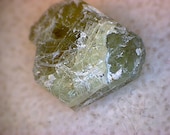
Chrysoberyl is a beryllium-containing oxide, while beryl is a beryllium-containing silicate. The name "chrysoberyl" comes from the Greek words chrysos, meaning "gold," and beryllus, the Greek name for any hard, lustrous mineral (also later applied to any green-colored stone). Logical, since chrysoberyl is usually greenish-yellow:


Chrysoberyl's formation is a little complicated. It starts with low-density, water-containing magma near the Earth's surface. As the magma cools and forms crystals, the ratio of water to magma increases, as does the presence of rare elements. This water-rich magma ultimately crystallizes later than the other magma, resulting in a pegmatite with overlapping crystals of differing minerals. Chrysoberyl, then, always forms with quartz and is found in granite, marble, and mica schists. However, chrysoberyl is the third-hardest mineral on Earth, after diamond and corundum (which includes ruby and sapphire); often it remains while the other parts of its pegmatite neighbors have eroded away. Then you can find isolated chunks of chrysoberyl in alluvial deposits, gravel, and sand.

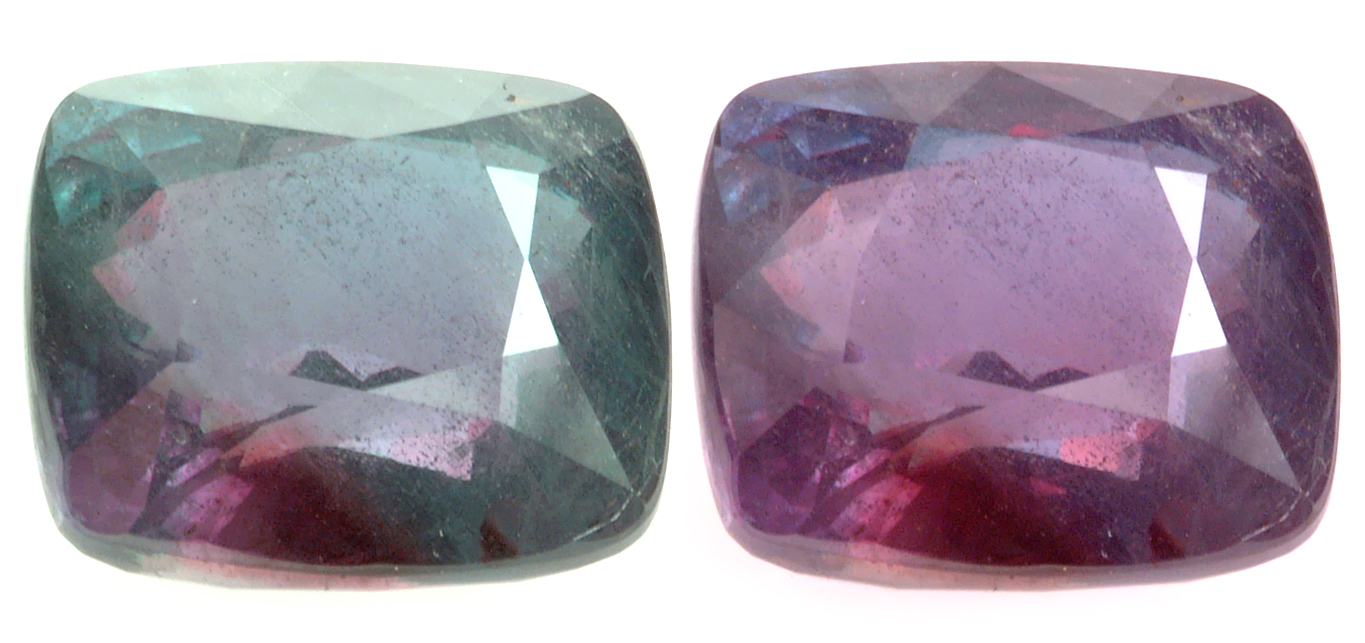
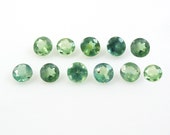
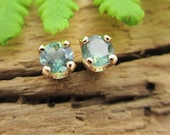
Of course, alexandrite doesn't look at all like the typical golden chrysoberyl. Depending on the light (more on that in a minute), it's either green or reddish-purple:


This is because alexandrite is a form of chrysoberyl where chromium has replaced some of the aluminum. If you've been paying attention, you'll remember that trace amounts of chromium in the crystal lattice of a gemstone often results in a green color. This means that for alexandrite to form, there has to be both chromium and beryllium present in the water–magma goop. This does not happen often and as a result the sources for natural alexandrite are quite limited: where there is beryllium-rich "pegmatitic fluid" and chromium-rich rocks.

The color change is due to the human eye and absorbed versus reflected wavelengths of light. The chromium ions in alexandrite are at a sweet spot where in the full spectrum of light (that is, with a balance of red, green, and blue light), the alexandrite reflects a green light, but in incandescent lighting (which is overbalanced in favor of red light), alexandrite appears more reddish. On the one side of alexandrite are rubies and red corundum (which always appear red) and on the other are emeralds (which always appear green). Note that this is a different sort of color change than pleochroism, which isn't related to the type or temperature of the light, but rather the angle at which the light strikes the stone.

Because of its relatively recent discovery (at some point after 1831), there aren't any mythological associations with alexandrite. Chrysoberyl in general (and particularly cat's eye chrysoberyl) was thought to protect the wearer; according to ancient Arabic thought it even rendered a warrior invisible during battle. All varieties were said to help with self-confidence and clarity of thought, and its gold-yellow color was also thought to attract wealth.

"Synthetic" alexandrite is popular, due to the rarity and expense of natural alexandrite. I put synthetic in the scare quotes because properly speaking, synthetic alexandrite isn't a true synthetic (chemically identical but formed in a lab instead of in the Earth), but rather an imitation: corundum or spinels with trace elements to mimic alexandrite's color-changing properties. Some glass imitation alexandrite lacks any color-changing properties whatsoever, but other ones manage to achieve the effect—even without any sort of AB surface coating. 

Alexandrite is one of my favorites, not least because I am a June baby myself. ;) Here are some great alexandrite items I found on Etsy to celebrate!

Amazing Alexandrite

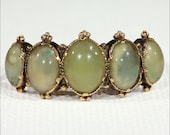
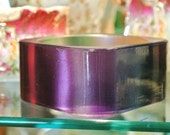
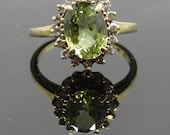
Antique Victorian Chrysoberyl Ring, 5 Stone in 18k Gold, c. 1850Vintage Lucite Square Bangle Chameleon Rainbow Frosted Clear Translucent Retro Circa 1970s Boho Hip Chic Funky IVteam Vogueteam VExplosionTwist Stacking Ring Alexandrite 3mm - June Birthstone Ring, Birthstone Twist Ring, Silver Twist Ring, Alexandrite Solitaire Ring, HandmadeCANCER Constellation Brooch - sterling silver and natural gemstones: red rubies and lavender alexandrite
Vtg  Re-Purposed OOAK Alexandrite Rhinestone BUTTERFLY & Cream Fx Pearl Bead 3 Strand Gold Tone Choker Necklace Adjustable Lengthpolypro hoop-- color changing tape/ color morphPretty and Classic 14K Yellow Gold Vintage Chrysoberyl Cocktail Ring - RGCB103PAlexandrite Blue Brown Cathedral Czech Glass beads  6mm FACETED.  Gb467 (10)
SALE Natural Alexandrite Round 2.7mm Great Beautiful Green Color Excellent Brilliance and Luster(5372)Milky Alexandrite Moon Dust CzechMates Czech Glass Bead 6mm Two Hole Tile : 25 pcBeautiful Chrysoberyl specimenPurple to Pink Thermal Color Change Nail Polish
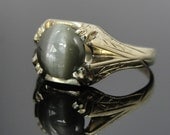
Kramer Alexandrite SIgned Bracelet 2 brooch  set GORGEOUS vintage  demi parureColor Changing Alexandrite & Diamonds (Lab) Sterling Silver Ring June Birthstone FREE RE-SIZINGAlexandrite Earrings in 14k Yellow Gold, Genuine Natural Brazilian Alexandrite, 3mmRare Cat's Eye Chrysoberyl Fine Green Gem in Art Nouveau Green Gold Setting RGCB201D

Powered By Toastie Studio - Etsy Tools

Thursday, June 5, 2014

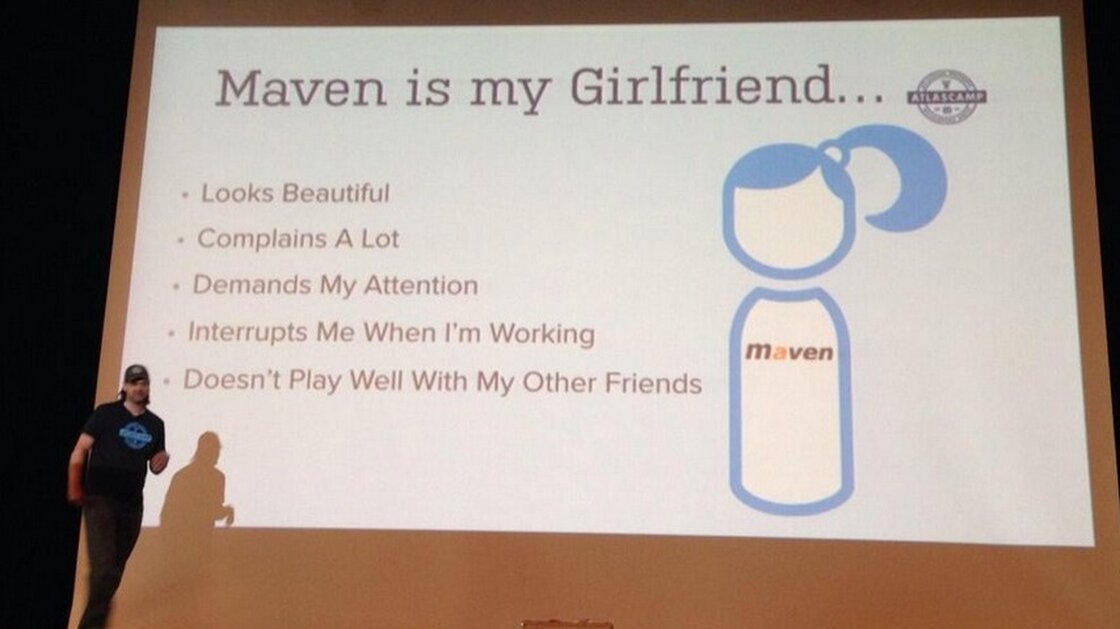
Atlassian, Maven, and Stupid Gender Jokes in Tech

Developer compares a plugin framework to his girlfriend, saying that it's "beautiful" but "it demands a lot of attention" and "interrupts [him] while [he's] working."

You would have made the same point by comparing it to your fancy show dog. Or without any cutesy metaphors at all.

Way to be classy and go for the low-hanging fruit of a joke there, Doklovic.

People who make jokes like this always baffle me: if your girlfriend is that much of a pain, or if your boyfriend is that much of an inept manchild, you're the one choosing to maintain a relationship with them. And if you think that every man or woman is going to behave in those ways, then please die alone without reproducing.

The jokes about women rustle my jimmies particularly (unsurprising, considering my ovary ownership), but I would be lying if I said I didn't die a little inside every time I see a pin like this on Pinterest:

Haha, it's funny because women are nagging harpies and men are clueless oafs!
But you know, let's not forget that the tech industry is still run by men and that jokes about women being annoying decorations contribute to a frigid culture that discourages them from joining, Which is a shame, because computer science is one of the fields where the gendered paygap is basically nonexistent.

I appreciate Atlassian's response to this and their stated commitment to doing better as a group.  They haven't outlined exactly how they plan to help Doklovic see the goof-up; I assume he has enough empathy and insight to realize just from this blowback alone why a joke about girlfriends being nothing more than pretty bimbos who keep men from getting stuff done was juvenile and inappropriate for an official presentation in a formal tech conference.

Wednesday, June 4, 2014

Pinterest Post: Punjammies and International Princess Project

Usually on Wednesdays (or every other Wednesday) I do a "What I('m) Read(ing)" post, and I do have one book I'm reading (Tropic of Cancer) and one book I just finished (White Teeth) that I want to talk about, but right now my blogging time is somewhat limited as I play hostess to a visiting friend. So, instead, a quick word about a package I just got!

When I packed for Stockholm, I brought one pair of winter pajama bottoms (warm, fleecy) and two pairs of all-purpose, year-round pajama bottoms (jersey knit bottoms from Target). One of the bottoms dated back to my junior year of college and so after many years of faithful service, had to be sent to the rubbish bin. Not to the donation bin; they were well beyond donating.

 In a nutshell: I was in the market for some lounge-around-the-house wear.

Then I remembered a great website I had found via Pinterest: Punjammies.


I had wanted a pair since I first saw the pin (and first realized they had items that would even fit me), but put it off because I didn't need any at the time. I ordered a pair the same day I had to retire my tan capri coulettes. I got a pair like this, only without the border on the bottom:

Aamani Punjammies

They are comfy, lightweight and fit wonderfully (a miracle for someone with my hips), though they are regular cotton instead of the stretchy jersey knit I've grown accustomed to. Anyway, the point of this post isn't that these are spectacular loungewear, even though they are. The point is that the proceeds go to the International Princess Project, a group in India that seeks to end human trafficking and provides former sex workers with a new trade (sewing), the chance to use it to earn a fair wage, and the environment needed to heal, mentally and physically, from their experiences. 

Priya Punjammies


Sunday, June 1, 2014

Armchair BEA Days 5 and 6: YA, Wrap-Up

I skipped the topic of choice because I am a bit short on blogging time at the moment. On Friday I picked up a friend of mine at the airport and we have been busy catching up and sight-seeing here in Stockholm. Naturally I think it is poor form to shut myself up in the kitchen and blog while I have a visitor so I've missed the last couple days (and will have to keep it short and sweet). And since a topic didn't even present itself to me right away, I take that to mean I don't have a burning desire to talk about anything that's already been covered (diversity is my ~thang~ but we touched on that earlier).

Our final genre of discussion is one that we know is a popular one these days: books for the younger crowd, from middle grade to young adult. If you do not normally talk about this genre on your site, maybe you want to feature books that you remember impacting you during this stage in your life. If this is where you tend to gravitate, maybe you want to list your favorites, make recommendations based on genres, or feature some titles that you are excited to read coming later this year. 

I'm of the firm belief that YA doesn't exist. You know how bookstores decide what is YA, nine out of ten times? If the protagonist is a (pre)teen or child. That's it. Maybe some places make some content considerations, such as for violence or sex or so on, but that's not the defining aspect.

"Easy" reading and "hard" reading certainly exist (along a spectrum), and "easy" reading is where I sort most everything that people call YA: Harry Potter, The Hunger Games, Twilight, John Green's entire oeuvre, etc. etc. And to be honest, most of the time I think they're crap.

(This includes Harry Potter. I am the only person on Earth writing about books who doesn't like Harry Potter. I positively loathe the series, as a matter of fact. I am a hater, and I am gonna hate.)

So which YA novels do I like?

There are, of course, books that are considered YA that I do like, even love. For example, right now I'm reading Sarah Maas's Throne of Glass series. I studied Creative Writing with her at college and admired her writing even then, so I'm glad to see her succeed at BEA and around the world.

Roofbeam Reader mentioned another series that has long gotten the short shrift: The Dark is Rising sequence. I love these books and  have compulsively re-read them, especially the eponymous second volume, from elementary school up until adulthood. If you haven't read this series, you should. I don't think it's just nostalgia tinting my love of these books; they are really and legitimately great stories with great Arthurian/magical world-building.

This is the closest I could find to my edition of the book. Same image, but less dorky font.
The new covers they're printing now are butt ugly; I hope they don't permanently replace this one.
I read a lot of other fantasy in middle school: I devoured every Brian Jacques novel in the school library, and bought some of my own, though I fell out of the series eventually. I don't think I'd ever buy the series to own for myself, but they are nonetheless a fond memory. The same goes for Tamora Pierce's series Protector of the Small and Song of the Lioness. They were the only series I read from Pierce, but she is a prolific and productive writer. The one-off A Plague of Sorcerers by Mary Frances Zambreno impressed me and did a lot to influence my own ideas about fantasy. I also enjoyed the few John Bellairs books I could find, most notably The House With a Clock In Its Walls.


Fortunately the library editions weren't from JUST FOR BOYS, but even if they were, I would have ignored that appellation.


Science fiction goes hand-in-hand with fantasy, of course. I was maybe 15 or 16 when I first read Neuromancer and my enthusiasm for William Gibson has never waned. Prior to him, I enjoyed the books of William Sleator, particularly Interstellar Pig.


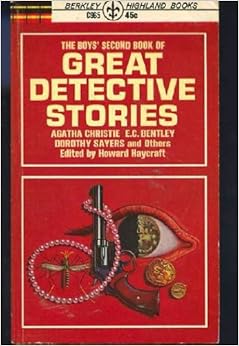
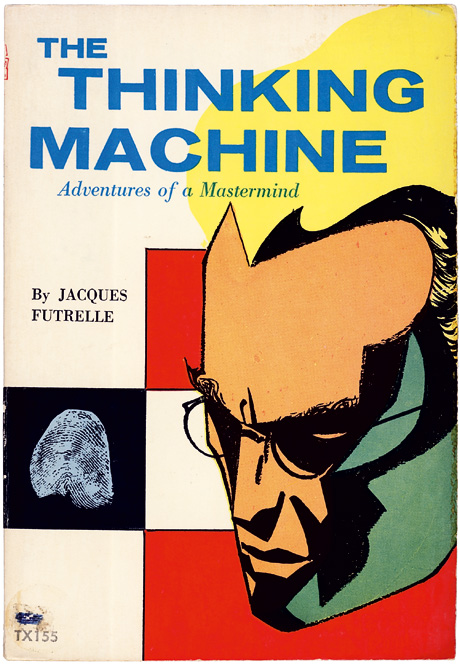
Fantasy wasn't the only thing I read, though. I also enjoyed a good mystery, too. By middle grade I had outgrown my Boxcar Children, Encyclopedia Brown, and Nancy Drew books and traded them in for some Agatha Christie. Who is not considered YA but nonetheless was a staple of my childhood. The same goes for my dad's old copies of The Thinking Machine stories and The Boys' Book of Great Detective Stories. (Again, I conveniently ignored the "For Boys" imperative.)


The latter was especially interesting because it had mostly true detective stories and also the history of detective work. That's where I first learned about Alphonse Bertillon, the French criminologist who determined a way of identifying suspects  by measuring their body parts: like height, around the head, wrist, feet, and so on. It wasn't a terrible method, as the odds are quite significantly stacked against two people having the same name and having similar facial features and having identical or even similar identifying measurements and ratios. In fact, Bertillon's system helped the authorities in France capture quite a number of repeat offenders, and it was soon used by police forces around the world.

But in a stroke of ultimate weirdness, when Americans booked and measured a man named Will West, there was a nearly identical William West already in prison. Identical measurements, identical ratios, and their facial features were even similar to each other. The only truly significant difference between them that anyone could spot at a glance was their fingerprints. That case (and the fact that it's easier to take fingerprints than measure lots of bobs and bits) was probably the biggest factor in the switch over to fingerprints.


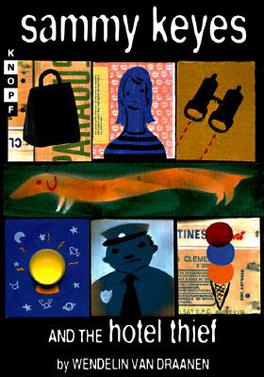
The final author I want to mention here is Wendelin van Draanen. How I Survived Being a Girl and the first few books in her Sammy Keyes: Detective series were a lot of fun.


In the meantime, we want to know how you felt the week went.  What were some of your favorite aspects of Armchair BEA 2014?  What were the most intriguing conversations or the posts you recommend everyone read?  Did you want to summarize your own posts all in one spot?  This is your opportunity to share your wrap-up for the week in the way you feel most appropriate.

On Day 2 I had a really fun and interesting conversation about book reviews on Good Reads and why I'm not going to read The Fault in Our Stars. That and finding all these new, interesting blogs to read has been the best part.

If you go back through my posts (beyond ArmchairBEA), you'll notice I have eclectic, though generally thematically connected, tastes and posts on topics that, for whatever reason, I can't find a whole lot of active-but-small blogs posting on. I'm not a Christian, I'm not a wife, and I'm not a mom, so the typical ~blogging~ community is generally on a different wavelength from me. But this week it's felt a little like I have found my people, so to speak. I hope those of you who have found my ArmchairBEA posts worth reading and commenting on will stick around for the long haul and future posts that have nothing to do with books!