Monday, February 16, 2015

Music Monday: The Barbarettes

It's been a while since I've found something worth sharing on Music Monday, but when I stumbled across these girls I knew I'd have to post about them ASAP.

May I present South Korean doo-wop group, The Barbarettes!


They don't just do covers. Here's their most popular single at the moment.


Sunday, February 15, 2015

Five Fandom Friday on Sunday: Best Friends


I'm late on the train with this 5 Fandom Friday, too. Originally about the top 5 couples that you "ship," I avoided it because I'm allergic to fanfiction and romance.

I understand wanting to celebrate and even interact with a narrative you've enjoyed and maybe even internalized, and I also understand the desire for smut, so I'm okay with fanfiction existing somewhere out there in the vague and and hazy ether of the Internet. But it's a thing that is definitely Not For Me, and it chafes me that 50 Shades of Grey and The Mortal Instruments (series that started life as Twilight and Harry Potter fanfiction, respectively) are setting up an inherently Ooribosean closed model: no new input, just constant regurgitation of the same or all-too-similar worlds because that is what the fannish hivemind will buy.

More than that, it bums me out that people would rather spend their creative energy playing with someone else's toys, so to speak, than to create new ones. Imagine if everyone slaving away over their 90-chapter Draco/Harry slash was instead slaving away over an entirely new story. (Not that writing fanfiction precludes you from writing original material; I know people who write both.)

There is an academic "pro fanfic" angle you take, and I grant that—authors have been cribbing off each other since novels were invented, "steal like an artist," etc. I respect that, and I say it still doesn't negate the inherent ick factor of fanfic (fanfick?) for me.

My unpopular geek opinion!

So all of this is to say I was not really excited about this week's 5 Fandom Friday, and then I saw other ladies in the Female Geek Bloggers community posting different interpretations of it, and it became much more palatable! I present my take on it: my top 5 Fictional Best Friendships.

1. Dante and Randall


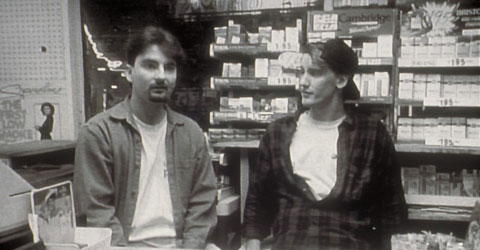
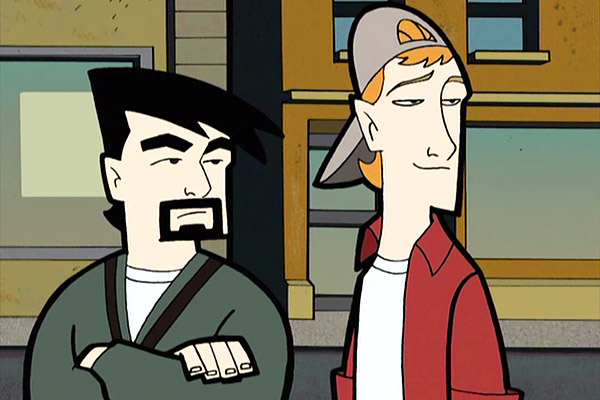
Whether they're in black and white, working at Mooby's, animated, running the Quick Stop and video rental, or in color, you just know that Dante and Randall's friendship will survive anything. Plus their relationship reflects a lot of real-life best friends: both have character flaws and strengths that complement each other and ultimately help each other grow. Randall's cavalier, "fuck this shit" attitude and confidence helps Dante take risks and move out of his comfort zone, while Dante's responsibility and maturity reign in Randall's impulsive immaturity. More importantly, they care a lot about each other and (nearly) always do their best to help their buddy grow into a better version of themselves. These guys are like the OGs of BFF-hood.


2. Daria and Jane


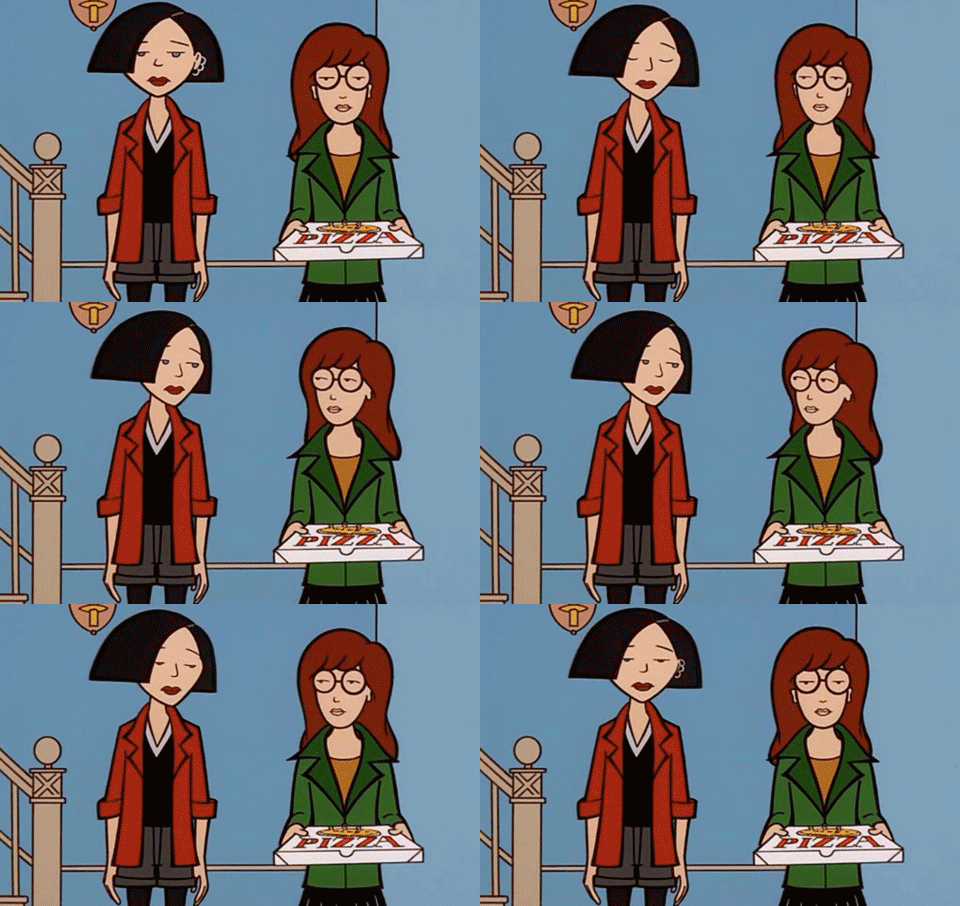
What 90s kid couldn't relate to the detached and sarcastic Daria? I've been compared to Daria on more than one occasion, I presume because of my glasses and tendency for snarkiness. Their girl friendship was noteworthy for being based on mutual interests and shared character traits rather than catty gossip and boy-chasing. Unfortunately the writers took Daria and Jane's rock-solid friendship down a hackneyed, cliched path when they spent a few episodes on the outs because of a stupid boy, but in the end, uteruses triumphed over duderuses. 


3. Enid and Becky


Comics Enid and Becky, at any rate. I've never seen the movie, and I don't know if I want to because I get the impression that a lot of the nuance and tenderness of the novel was cut in favor of wacky on-screen shenanigans. They were a proto-Daria and proto-Jane, but also different. A lot of the conversations they had were echoes of ones between myself and my best friend. Unlike Daria and Jane, though, their friendship seems to start dissolving once they graduate high school. Sad, but probably more realistic than Daria and Jane's future.


4. Nancy, George, and Bess


Okay, maybe not the most heartwarming of friendships here. Just solving mysteries together like badasses. These were some of my favorite books when I was a kid; at some point after I finish the TIME Top 100 list, I'd like to reread these all again, just for shits and giggles. Fun fact: these books are where I learned the word "amateur."


5. Jeff and Shirley


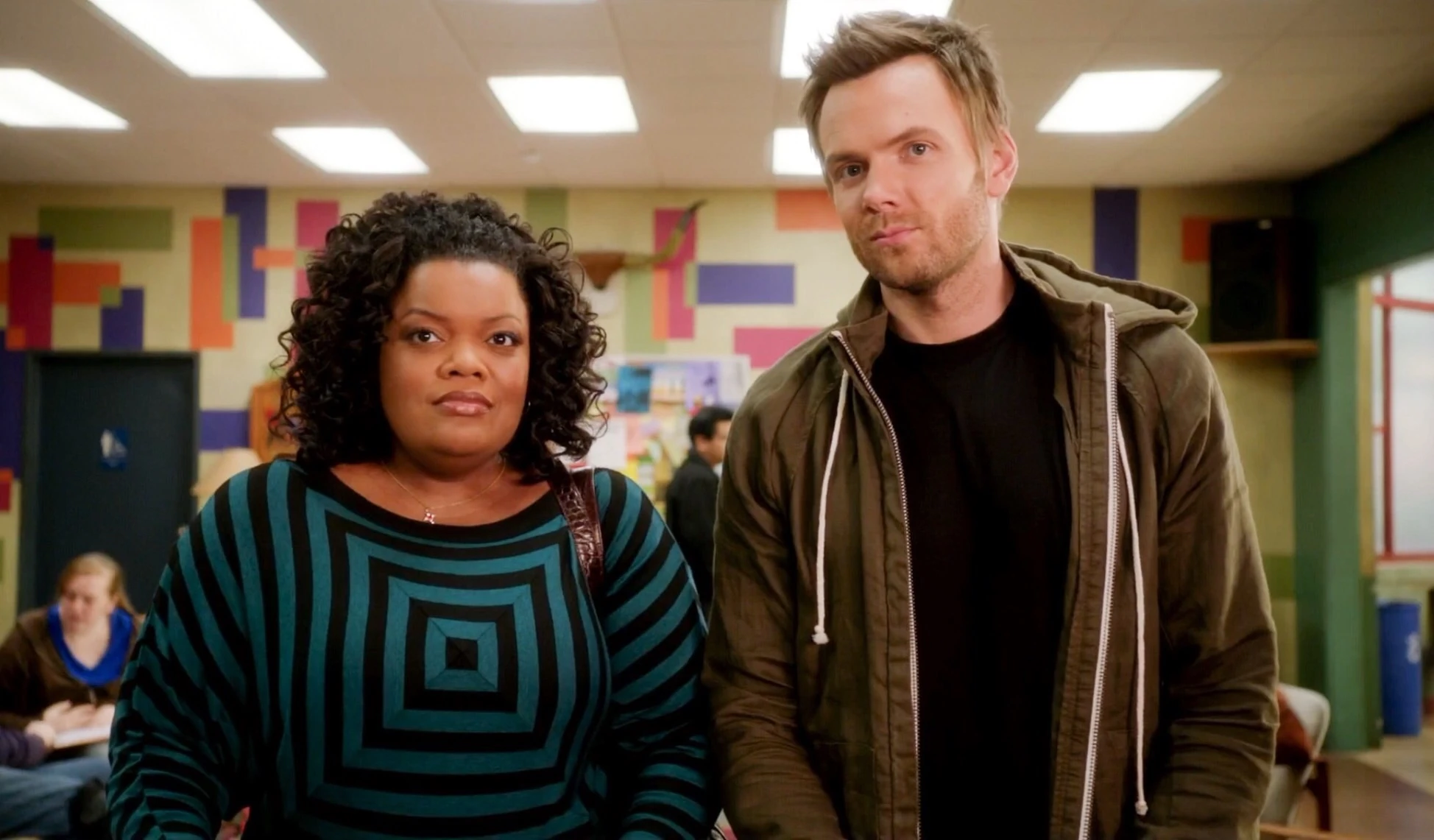
While Troy and Abed's Cloud Cuckoolander antics were many fans' favorite part of Community, after Season 3's "Foosball and Nocturnal Vigilantism" Jeff and Shirley became my favorite pair in the group. I wish Yvette Nicole Brown had stayed on, because I would have loved to see more of Shirley, as well as her friendship with Jeff. They weren't BFFs by any stretch, but they could have been if the show hadn't been under constant threat of cancellation and if Brown hadn't ultimately left it. After all, they've known each other for longer than anyone else in the study group. Their reconciliation over the foosball table and the tyranny of the German exchange students was something like a friendship version of kintsugi: the Japanese art of fixing broken pottery with precious metal lacquer. 


Who are your favorite fictional BFFs?

Thursday, February 12, 2015

Trek Thursday: Let That Be Your Last Battlefield

#37: Let That Be Your Last Battlefield


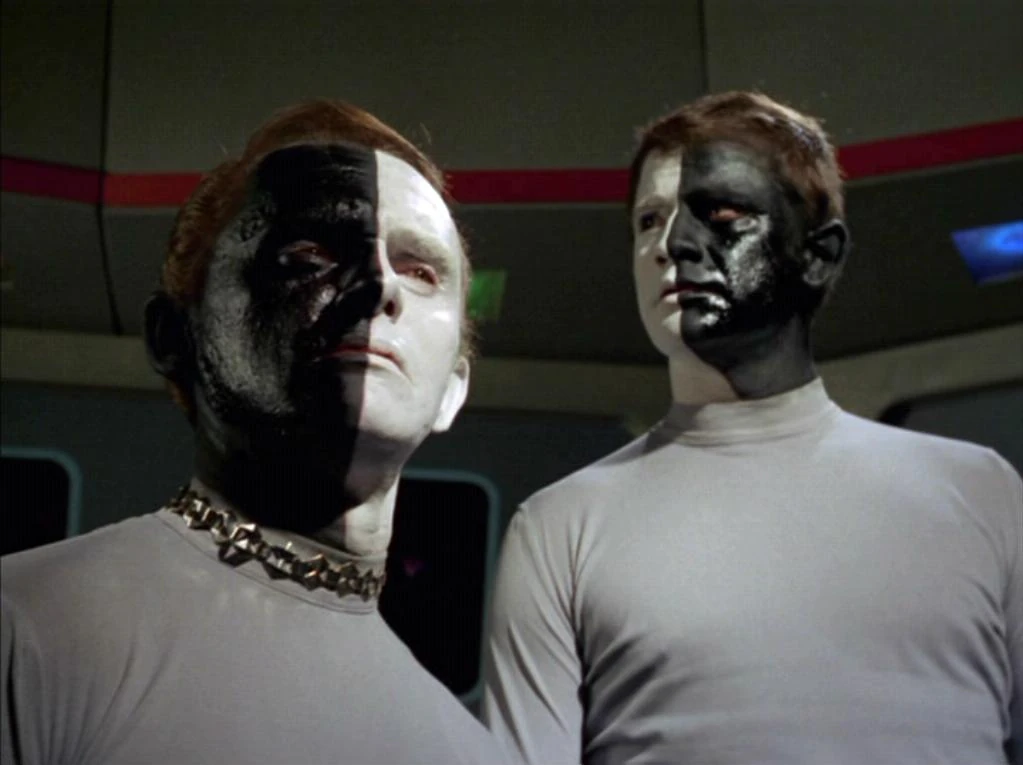
In case you forgot: Another legendary episode. The Enterprise finds itself mixed up in some alien race relations. Two aliens with half-black, half-white faces (one of whom is The Riddler) are running amok on the Enterprise, until Kirk solves the problem by giving them a whole planet instead.

Space racism is bad, mmkay?

But on a serious note, the Enterprise inadvertently getting itself involved in another planet's politics is a pretty solid hook, especially when not all of the aliens involve recognize the sovereignty of the Federation. This is work for diplomats, not starship captains, but Kirk does an admirable job of doing a job he hasn't be trained for.

Kirk, Scott, and Spock's initiation of the self-destruct mechanism (rather than have the Enterprise and her crew beholden to some strange alien power) is some major Hero points, though you have to wonder if they polled the rest of the crew first. "In the event this guy won't relinquish control of the Enterprise, are you willing to go down with this ship? Y/N."

The end, with Bele (The Riddler) and Lokai chasing each other for the rest of their lives, is very reminiscent of "The Alternative Factor," though made all the sadder because there is absolutely nothing to be gained by their protracted conflict. At least anti-Lazarus was sacrificing himself to save the universe.


But part of what makes this episode legendary (aside from the dopey make-up) is that the Aesop in this one is pretty hamfisted; though again, considering the timeframe when this aired, it was certainly an anvil that needed to be dropped. Sometimes it seems like it still is. The downer ending, while a powerful caution about the power of hate, does raise some uncomfortable implications for me; it seems to suggest that anything resembling a dialog or justice about race relations will only lead to civil strife and eventual doom. (No one ever explains how the Federation got to be such a post-racial Kumbaya sort of organization in TOS, and maybe you can debate that it doesn't actually exist....!) I guess I wanted to see Kirk side more heavily with Lokai and found his diplomatic neutrality kind of off-putting.

Wednesday, February 11, 2015

What I Read: La Petite Bijou

This review is for you, international/polyglot readers/bookish trend watchers! Patrick Modiano's 2014 Nobel Prize win (hopefully) means that some of his lesser-known works are going to get English translations, but as of this review, there is no English translation. I read it in Swedish for a class assignment, and so the following review is based on that translation. I hope to get a copy of it in the original French, soon, to see if my opinion changes any.


Also, I'm totally cheating and presenting an English language version of my Swedish homework assignment. Deal with it.

When you read a book in a foreign language, it feels like a gauzy veil between yourself and a theater performance. You can hear voices, see silhouettes, and maybe understand the entire story, but it lacks nuance: meaningful gazes, facial expressions, and other subtle details disappear. Details that can make the difference between an "okay" story and one that's amazing.

Likewise, you're removed from a story when you read a translation. Different languages have different finesses, even when they're more or less similar. When Voltaire wrote, "Mais il faut cultiver notre jardin," at the end of Candide, how should that be translated. "But we must cultivate our garden."? "But our garden needs to be tended."? How can you translate the precise expression "il faut" from French to [English] and retain the same meaning, the same tone? So you can say that when you read a translation of a story, you're not really reading the story, but a translation of the story.

So when I say that I've read Patrick Modiano's "La Petite Bijou," I mean that I've read a translation through a veil, twice removed from the original. It can be debated if I actually have read the novel, but that's something else entirely.

In a sentence, "La Petite Bijou" is about a few days—maybe weeks—in the life of a young Frenchwoman in Paris, Thérèse. She works as a nanny, meets a guy and a girl, and sees a woman who looks like her negligent, dead mother. That is, without spoilers, almost everything that happens in the story. Of course there's more in a novel than "what happened" and it becomes crystal clear that "La Petite Bijou" isn't a story, but a portrait. Of Thérèse, obviously, but also of Paris, and Parisians, and maybe an entire French generation: lost and alone, with a strong desire to be heard. Understood. Recognized. It's a portrait that Modiano paints with relatively few words, light as a haiku. His style is graceful, executed with an almost surgical precision. I absolutely appreciate Modiano's technique and recognize an impressive talent.

However, I have to admit that I feel a little cheated. (Spoilers!!) The novel ends in a hospital after an overdose: Thérèse wakes up in the premature infant unit, metaphorically newborn but also metaphorically unready and weak. But such an ending only works if we have an idea of what will happen next, how Thérèse will conduct herself in the future, and Modiano is incredibly stingy with clues. Will she try to meet her mother ("her mother")? Will she take le bac and enroll in the school for Oriental languages? Were those actual, important goals that she had, or were they only passing fantasies? Does she have a future in front of her, or will she continue her descent into madness? We don't know. We can only guess, and therefore it feels like an incomplete portrait.

Tuesday, February 10, 2015

My New Band, Volume 1

My day job (or well, one of them) is proofreading science articles. My contract says "editor" and that's what I tell people I do, but really I spend most of my day adding Oxford commas, changing hyphens to en dashes, and making sure the authors use a proper degree symbol instead of a superscript lowercase "O" or something else equally bizarre. I'm not editing for content or style in a really meaningful way, or on the body that decides which papers are accepted or rejected, which is what people usually think of when they hear "editor," so "proofreading" strikes me as a little more accurate.

Anyway, I keep a collection of odd and amusing turns of phrases in a game I call "My New Band." Sometimes I share them on Twitter, other times I send them to my boss, and other times I just keep them to myself. I don't know why I didn't think to share them here until now. It certainly seems like a ~bloggable~ topic. Who knows, maybe I'll even get around to coming up with album titles and art for all of my imaginary new bands!


What I assume is my typical blog demographic.


Here's Volume 1. Confidential to all you aspiring rockstars out there: you're welcome.


1. Behemoth Toxicities

I feel like this would be a metal band. I don't know what kind of metal, because I know there are approximately 98271 different subgenres, but it would be metal.


2. Ultra Junior

As if, thanks to Super Junior, this could be anything other than an Asian boy band.


The three stages of "Sorry, Sorry:" you like, you hate it, you have an inexplicable and frightening love of it.


3. Squat Down Situation

I can't decide if this would be a hip-hop group or a jam band. But it would definitely be one of them.


4. Bright Sunday Dongo

Definitely one of those hippie-esque "world music" bands that I like more than I care to admit. Possibly bluegrass. I think a didgeridoo would definitely be involved.


and finally, the bingo bonus goes to:


5. Heterotic

This is a band that, as it turns out, actually exists. I Google random words and phrases from papers a lot to check for spelling and capitalization, and lo and behold this was the rare time when the first hit was a music video. Reproduced here, for your pleasure (if you're into electro/synth/mellow out stuff):


Thursday, February 5, 2015

Trek Thursday: The Mark of Gideon

#39: The Mark of Gideon


If we kill him, we could play Settlers of Catan on his shirt!


In case you forgot: What is perhaps the most Catholic race of aliens of all time abducts Kirk because their overpopulated planet needs to find some way to die.

A race trapped in a tragic, unpleasant longevity is such a good hook. (See: The Man from Earth, the "Requiem for Methuselah" TOS episode, etc.) So is Kirk being brought to a fake Enterprise. And while they may be filler, watching Spock deal with Federation and Starfleet bureaucracy  is so much fun I don't care that the scenes are mostly filler.

But the good hook is lost as soon as we learn that the Gideons ~value life too much~ to use any kind of contraception. You'd rather your daughter contract a deadly disease and die rather than put her on the pill? I just....what? That is what relegates this episode to Category III ("mediocre") instead of Category I ("amazeballs") for me. Of course alien races are going to have different cultures and priorities and beliefs but that one is just so logically inconsistent I can't. Also, if space is such a priority, wasting a whole bunch of it to construct a fake Enterprise seems, well, a waste.

Wednesday, February 4, 2015

What I'm Reading: Under the Volcano

I've been working on this one for a while. In fact, I've been putting off posting about it because I wanted to get deeper into the story before coming to any conclusions. At three-quarters of the way through, I'm still not sure if I'm up to the challenge of writing about this book, but I'll give it a shot.

Image courtesy HarperCollins

Under the Volcano is a throwback to the dense and quote-unquote literary selections on the TIME Top 100 list. The last one I read before this was White Noise, which is...a thing. But it's light and easy to read. Before that was A House for Mr Biswas, which was thoroughly unimpressive. I'm glad to be back into "literary" territory. Or maybe literary isn't the right word.

In stark contrast to A House for Mr Biswas, Under the Volcano is an interior novel, an entire story filtered through people's inner perceptions and reactions. There isn't that cynical distance that Naipaul keeps as he traces the arc of Mr. Biswas's sad, short life; this is a very personal novel. And unlike both White Noise and A House for Mr Biswas, there is a higher level of syntactical complexity. It doesn't quite reach the density of something like Beloved, but it's more like Beloved than anything else I've recently read. You can't zip through Under the Volcano. You wouldn't want to, either—there are some exquisite descriptions and inner narrations in here that should be savored.

This is the kind of reading I love. I love to be challenged like that, to have lots of complexity that requires reading and re-reading and long pauses to digest and think.

When I read a book, I'm always on the lookout for a quote or two that I can pull, for my own reference (I like to collect quotes) as well as for use in my reviews. Everything in A House for Mr Biswas was too pedestrian and dull to be worth sharing out of context; there were a few bits of dialogue here and there in White Noise that I enjoyed but which didn't seem to be worth noting. With Under the Volcano, my problem is that I don't know where I could possibly end the selection. I would just be quoting the whole thing. Even the selections I could more or less excise are just so long, they don't really belong in a fly-by-night blog review by a nobody.

But on to the story. What is it about? In a nutshell, the book is about Geoffrey, an alcoholic British expatriate in Mexico in the late 1930s and the people around him: his estranged ex-wife, a childhood friend (or is that ex-friend?) from France, his half brother Hugh. So far, what's happened is that Yvonne (the ex-wife) has returned to Geoffrey to try to work things out; Hugh is visiting on leave between sailing jobs; on their way to another town for Day of the Dead festivities they've run into Jacques, the childhood friend, and they've all decided to go to the carnival together.

Simple on the surface, but there are deep waters in this book. Each chapter shifts perspectives from one character to another—Geoffrey, Hugh, and Jacques, primarily—so that the reader gets a healthy dose of backstory and interior monologue.

No one is perfect, but no one is entirely unsympathetic either. Everyone is human: flawed, certainly, but recognizable as a more or less likable or at least understandable human at the end of it. The level of detail and clarity of the portrait sketched depends on the character. Geoffrey's perspective is the most interesting, in terms of language, but he is also about as coherent as you would expect from someone off their mind on mescal and tequila. The most clearly articulated portrait is that of Hugh, an idealistic artistic type still coming to terms with reality, and the sad truth that it's most likely that he won't amount to anything—appropriate that the person with the strongest sense of self and identity and adhesion to labels is the one whose biography is the most straightforward. Jacques is somewhere in between the two: without the same centered identity as Hugh but not as lost and hopeless as Geoffrey.

This is the kind of book that made me tackle the TIME Top 100 list in the first place. I'm definitely going to have to find more Malcolm Lowry after I finish this book tour.