Today's 5 Fandom Friday (brought to you by Super Space Chick and Nerdy Girlie) is a good one. A couple of the last questions haven't really been my thing, plus I've been busy, but this week's prompt has me back in the swing of things.
Not pictured, because it's just weird to post a picture of Lawyer Mom here. Enjoy this mama horse and her foal? colt? instead.
I did not appreciate all of the badass things my mom did (going to school for engineering in the 70s, working at Bell Labs in the 80s, continuing her career after having kids, opening her own business when she was dissatisfied with her job at AT&T) until I was an adult, but now that I'm adult I can say holy shit I could never do that. In addition to being a badass, Lawyer Mom is also a geek (bookworm, Trekkie, Jeopardy! fiend) with a huge heart. She was and is the perfect mom for me.
2. JV
JV is also not pictured (again, weird; enjoy our shadows from a trip to Finland), and also not mentioned much, but he is just as much an inspiration as Lawyer Mom. JV and I have been together a long time, considering our ages (12 years!) and I can safely say I would not be who I am without him. In addition to being an incurable video game addict and East Asian horror movie fan, he is a wellspring of patience, good nature, tolerance, and empathy. I could go on but suffice it to say that I am really lucky to have him in my life.
I wonder if this will trigger any outraged comments from the ~*~gaemergaet~*~ crowd. On the other hand, who cares?
No one would spend so much time and effort publicly discussing video games if they didn't like them, and that's just how it is. It's sad that I can sit here and say that Sarkeesian is brave for putting her opinion out there, because you shouldn't have to be brave just to voice an opinion, but that's how it goes, I guess. I can barely muster the courage to respond to ignorant Facebook comments, never mind being a public figure. Let me buy you a drink, girlfriend.
4. Ellen Pao
I'm just going to leave this here:
(Another GIMP masterpiece by JV. One of many reasons I love him.)
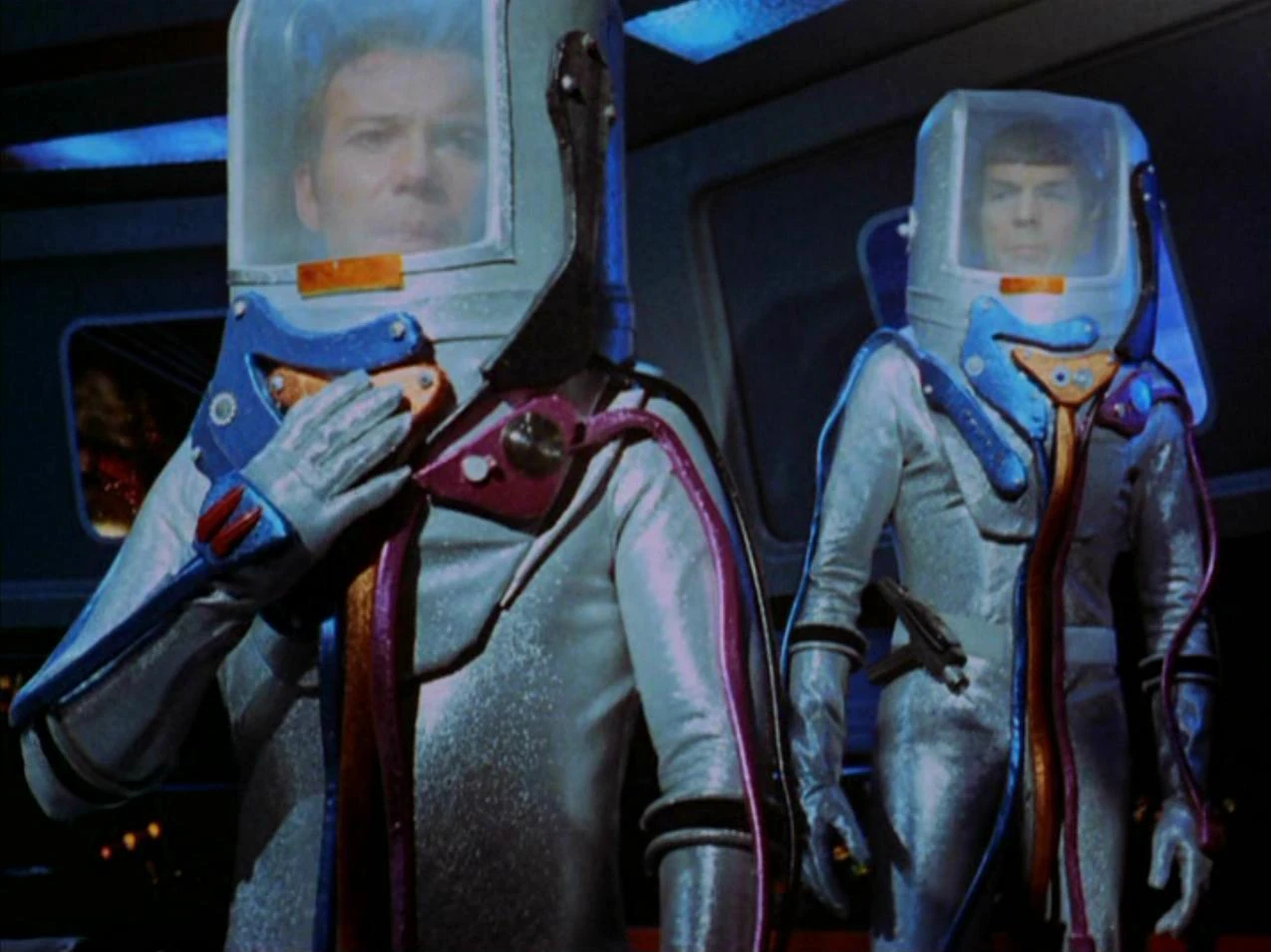
In case you forgot: In search of a missing ship, the Enterprise finds it in some weird in-between space (so much for that sacrifice Lazarus made in "The Alternative Factor") where two different parallel universes are in contact. Kirk gets stuck in the parallel universe and Spock has to decide whether to try and save the captain or to escape this weird bubble in the universe that's making the crew lose their minds before the Tholians finish caging them in.
Much as I love TOS, I have to say: an episode largely bereft of Kirk is almost refreshing to watch. More than that, we've got some good old-fashioned sci-fi going on here, and again, one of my favorite moral dilemmas to come up in TOS: do you risk the many to save the few (or even the one)? Of course TOS always comes down on the side of the few/one, which I guess does get repetitive, but it does make for some of the more compelling plots in the show.
The pacing on "Tholian Web" is solid. Each new disaster (missing the interphase, engines busted, crew going crazy, Kirk's diminishing oxygen supply) adds to the tension without seeing artificially tacked-on, making the payoff when they are able to recover captain Kirk immensely satisfying (even though we know that, of course, Kirk will survive).
McCoy's mistrust of Spock seems to go a bit too far, however. It's been well-determined by now that Spock harbors no ambitions for power whatsoever; Bones refusal to accept this is too stupid to be entirely consistent with his character. I can understand being freaked out by someone's lack of freaking out, but come on Leonard!
Why are the Tholians so needlessly antagonistic? I guess in the big bad galaxy some races are bound to be jerks and it's just too bad that the Tholians are one of them.
Speaking of my favorite authors over in the Blogger Book Drive post, here's a David Foster Wallace collection that I finished on vacation.
I first came to Wallace after a friend whose taste I trust recommended Infinite Jest. "You guys are both Writing and Philosophy double majors, you're like soul mates," he said, or something similar. So I picked it up and after a slow start I was sucked in. It was something else.
I became thirsty for Wallace. I read articles online and picked up collections of essays and short fiction. There isn't much left in his collected works I haven't read (I'm not touching A Pale King; I don't believe in posthumously publishing novels), so when I saw Girl With Curious Hair in a used bookstore I had to buy it. It was a good traveling companion for the last leg of my journey out of the Pacific Northwest and back to Sweden.
In a nutshell: it is weird. It is weirder than his other short fiction, in that there often isn't a concluding or satisfying logic to these short bits of world there is in his later work. Girl...is one of those works I can appreciate it from a fan perspective (observing the evolution of his style) and even a literary commentary perspective (what he does with narrative and language and etc.) but I can't viscerally enjoy it. A lot of times when I read something, whether it's a whole novel or even just a short story, I usually leave with the sense that I can answer the question, "Why did the author write this story?" Such was not the case here; most of the stories in this collection I struggled to find that driving force.
This isn't surprising. Girl... is a very early work and Wallace was still polishing his voice and style. I can forgive the rough edges because they're a necessary part of the artistic process.
But the neat thing about a collection of short fiction is that I can give you a nutshell review of each selection in addition to my impressions of the whole thing!
"Little Expressionless Animals" is maybe the strongest piece in here, by which I mean: the one that is the most satisfying, narratively. It's up there with "Westward the Course of Empire Takes Its Way," which makes me wonder if Wallace's editor followed the old stand-up comedy advice of putting your best joke last, your second-best first, and then ping-ponging your way through the set until the worst is in the middle.
"Little Expressionless Animals" starts out a bit rough but ultimately you can put the pieces together and it's a fucked up and yet entirely believable story. Also it's a lot about Jeopardy!, which I love (and miss). Through the lens of American game show entertainment we eventually get a very clear portrait of one woman's life.
"Luckily the Account Representative Knew CPR" is well-polished in terms of pacing and language, a very tight and focused little story that nonetheless lacked that "...but why?" urgency.
And now the eponymous selection, "Girl With Curious Hair." It has that same fucked-up surreality as "Little Expressionless Animals" (childhood tragedy seems to be a theme across Wallace's fiction), with the freak-out factor cranked up to 11.
Afterwards we have "Lyndon," which I appreciate as a fictional character study (not being an American presidential history buff I have no idea how much in this story was pure imagination and how much was based on extensive LBJ research), but not much more.
"John Billy" is a remarkable piece if only for the deft control of language and dialect Wallace exhibits.
"Here And There" is a tough nut to crack. I found this one probably the hardest to get into and I don't really have much else to say about it.
(Interestingly, if my "stand-up routine order" hypothesis is correct, this would suggest that Wallace or his editor or someone else thought that "Here And There" and "John Billy" were the weakest in the collection. I think I agree.)
"My Appearance" returns to a more or less linear form and, even if it's an unremarkable story in this collection, it's at least complete in a way many of the other stories are not. That completeness but also that theme of television appearances (this time Letterman instead of Jeopardy!) tie this story pretty strongly to "Little Expressionless Animals," at least for me. Never mind that it goes without saying that an "unremarkable" David Foster Wallace story is still really good.
Biographical snapshots continue with "Say Never," though outside the purview of television and instead from the perspective of perfectly normal and caring (though quickly aging) parents. Again, that earlier comment about "unremarkable" applies.
"Everything is Green" is a sudden, though not unpleasant, brief little thumbnail (it's just one page, front and back; the shortest in the book by a significant margin). I love what can be done in such short fiction, but this is a case where a few extra words would have imparted a lot more meaning.
Finally, we have the granddaddy of the whole collection: "Westward the Course of Empire Takes Its Way." It's over a hundred pages and takes up a good third of the book. Do I have more to say about it? Um. In a nutshell, it's about a bunch of people trying to make a grand opening of a new (fast food?) eatery based on Barth's (here fictionalized as Ambrose) Lost in the Funhouse. I haven't read any Barth (and was not sure the title even existed until I Googled it after reading), so there was a lot in this sucker that eluded me. I'll come back to it, one day, but today is not that day.
Like all of Wallace's writing, the stories in Girl...are dense, nested, and complicated. They demonstrate a remarkable technical control and you can even see the seeds of later work in them. But is it of interest to anyone who isn't already a fan of David Foster Wallace? Is this the first book of his that you should read? Probably not, and no. But for the fan, it is essential.
Original image courtesy Beniamin Pop/FreeImages.com
Natalie Patalie, The Happy Arkansan, and Hodge Podge Moments are hosting a virtual book drive for First Book! First Book is a charity that aims to provide books to low income American children. There are loads of studies about the relationship among books in the home, early reading, and later academic (and overall) success. Obviously just the presence of a few books is just a part of the puzzle, but a part is better than nothing at all! You can donate, you can retweet/reblog my entry (or one of the above entries if you think mine is crap), or you can just pimp out this fundraiser link. You can also browse previous prompts (if you're the kind of person who has free time on a Monday): favorite book quotes, favorite childhood books, and favorite authors.
This week's prompt is Best ______ Books. I decided to go with science fiction—I am not heavily involved in the scene, but I like to think that my distance from the fandom-at-large means that I have discerning taste. (Read as: "I'm a total fucking snob.") I also did my best to shift my focus away from the heaviest of the heavy hitters of the genre and on to names that are maybe not as well-known (at least, not as well-known outside the fandom). In no particular order:
1. Interstellar Pig (William Sleator)
Remember when book covers looked like this?
Pepperidge Farm remembers. (Image courtesy Goodreads.)
William Sleator was the YA science fiction guy of my time, or at least in my middle school. Unfortunately, I think as he aged he became painfully less relevant (or tried harder to be hip). But his earlier stories are timeless, and Interstellar Pig might well be the best of them. House of Stairs won a bunch of awards, too, but I think Interstellar Pig is better.
2. Doomsday Book (Connie Willis)
Image courtesy Wikimedia
Is this one of the best time travel books I've ever read? Yes. Unequivocally. Imagine Michael Crichton's Timeline, and then imagine it was written by someone with more talent who had done more research. Imagine if she had also written about a theme park with cloned dinosaurs...!
Come at me, Crichton fan club.
3. Light (M. John Harrison)
Image courtesy Goodreads
This was a fantastic piece of hard SF that blew my mind in all kinds of ways. It probably holds up to re-reading, since years later I can't remember the details or plot twists well—only that the world building was amazing and that the story blew my mind in all kinds of ways. I don't mean that to imply that book is forgettable, either. I usually have a pretty good memory for stories (and, let's face it, a lot of stories follow predictable plot points and use familiar character tropes), which means that I don't often re-read things. For years. But there was so much going on Light that I could not keep track of it all. And it's the first in a trilogy?! I can't speak for the other two, but Light is really good.
4. Dying Inside (Robert Silverberg)
Image courtesy Wikimedia
What makes Dying Inside a remarkable book is the way it integrates science fiction into the story and makes the character (in this case, an aging telepath who is starting to lose his powers) the focus of the story instead of the whiz-bang wow technology/alien races/foreign cultures. Even though this one is considered Silverberg's masterpiece, and Silverberg is himself a pretty big name, I feel like I've never met anyone else who's read this. That is a tragedy.
I could go on, but this seemed like a good place to stop myself for now. What are your favorite science fiction books? Let me know in a Tweet or in the comments, and don't forget to chip in a couple bucks to the Blogger Book Drive!
In case you forgot: Kirk takes aboard a traveling theater company, because he suspects one of the actors of being Kodos the Executioner.
I freaking love Shakespeare. More than that, I freaking love Hamlet, and no episode is more Shakespeare, or more Hamlet, than "The Conscience of a King." More than references, though, the ethics of this episode—the circumstantial aspects of heroism, the subjectivity of history, the moral limits of vengeance, protecting loved ones—are pretty serious.
The actor in question is, obviously, Kodos the Executioner. We get multiple accounts of what happened on Tarsus IV, but none that are really satisfactory. The hard facts say that Kodos declared martial law in a state of emergency and that 4,000 people were shot outright to reduce demand on a devastated food supply. Spock says that Kodos used the opportunity as his own private eugenics experiment, but when pressed Kodos never goes on a crazy eugenics rant, only spouting some vague platitudes about a "revolution" and saying he had picked the people he thought to be the hardiest and most likely to survive. Of course it's not the most ethical move in the book, but not necessarily eugenics wackiness, either. Was Spock's interpretation over-reaching? Has Kodos learned that people don't like when you go on about eugenics? Or has he had the grim epiphany. all too late, that eugenics is never a good idea? The ambiguity of what happened is never addressed, which means each viewer gets to interpret Kodos as they please: evil of the worst kind, a good man in the wrong place at the wrong time, an unsung hero. (Gotta say, though, dude looks shady as all get out.)
The twist (maybe you were clued in right away that it was Lenore who was killing everyone, but I'm slow on the uptake) is a real gut-puncher. Kodos is horrified and heartbroken that what he thought was his one good and pure thing in the world—his daughter—was tainted by his past; meanwhile, Lenore has become so obsessed with protecting her father that she can't see or understand why he's so upset that she's been killing people to protect his identity. Of course TOS won't let Kodos the Executioner get away with surviving the episode, but his accidental death at the hands of his daughter isn't exactly cathartic or feel-good. Bonus points for Lenore losing her mind over her dead father while in an Ophelia costume. In case you didn't get it.
Admittedly,this is perhaps one of the least science fiction-y stories in all of the TOS episodes; you could recast the story in a totally different setting without changing anything but the smallest details. Everyone watches Trek for different reasons, and if aliens and blasters and new worlds are your reasons (no shame in that!) you're not going to find any of that here.
A minor continuity weirdness quibble: who the heck took Kirk from Iowa to Tarsus IV so he could have seen Kodos with his own eyes, but then took him back to Earth four years later?
Natalie Patalie, The Happy Arkansan, and Hodge Podge Moments are hosting a virtual book drive for First Book! First Book is a charity that aims to provide books to low income American children. There are loads of studies about the relationship among books in the home, early reading, and later academic (and overall) success. Obviously just the presence of a few books is just a part of the puzzle, but a part is better than nothing at all! Please donate if you can, or just spend a blog post to signal boost. Because when is it not fun to talk about your favorite authors?! (If it isn't, feel free to check out previous prompts: favorite book quotes and and favorite childhood books.)
But on to the good stuff: favorite authors! I have so many, and then there are so many more that I love, and then others that I like but don't love but think are criminally underrated, and so on. Never mind all of the times where I love this or that book more than life itself, but haven't read anything else by that particular author. Consider this a snapshot of an ever-evolving and fluid list that depends on my mood, the quality of my recall, and the stuff I've recently been pondering.
Today, I'm defining "favorite authors" as "authors whose collected works I want in my someday library; additionally, I've already read a significant portion of said works."
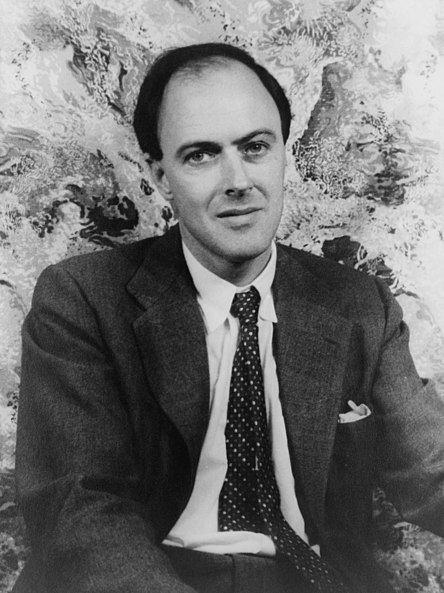
Dahl was probably the first favorite I had on this list. I had an absolute mania for him when I was a kid, but then, who didn't? While he had a reputation for being a fantastic liar, that bad habit seemed to have endowed him with a boundless imagination. His short stories for adults are great, too, and criminally under-read. Plus, did you know he was a spy for Great Britain after his stint in the RAF? And coordinated the invention of a new kind of cerebral shunt? How cool is that? Unfortunately, his well-established antisemitism does a lot to tarnish what would otherwise be a beloved reputation.
2. Agatha Christie
If you were evaluating "favorite" in terms of "number of books owned," Dame Agatha would probably be the best-qualified author in my library. I read Murder on the Orient Express in middle school, and it blew my mind in the way that only things you read as a young person blow your mind. I went through a phase that, while it's cooled off, has never really left me. Even before I found Christie, I had been a pint-sized mystery buff. The Boxcar Children was one of my favorite series, as were the Encyclopedia Brown and Nancy Drew books. While I have fond memories of both of those today, by the time I was a preteen I felt that I had outgrown them. Christie was my introduction to more sophisticated mysteries on a grown-up level. Once I'm done with school and my TIME Top 100 goals, I might make finishing Christie's collected works my next book goal. Because I deserve it.
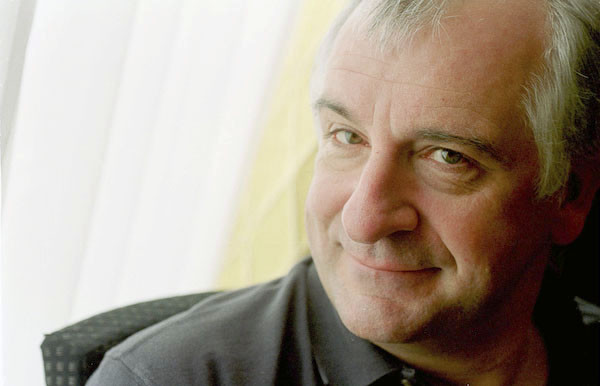
On the other hand, if you were evaluating "favorite" in terms of "percentage of complete works owned," Douglas Adams would probably take the cake. Again, like Dame Christie, I discovered Adams in middle school and everything about his writing hits that childhood nostalgia sweet spot, even though it's still entertaining and engaging as an adult. I read a lot of other, more serious science fiction, too, but The Hitchhiker's Guide to the Galaxy remains one of my favorites in the SF genre.
4. J. D. Salinger
Is any former disaffected and cynical teenager's library complete without Salinger? Probably not. It took me a couple of tries to get into Catcher in the Rye, but when I did it was like someone was talking right to me. Someone knew me, and it wasn't my best friend or even another teenager, but an adult. I don't think I can possibly overstate how much Catcher affected me; how much hope it gave me that it was possible for a grown-ass adult to relate to me and not treat me either like an idiot or an underling. Out of everything I ever read in high school, the grand triumverate of life changers would be Salinger, Thoreau (whom I love but am not including here because I've only read Walden), and Dostoyevsky. Today my Salinger collection is pretty much complete, including the leaked Three Stories(not to be confused with the recent publication, Three Early Stories, from Devault-Graves).
Every once in a while some YA or teen release would come out with high praise and comparisons to to Catcher specifically or Salinger generally (among others, I recall Arthur Nersesian's The Fuck-Up and Steven Chobsky's The Perks of Being a Wallflower). I gave them a shot but none of them had that same magic.
In fact, I loved Catcher so much that I'm afraid to go back and re-read it. I'm not a teenager anymore, and what teenage me found so engaging and compelling might make grown-up me roll my eyes. I'd rather keep my memory a happy one. I'll read anything else, absolutely, but Catcher stays untouched.
5. Fyodor Dostoyevsky
Speaking of my grand triumvirate: Dostoyevsky. I don't know what else there is to say. His name and reputation speak for themselves at this point, don't they? In the same someday where I finish all of Dame Christie's novels, I'm going to brush up on my Russian and read Dostoyevsky's original words.
First of all, a moment of silence for a soul gone too soon.
With that said, Wallace has been co-opted by hipsters in a such a way that I wonder if I'm not actually a closeted or accidental hipster. I've already got the glasses, after all. But no matter. Infinite Jest was one of the most mind-bending novels I've ever read. His essays are equally complex, memorable, and thought-provoking.
In fact, you may not even realize that you already know a Wallace essay: his "This is Not Water" commencement speech at Kenyon College. I see quotes from it all over the Internet, even including a very glossy, high-quality video.
I suppose I also feel a special kinship with Wallace because we were both philosophy and creative writing double majors and anyone who inhabits that particular Venn diagram overlap is like an instant friend for me.
I could probably go on, but I think six is a good number. As always, I'm a bit disheartened to see how easy it is for lists like these to be tilted in favor of white men. Hopefully attitudes and circumstances in the coming years will make it easier for bloggers to hit gender and racial parity without even thinking about it.
Who are your favorite authors? And don't forget to share (and donate!) to the Blogger Book Drive!
Read Play Blog is a meme about video games and books, posted every 16th of the month. Bloggers are encouraged to answer a discussion question, and recommend a video game that is similar to a book they liked. Hosted by Happy Indulgence Books and Read Me Away.
What Game Character Do You Relate To The Most?
Honestly, as a fat female bookworm, how many characters like yourself are you going to see in video games? Even putting the question of appearances aside (since video game women are, as I think Ben "Yahtzee" Croshaw put it, "benignly attractive" at their worst), I'm not a particular daring or adventurous person (from my own perspective). I'm not out to find lost archaeological treasures like Lara Croft, nor am I as innovative and clever as Chell is (though, to be fair, that is more or less by virtue of being controlled by you, the player). As I've talked about in a few older 5 Fandom Fridayquestions, the characters I relate to tend to be snarky outside observers rather than adventurous go-getters.
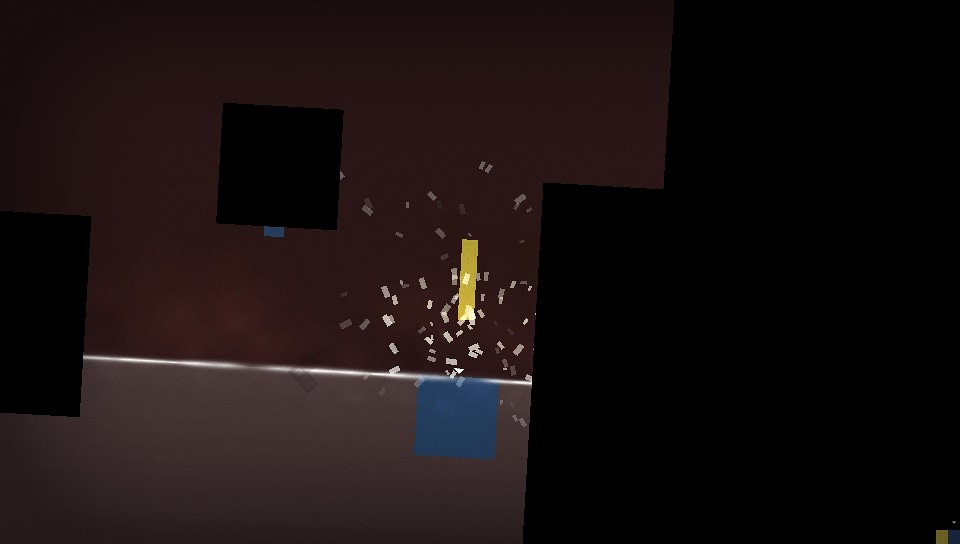
In other words, I had to think about this question for a while. Eventually I settled on an answer that felt just right: Claire from Thomas Was Alone.
Claire is the largest and clunkiest of the little AI shapes; as a result she feels pretty useless and unsure of herself. This is a feeling I was well acquainted with after basically every gym class. I was the stereotypically unathletic, klutzy fat kid who couldn't run, jump, or throw as well as everyone else. Thankfully my high school gym teacher was the kind of person who was sensitive to the plight of the fat kid; she never had students pick their own teams, and much of our gym class was spent in our actual gym (like, with treadmills and bikes and weight machines) so that we could work on our own individual fitness as much or as little as we wanted to instead of always suffering the indignities of team sports.
But then Claire discovers that she can swim and her whole world changes! Since she's a bit of a comic book geek to begin with, Claire begins to see herself as Super Claire, a good and caring friend who will help those around her with her special gift of water immunity. My own version of swimming was academics: like Claire and the water, knowing that I had other gifts helped me deal with my own clunky awkwardness. (Though, incidentally, swimming is one of my favorite summertime activities.) I am also just as protective of my friends as Claire is.
Recommendation (and Currently Playing)
Tropico, from PopTop software and MacSoft
JV just bought the Tropico collection on Steam and it's basically my childhood all over again. (Or, well, my teenage years, I guess; I was 15 when the first Tropico came out.)I haven't tried any of the others, though I hear 3 and 4 are basically the same game with just better graphics, cars, and a much-needed quick build option, but I'm fine with just playing the first forever and ever. Even though it's been successful enough for 4 sequels now, I never hear people talk about it. Why is that? Did everyone just forget about it? Am I hanging out in the wrong parts of the Internet? I'm glad the title is still robust and successful, at any rate.
As for a book to go along with it, Salman Rushdie's The Jaguar Smile seems like a good fit. Or, if you'd prefer ficton instead of a travelogue and political commentary, Flight of the Cat by Abel Prieto.







.jpg)


.jpg)