Monday, October 12, 2015

Newly Listed: Black and Blue Wrap Pi Bracelet

Another Monday, another new listing in the Kokoba shop!

I had a relaxing day to myself, like most Mondays I had up until recently, and ended up going to the library for Alex Garland's The Beach. It's not a novel entirely suited to my tastes but one of my English tutees is reading it for school, so I thought I'd read it, too. I had a hard time believing him because I was under the impression that it was full of drugs and sex and gore, and my American expectations about what's appropriate for school assignments were ~~shocked. (I got over it, though!) Even though the book isn't to my taste (for reasons I'll go into later), I did blow a few hours reading it today and got over 200 pages in. Way more drugs than I was expecting, but not really as much sex or gore. I plan to finish it before I see this tutee again on Saturday, partially to anticipate any language/cultural questions and partially just to mess with him.

Needless to say I didn't get around to updating the blog or Etsy until much later than I normally do. I guess not having my usual Monday tutoring completely ruins my sense of time.

This is a piece I've had laying around for a while, but didn't list until recently. Not a color combination I usually go for in my wardrobe, but I think the look in this one is quite dramatic!

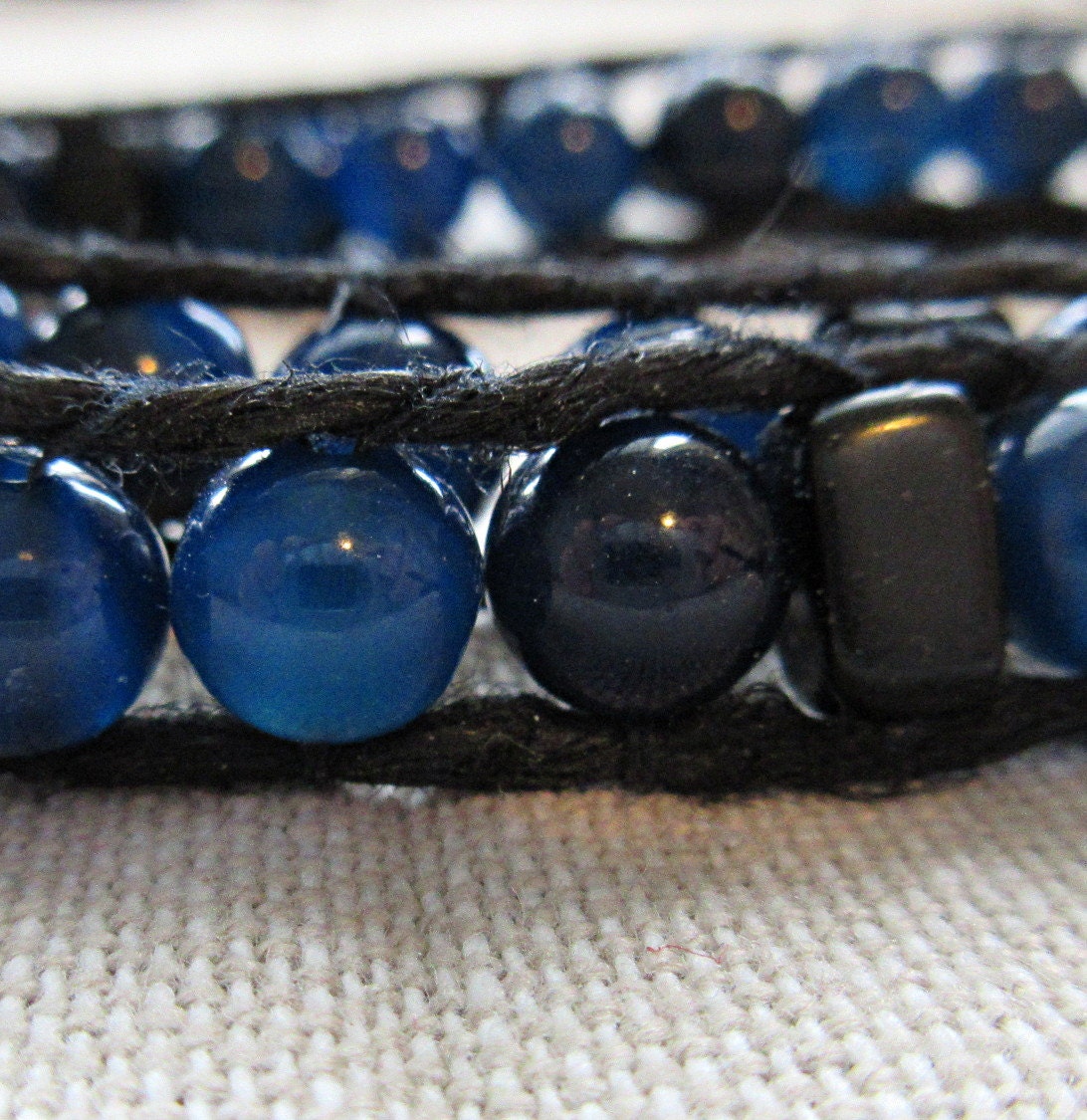
The latest jewelry from Kokoba: black and blue wrap bracelet in twine and agate, with pi.
Black and blue wrapped pi bracelet
The dyed blue agate looks very bright here, but in typical light (and against the skin) it's more navy-colored, or even black.

I really hit a wrap bracelet craze earlier this year. Even though it's died down a bit, wrap bracelets are still something I like on style level as well as a craft level.


The round, dark blue beads spell out the digits of pi, while the black rectangular beads act as spacers. The blue beads are dyed agate; the black beads are some kind of dyed/reconstituted something or other.

This is the only one I have left in my inventory. Every other one I've made has been sold, either as private gift purchases or as part of my latest order for The Da Vinci Science Center. It always breaks my heart a little to sell them, because they end up becoming part of my wardrobe. (Of course I test wear things! Besides, not wearing your own jewelry is a missed advertising opportunity.) But with the heartbreak comes a bit of satisfaction: at least I'm making something that people want to buy!

I've been too busy to sit down and make any recently (they do require a significant time and patience investment, both of which have been in short supply recently), but once NaNoWriMo season winds down I hope to crank out a few more. Maybe even one to keep for myself. ;)

If you want to break my heart a little bit, you can take this piece of math jewelry home yourself. Don't forget to nose around Twitter for some great #sciart finds. I RT'd my favorites but there are just so many!

Saturday, October 10, 2015

Friday Five on Saturday: 5 Favorite (Fictional) Teachers

Image courtesy Katelyn Jade


As a teacher (of sorts) myself, I am basically morally obligated to answer this one. I'm also really, really, excited to answer it, because I think teachers are immensely underrated and undervalued in American culture. Sure, everyone loves Dead Poets Society but then we also joke about how teachers are glorified babysitters who only work 9 months out of the year. Um, excuse me?

My list includes real-life teachers alongside fictional ones, just because.

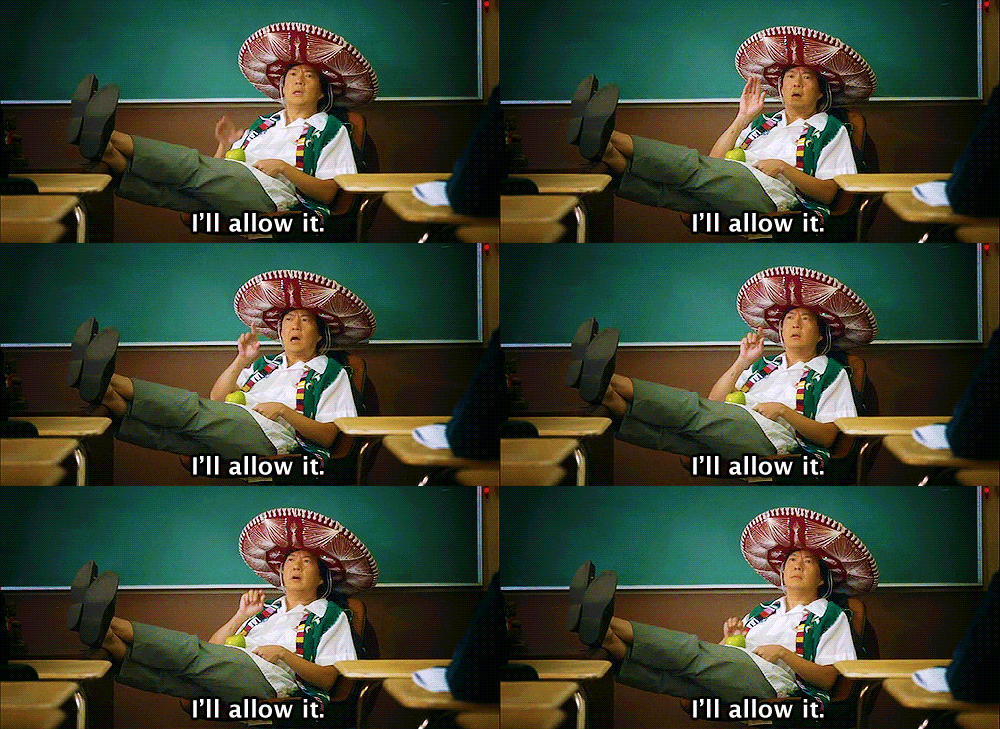
5. Senor Chang (Community) (season 1, mostly)


I mean, he's Chang. His character took some bizarre directions—I guess that's what happens when a bunch of people work together on a story—and sometimes it was okay and sometimes it wasn't. Season 1 despotic teacher Chang is where it's at, though I do like the storyline he gets in the Karate Kid theatrical adaptation episode.

I allowed myself one silly answer, because a little levity never hurt, but the rest of these answers really speak to what I admire in teachers (and hope to be myself, one day).


4. Ma Yeo-jin (Majin) (The Queen's Classroom)

Courtesy Wikimedia and iOK Media.


MAJIN IS THE BAMFEST TEACHER CHARACTER TO HAVE EVER BEEN WRITTEN. A lot of favorite teacher characters are theatrical, over-the-top ~*~performers~*~ and while that's great, you get the impression that maybe some of them should have been actors instead of teachers.

BUT MAJIN.

Majin devotes herself to the betterment of her students to an almost unprecedented level. Part of the appeal of teaching (for me, and apparently for a lot of the OTT teacher characters) is being able to forge a connection with students and be their friend and mentor and, once in a while, have fun with them.

MAJIN IS TOO GOOD FOR THAT. She started out as that teacher, apparently, but realized that what was the best for her students wasn't to be their friend, but to teach them to be friends for each other. This lesson, unfortunately for Majin, comes at the cost of her ever being able to be their friend. She fights for them and champions for them in exhausting, unimaginable ways outside of the classroom, but in the classroom she resists every urge or temptation to be funny, to be entertaining, to be likable. Instead she engages in a year-long Socratic dialogue with them, leading them to some heavy life truths by forcing them to question their environment, their values, and even her own authority.

I could never do that.


3. Mrs. B


I took piano lessons for about ten years, from 7 to 17, and Mrs. B was my teacher for 8 or 9 of them. I had a student of hers before I started with her, and supposedly I was the catalyst for some kind of feud or fallout between them?

HUMBLEBRAG TIME:

(My first teacher was still in high school when she started giving lessons, and Mrs. B instructed her to refer any clear talents up the ladder to Mrs. B herself, as she was a professional with a proper music education background and years of experience and so on—if a sucky kid gets bad instruction, it's no loss, but she wanted any potential talent to have experienced training from the get-go. As it turned out, I was pretty good! I'll never know how good, for reasons I'll get into later, but good enough that Mrs. B could tell by my first recital and demanded to know what the hell, man? My then-teacher said something about Lawyer Mom being the church organist and helping me(???) or making me practice a whole lot or whatever, but my second recital rolled around 6 months later and Mrs. B had it all sussed and flipped her lid at my then-teacher and, if I'm recalling this story correctly, they fell apart permanently as a result.

I knew none of this until years later. I stopped lessons with my first teacher because she was leaving for college; my parents offered me the choice of another neighbor or my first neighbor's teacher (Mrs. B). I'm surprised they let an 8-year-old make that kind of decision? But I said that I thought it would at least be more consistent to have my teacher's teacher than a completely new track. In retrospect, that decision was a life-changer.)

Like my other favorite real-life teachers, Mrs. B had standards, and I'm ashamed to say that I was a lazy piece of crap who failed to meet almost all of them. I got by for years with the scantest amount of practice because I was a halfway decent sight-reader (meaning: I could play things up to a certain difficulty fairly well on the first try) and even though she tried to have quite a few Come to Jesus moments with me, the message never sank in. (If someone had told me that Malcolm Gladwell tidbit about 10,000 hours I might have been a less lazy piece of crap. Who knows.) We won't even discuss my disastrous senior recital. :(

To a small extent, I can also pinpoint some of the problems I had on my first teacher: she did not (that I recall) instruct or even recommend scales, which are a vital piece of learning to play an instrument well. I also had a tendency to keep my thumbs on middle C no matter what in early songs. I realize this is a popular way to introduce kids to the keyboard but it's not good pedagogy. Otherwise you end up like me, learning to contort your hand(s) to keep that thumb on C instead of fluid, natural fingering.

But that's passing the buck. I could have gotten over that small handicap if I had given more of a shit in middle and high school. I coulda been a contendah! But I didn't, and now I regret it.

Sorry, Mrs. B.


2. Ms. R-B


I have a lot of teachers from kindergarten up until senior year I could put on this list, but it would more or less be an exercise in injustice. My school district, which has its own set of problems (like the football coach/high school principal...imagine that combination if you will), was at least blessed with a lot of really fantastic and dedicated teachers while I was there (and that still seems to be the case today). I don't have enough room here to thank all of them, but if you were a teacher of mine at any point: thank you. At one point or another I was probably a sullen and defiant piece of shit to you, and I'm sorry for that. I was a kid/preteen/teenager, which isn't much of an excuse, but so it is.

However, there is one teacher I single out every time when it comes to teachers, and that is my 10th grade/AP Language and Composition/Creative Writing teacher, Ms. R-B. Out of a school full of amazing teachers, she was my favorite.

I think sometimes when you're a teacher, you get a little jaded and you lower your expectations out of students because it's easier than trying to keep pushing that rock uphill. But R-B, despite having been a teacher for many years before I had her, never gave up on that Sisyphean task, not until she retired. That meant that most everyone else groaned and thought of her as "the strict" teacher—she wouldn't have won any popularity contests among the student body—but it also meant that you learned a lot from her. At least, you did if you paid even the slightest bit of attention and gave the barest of shits.

I kick ass at writing essays. You know why? Because she taught AP Language and Composition and put us through essay bootcamp right from the first week. We churned out essays on a weekly/bi-weekly basis (my memory is a bit fuzzy). I wrote more in that class than I ever did in any other class I ever took; by the time I got to college, I was an essay-writing machine and could handle anything the 100- and 200-level courses threw at me; at the 300 level and above it became a challenge, but always a challenge I was confident I could meet. (I also got a 5 on the AP Language and Composition test and got to skip Freshman Composition. Natch.) None of that wouldn't have happened without essay boot camp.

Not only did you write a lot, but R-B expected everyone in her class to write well. If you phoned it in on a paper, she wouldn't be afraid to give you the grade you deserved. I think that's what soured most of the student body on her: you could definitely argue that grade inflation was something of a thing in my district, and I think it burned a lot of egos to get a C or worse.

I admire her ability to stick with her career for so long (she taught for well over the average 7-year career span of most teachers today, and at the same school to boot) in the face of apathetic and snotty students. I would not have the patience for that; in fact, my classes with her were the ones that dissuaded me from becoming an English Literature teacher—not because her classes were horrible (they were great), but because I realized they were exactly how I would teach a class, and if it led to the kind of withering apathy and disrespect I saw in my peers, then I wouldn't be able to hack it.

Incidentally, out of all of the people from high school I ever really connected with, and still talk to today, almost all of us took AP Language and Composition with R-B and loved the hell out of that class (and her). Even as shitty, self-absorbed teenagers, we could tell that she gave a shit.

I actually ran into her a week before I left the country forever and it was the most gratifying and wonderful thing that could have happened while I was out running errands. We even trade letters periodically, and Christmas cards.


1. Teacher Dad


I don't mention Teacher Dad as much as Lawyer Mom here, but he is of course my favorite teacher, ever, by virtue of being my dad.

I am who I am in large part because of the parents I had, of course. Both of them fostered my curiosity as a child and never patronized me or my brother in their explanations of things or answers to questions, and both of them worked hard and made sacrifices to give their children a comfortable life. Lawyer Mom is the one responsible for my love of reading and for whatever sense of compassion and empathy I can make claim to (some days it isn't much), while Teacher Dad is responsible for my persistence (some might say stubbornness), my sarcasm, and my...backbone? courage? cynicism?

We spent a lot of my teenage years being angry and dysfunctional and yelling at each other, but now we're grown-ups I'm a grown-up so it doesn't happen as often. As it turns out, fighting with your teenager, even a lot, actually teaches them to resist peer pressure. But I wouldn't be surprised if it also encourages just better critical thinking and a healthy skepticism regarding authority. Teacher Dad also always held me and my brother to high standards when it came to academic performance (white people do Tiger Parenting too, guys) and just whatever we did in general. It was okay to suck and fail sometimes, just as long as you did the best you could. (High standards also seems to be a theme throughout this Friday 5. Well then.)

Honorable mention:

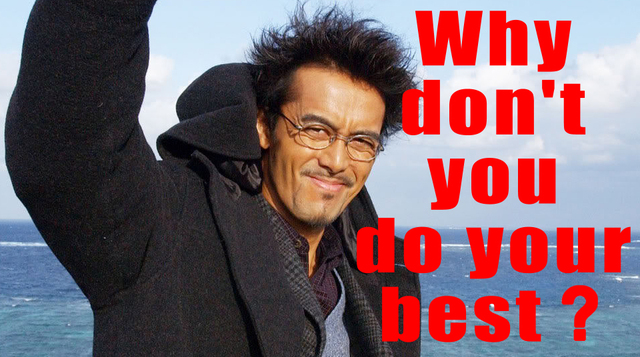
Ueda Jiro (Trick)


He is technically a physics professor, although we never see him do any teaching in the show (which is why he gets an honorable mention instead of a place in the list proper). Even if he's often a jerk, you can tell that he really cares about Yamada. Hiroshi Abe is also just a lot of fun to watch. He has a great deadpan comic presence.

Who are some of your favorite teachers, real or otherwise?

Thursday, October 8, 2015

Trek Thursday: The Trouble With Tribbles

#3:  The Trouble With Tribbles 


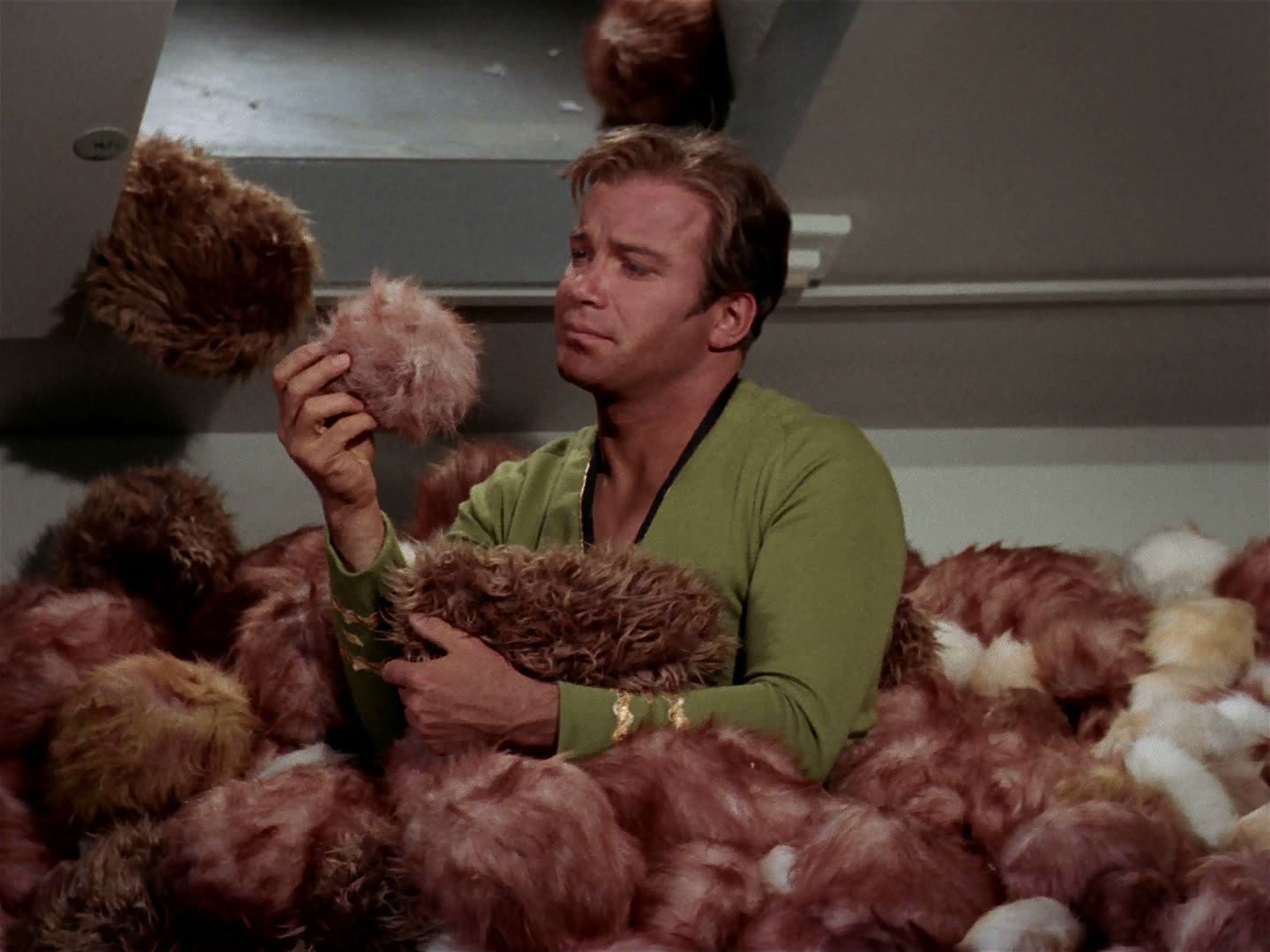
In case you forgot: The Enterprise is tasked with guarding a store of grain on a space station from Klingon saboteurs, much to Kirk's frustration. The overly-theatrical but still charming trader Cyrano Jones brings the fuzzball Tribbles on board the station and they end up reproducing at an astronomical rate, but they serve their purpose in uncovering a Klingon mole and saving the nearby planet from poisoned grain.

It's goofy, but it's a classic. Spock gets to deadpan snark EVERYTHING, Scotty punches a Klingon for insulting the Enterprise, and Stanley Adams is loads of fun to watch as Cyrano Jones. It's too bad Jones never made another appearance in the series, as he's just as much goofy Summerstock community theater fun to watch as Mudd.

I may have permanently ruined this episode for myself by reading up on Stanley Adams and learning that he died of a self-inflicted gunshot wound. I may have now ruined the episode for you as well. I'm sorry.

Back to the episode itself, though. Kirk is kind of needlessly dickish to a Federation official just trying to do his job. Whatever's supposed to be funny about it just isn't, at least for me. But then, if he weren't being a dick, he wouldn't be Kirk.

The overall silliness, while refreshing and fun, doesn't really have any emotionally satisfying "right in the feels" moments or interesting philosophical quandaries, making it mostly fluff and filler. Well-done fluff and filler, to be sure, but fluff and filler nonetheless. Nonetheless, it's a good palette cleanser. Some days you have moods that only Tribbles can fix.

Wednesday, October 7, 2015

What I'm Playing: Hexcells

This one is just a mellow little puzzler. Sorry, hardcore gamers, but I guess I'm a ~filthy casual~ at heart.

There are three editions of Hexcells: Hexcells, Hexcells Plus, and Hexcelles Infinite. They're all developed by Matthew Brown, who has a couple of other games out now that also look cool.

He describes Hexcells as an "ambient puzzle game" and I'd say that's a pretty apt descriptor.

Hexcells screenshot courtesy Matthew Brown
Everything about the game is clean, simple, and calming, and that is the game's strength. Games can do a lot and be a lot these days; to be simple (truly simple, not scaled-down-for-mobile-app) is a bold move.

The game play of Hexcells is, unsurprisingly, like Minesweeper with hexagonal cells. There are some twists and turns thrown in (as you can see above, sometimes you get hints about how many "mines" in a specific column rather than in the surrounding tiles), but it's still very straightforward.

For extra stress-relief, zone-out experience, there is the soundtrack. On its own it's great chill-out music, but the creative little touch is the inclusion of the game play in the music. Every time you either find a "bomb" or clear out a cell, a subtle audio cue plays—in perfect synchronization with the soundtrack. There's something about uncovering the blue cells or destroying the yellow ones to play with the soundtrack that makes things even more satisfying. Headphones are a must.

As for the puzzles themselves, they're well designed. They might err on the side of too easy, but not that often. (Of course, I say this without having even cleared Hexcells yet.) I've had a couple where I had to sit and think for a while, and a few where I had to ask JV to come over to see if I had missed anything. Funnily enough, sometimes the act of looking away from the screen to talk to him was enough to refresh my brain: I'd look back and see the critical bit I had missed.

You can get the whole set for around $10 US on Steam. If you're not sure it'll be your thing, you can just get the first for $3 US.

Monday, October 5, 2015

Newly Listed: Maille DNA Bracelets

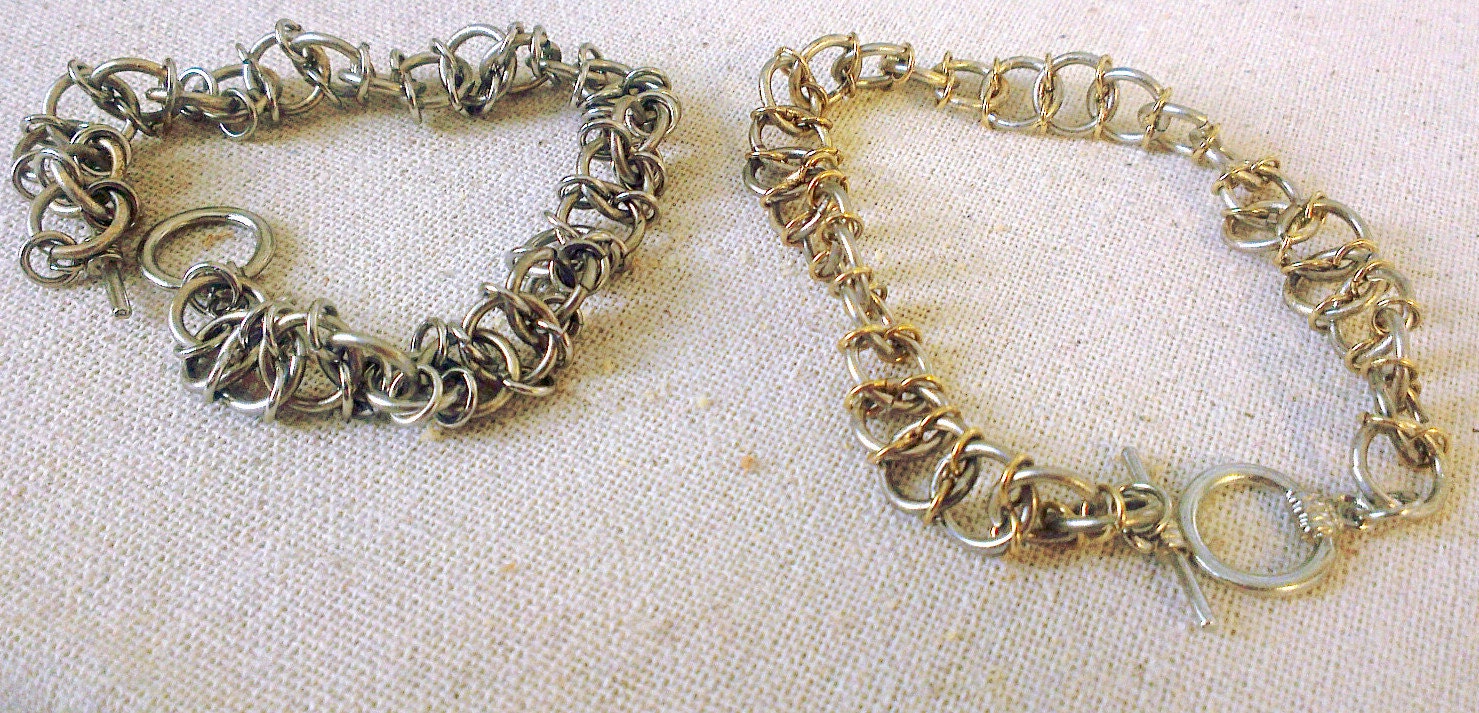
This week we're taking a break from mathematics and delving into biology with these chainmaille bracelets. This spiral weave, called This Is Not Food, resembles the double helix structure of a piece of DNA.

A science-themed piece of jewelry, like this DNA-inspired maille bracelet, would be a great gift for biologists and biology teachers.
DNA maille bracelets
I love beads, I really do, but I also recognize that diversification is important. Chainmaille has piqued my interest for some time now (probably because of my partners in craft is a seasoned maille expert), but I couldn't figure out a way to make it work for me until I saw a 4-in-1 spiral weave.

An example of a 4-in-1 spiral weave from Keitilen on DevArt
The only problem with this weave is that you need to "lock" it in place, otherwise it twists into Jens Pind Linkage, which is (IMO) kind of ugly. There are a couple ways to do it: loop the twist onto itself, add small reinforcing rings to lock the weave, and (possibly, I'm not a maille expert yet so jury is still out on this) work with rings that have a very specific aspect ratio (AR) (which is to say, rings that have a specific relationship between the thickness of the metal and the diameter of their shape).

I wanted to work with the jump rings I already had, and I didn't want to add the reinforcements I saw because that often ruined the double helix shape. Eventually I found a weave called This Is Not Food, which still had a clean double helix outline but also naturally kept to a spiral form. If anything, it's even more more appropriate for DNA jewelry because you can think of the pairs of jump rings that keep the shape as DNA base pairs.

I did manage to figure out a way to do a regular 4-in-1 spiral bracelet. It came out really well, and is now sitting in the gift shop at the Da Vinci Center in Allentown, PA!

I got to get a picture of it before I had to sell him. This reminds me: I need to order more jump rings!
Otherwise, you can visit my earlier DNA projects in the Kokoba Etsy shop, as always. And cheer yourself up this Monday by browsing some spectacular #SciArt on Twitter!

Thursday, October 1, 2015

Trek Thursday: Balance of Terror

#4:  Balance of Terror 


In case you forgot: Federation colonies along OMG THE NEUTRAL ZONE have been attacked by Romulans. Kirk gives chase and ultimately destroys the ship. There's also some irrelevant nonsense about a wedding and some slightly less irrelevant nonsense about space racism.

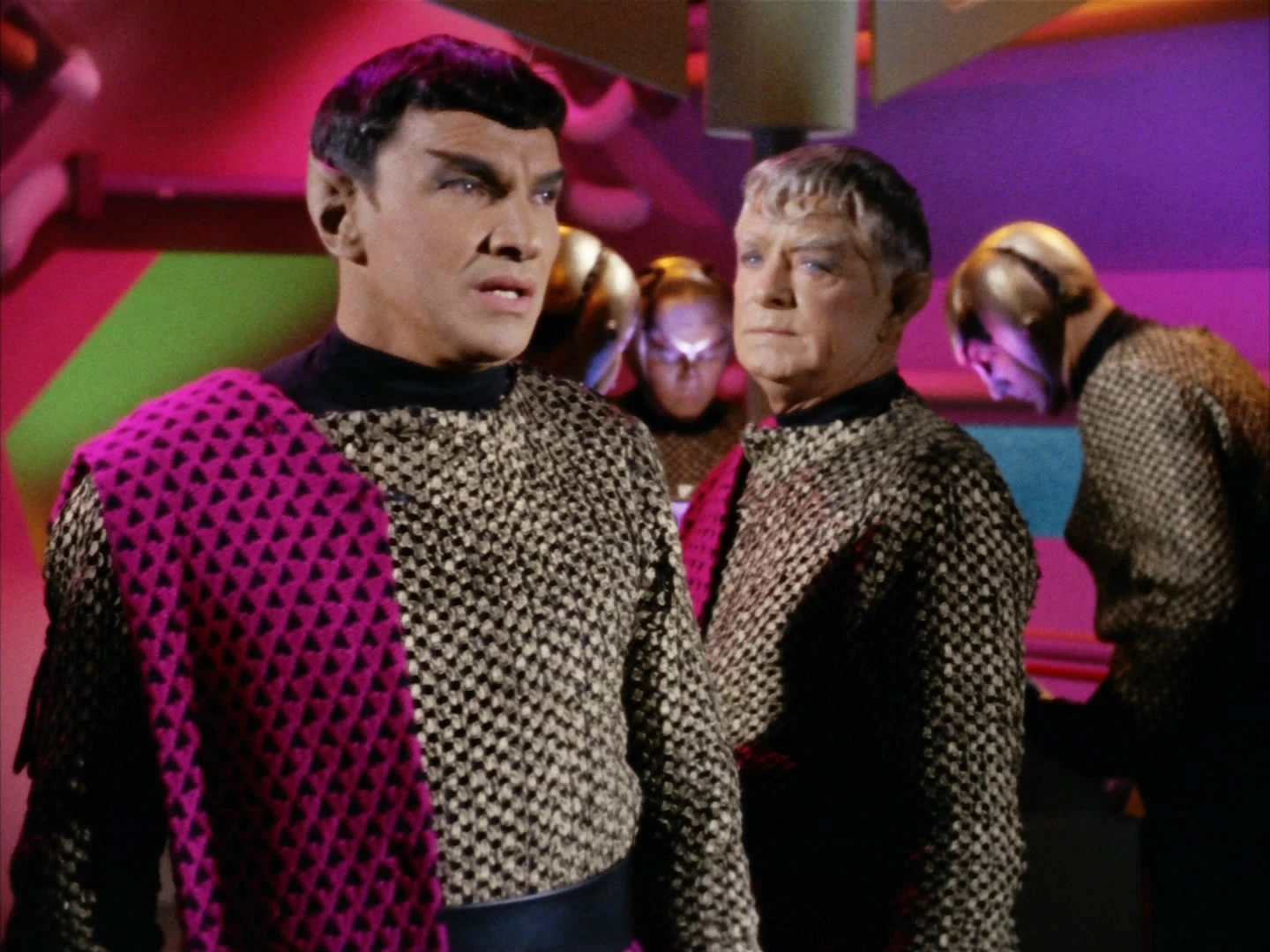
It's the Romulans! And oh snap, they sure do look a lot like Vulcans. There must have been some level of shock and excitement at the reveal back when the episode first aired, because the mythos of TOS had yet to be established. As far as the audience knew, Spock really could be a Romulan spy. It's hard for viewers today to experience that same visceral shock—everyone knows Spock is a good guy—but the idea is cool enough that I'll still count it as a point in favor. We also have the first appearance of Mark Lenard, aka Sarek, as the Romulan commander. He is one of the highlights of the episode, and though he is totally a scumbag for destroying Federation colonies without provocation, you still feel bad when he opts to go down with his ship.

Again, like "The Corbomite Maneuver," this is an episode for Kirk to be an awesome captain of a starship, not a bull-headed Casanova who gets involved with planetary intrigue. Episodes that rely on the Enterprise being under the threat of death and destruction for the dramatic weight aren't as fun to watch, for me (of course they're going to survive!); episodes where you wonder how they're going to escape, rather than if they're going to escape, are where it's at. "Balance of Terror" is a great example of that.

Sometimes TOS forgets that it's in space, and that it can maneuver in all three dimensions. Surely the Enterprise could have switched to a course perpendicular to the trajectory of the Romulans' super plasma beam? An understandable mistake since the episode was inspired by submarine movies, I guess, but a little throwaway line about how the plasma beam is heat-seeking or locked on to the Enterprise or whatever would have been enough.

Why the wedding? Why? It's not like this episode needed any padding. At least the space racism with Stiles and Spock serves some sort of moralizing, Aesop-y purpose.

Wednesday, September 30, 2015

What I Read: The Last Word by Hanif Kureishi


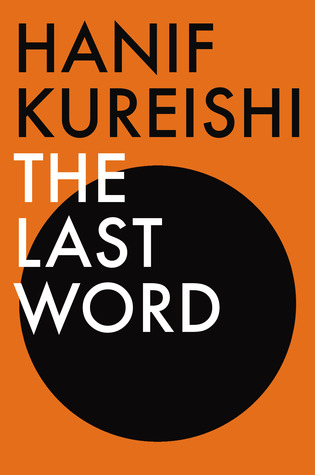
Courtesy Goodreads
I blazed through The Last Word in almost no time at all. Maybe like three proper sit-down reading sessions? Honestly, if I had the time, it could have been a member of the one-sit read club, but given my current schedule it was just not to be.

Hanif Kureishi is not on the TIME Top 100 Novels of the 20th century list; he is an addition that I made because I wanted more diversity in the list. Someone in a 101 in 1001 group I'm in suggested The Buddha of Suburbia and I added that, then realized the only copy in the entire Stockholm library system was out, and then overdue, and then LONG overdue. But browsing the world literature section at Kulturhuset, I saw that they had plenty of other Kureishi books. The Last Word seemed the most interesting, and so far as I'm concerned it counts towards my list.

The Last Word was easy to read, and surface-level interesting. It focuses on an up-and-coming writer who is working a biography of an elderly British Indian author (Mamoon) but having a difficult time doing so—his publisher wants lurid sexy details, Mamoon's wife wants him painted in the best possible light, etc. The surface-level interest is: will Harry (up-and-coming writer) finish the biography or not? How will it turn out?

The language is light and easy; even though the dialogue is comically overwrought, it flows, and it does well exactly what John Green does poorly (HEY-OH): managing to be pretentious and heavy-handed without being annoying. Maybe that worked because there was an overall comic, even farcical tone about the whole thing, whereas The Fault in Our Stars was trying so hard to be serious and gut-wrenching.

Speaking of farce, the style of humor makes The Last Word feel anachronistic, or like a throwback. There are a handful of contemporary references to things like cell phones and video games, but you could take them all out and, with only a very minor rewrite for one scene (Harry gets his girlfriend to record Mamoon admitting to some scandalous things), the story would remain unchanged. The Last Word shares more in common with Lucky Jim than, say, White Teeth, and that felt weird for a book that was published only last year.

Because the story is largely farcical, the characters are all stock, trope, and stereotype instead of detailed or well-developed. We have: a writer in the decline of his greatness who also happens to be a grumpy old man (Mamoon); a hysterical wife hungry for her youth and "the good life"; the vapid girlfriend who can't stop buying new clothes; the drug- and pill-addled manic editor/boss who is successful despite (or because of?) a serious substance abuse problem to whose whims Harry must always cater, and Harry the ladykiller.

As the book continued I thought, "Is this about V. S. Naipaul? Is it? I really want it to be." Because everyone being awful includes, of course, Mamoon. As things pieced together (overbearing dad, violence and grossness towards women, rightwing douchery), I thought, "This has to be Naipaul!" I'm one of many who have noticed the connection, and this pleases me, because Naipaul is a shit writer and an even shittier person. The more people taking the piss out of him, the better.

It is also an extremely British book. Unsurprising, since Kureishi is British, born and raised, but there's nothing about the whole British Indian experience. Of course, Kureishi is allowed to write about whatever he likes, instead of what I expect/want out of writers of color; moreover, he seems to have done the standard "minority experience" novel with The Buddha of Suburbia, anyway, so it's still staying on my list.

Otherwise, The Last Word is not an amazing or life-shattering read. I guess it's impressive that despite not liking any of the characters I still wanted to know how things turned out for them, but maybe that's a result of the headspace I'm in at the moment: thirsty to read anything in English. This is my first English read since July. The rest have been Swedish literature, but once in a while you need something in your own native language to take the edge off. (At least until your Swedish gets better.)