Friday, January 29, 2016

Five Fandom Friday: 5 Favorite Late to the Game TV Shows

Image courtesy Katelyn Jade
This week's 5 Fandom Friday is going to be a stretch for me because I kind of really hate television, hah. But let's give it a whirl!


1. Star Trek


Yes, despite my undying though nonetheless critically attentive love for Star Trek: TOS, I missed out on it until my mid-20s. You can't blame me; I never caught it on syndication and my parents somehow didn't love it enough to own any copies on VHS or DVD. It took the J. J. Abrams reboot for me to think, "Hm, I should probably actually watch the original series." By that point, I knew all the jokes and tropes (Kirk's sluttiness, "live long and prosper," the fate of most redshirts) just through cultural osmosis, so it had never felt super urgent to watch.

Next up is The Next Generation, but it will probably be a while before we finish that one, for reasons similar to the next  item on the list.


2. Red Dwarf


This is one of JV's favorites, so it was only a matter of time before we sat down and watched it together. Unfortunately, since we were streaming it from less-than-reputable online sources, sometimes the stream quality sucked, and then it happened so often that we put aside the series in favor of something else. When we finally thought we should maybe get around to finishing the series, we realized we had no idea what season or episode we were on. We were quite far in (far enough that Krachanski was now part of the crew), too. We better get it sorted soon, though, because two new seasons are on their way!

I feel like one day I'll probably unload a whole critical analysis on the series, but today is not that day.


3. Q.I.


QI first aired in 2003 but I knew nothing of its existence until 2009? 2010? There was a glorious period when I had so! much! backlog! to catch up on, but that period of binge-watching is over and now I'm stuck waiting for new episodes just like everyone else. The UK has a real knack for great panel shows, but I think things may have reached a saturation point. In any case, much as I love Would I Lie To You? and 8 of 10 Cats (Does Countdown), Q.I. is forever the superior panel show (in my view). There was even a short-lived Swedish version of it, which was great fun for practicing my listening, but after season 4 (series "D"), SVT didn't want to buy any more episodes and neither did anyone else. I'm pretty sure my Swedish listening comprehension has suffered as a result.


4. Jonathan Creek


Speaking of Q.I., this list wouldn't be complete with Jonathan Creek! If you are hurting for some tricky whodunnits solved by a short-tempered savant and can't wait for more Sherlock (or, like me, had to go through a messy break-up with Sherlock because Moffat is garbage), this might be the methadone treatment for your TV heroin addiction. This was a series we picked up to watch in between new episodes of Q.I. and I was mostly pleased with it, though the second pretty lady sidekick was a goddamn trainwreck. Alternatively, if you're already a fan of Jonathan Creek, you should check out Trick!


5. The I.T. Crowd


Are we noticing a pattern yet? I didn't even learn about this one until years after it had been canceled (though before the concluding special in 2013, which I don't think I've seen yet...!). Sorry British TV, somehow I'm really slow on the uptake on most of your good television. It's still a tragedy that there isn't more of this show. Four seasons with only six episodes each? That's essentially one season of TV. One! But we have so many wonderful reaction gifs to show for it...

What's some great TV you were late to the game for?

Wednesday, January 27, 2016

What I'm Reading: The Price of Salt

So with all of this Academy Awards buzz and #OscarsSoWhite buzz and everyone talking about media representation, it's fitting that my book club choice for February is The Price of Salt: the novel, later retitled Carol, that's the basis for Carol the movie, which is up for some awards.

I'm not usually so timely and relevant!


But The Price of Salt is definitely timely and relevant, which is weird considering that it's a positive lesbian romance published in 1953. How often do we say that someone is just a product of their time? That things were different back then? And look at this.

That being said, The Price of Salt was the result of author Patricia Highsmith's experience with psychotherapy as an attempt to learn to enjoy sex with her fiance after years of sexual relationships primarily with women. So maybe what needs to be applauded is not Highsmith's compassion for the plight of other people, but her bravery for choosing to write and publish something, especially something so personal, that would no doubt garner her scandal and negative prestige. (Of course, it was originally published under a pseudonym, no doubt for that reason.)

I had never read any Highsmith before, so her reputation as an author of suspense and thriller novels is unknown to me. (Yes, I haven't even seen Strangers on a Train.) The Price of Salt is a horse of an entirely different color: personal drama, maybe even bordering on the melodrama. But the language is light, precise, and airy; a stark contrast to the complex and meandering prose of January's Mrs. Dalloway. It's a snappy read that is coming along fairly quickly for me.

If you're like me, and missed Gay Fiction 101 in life, this is probably a great place to start. And you know that I'm all about reading the book and watching the movie. After you finish, you can consider Sir Ian McKellen's thoughts on the Oscars and diversity.

Tuesday, January 26, 2016

Talky Tuesday: Meeting People From THE INTERNET

If you're not following me on Twitter, then you missed my response to this tweet, which one of my friends (an Internet friend, natch) RT'd:

Which I also initially RT'd and then I got sucked down memory lane and ended up tweeting an abbreviated version of my Internet friends story, before realizing that it'd maybe be better on the blog. So welcome to a new regular-ish feature where y'all learn more about me than you needed or even wanted to know! At least until Twitter officially does away with the 144-character limit and I can opine into the void to my heart's content.

As a kid, I was definitely on the periphery. Even though I escaped being bullied (pure luck: there were kids who were much weirder than me; even though I was a fat smart girl, I knew how to play the game and keep my head down), I still orbited the social center of my growing-up from a fair distance.

It never bothered me much, because as an introvert I was perfectly content with just one or two good friends here and there. Daria was essentially my high school life—even when I participated in group things (and I did: orchestra, marching band, Reading Olympics, pit orchestra, debate team, trivia team), those groups never formed the core of my socializing. Most of the time, it was just me and my BFF (who joined me in orchestra, pit orchestra, and debate team).


But everyone, even introverts, can benefit from feeling like they belong to a cohesive group* and that's where the Internet stepped in for me.

I cannot mention Internet friendship without shouting out to the random group of friends I made, via an online play-by-post RP forum, on the opposite coast in the town of Eureka, CA. Things fizzled a bit after my Internet boyfriend (lolol) in the group dumped me and everyone went to college, but my West Coast Wander last year proved that there was still connection and friendship. In fact, I wouldn't have met up with the second group of Internet friends that would change my life in an even more profound way if it weren't for the first.

The second group I met on a message board for the now cringe-inducing Nickelodeon show Invader Zim, originally linked to me by one of my Eureka friends. After a slow, awkward start, I got to know a lot of the other members, and was invited to the first of an annual/biannual series of meetups that we dubbed MooseCon.

Now, I was 16 at the time, and this was when actual, honest-to-God socializing on the Internet came with warnings of STRANGER DANGER! An assigned reading I had for school at this point in my life was a memoir of one of the earliest Internet pedophile cases, called Katie.com. It was a book that felt selected for us teenagers as a DIRE WARNING from our CONCERNED  TEACHERS.


As an adult, I recognize that Tarbox went through a terrifying and traumatic experience, and I'm glad that she seems to have become a proper badass now, who climbs mountains and runs marathons.

But as a teenage girl, I hated the book for a couple of reasons: first, I thought from the title it was going to be a badass, competent hacker chick and was looking forward to reading about a teenage girl's experience within hackerdom. Then I read the summary and was immediately deflated: it was just Internet STRANGER DANGER. If I were more articulate then, I would have said something about perpetuating the narrative of teenage girl victimhood rather than agency, but I wasn't that articulate, so it just stewed.

Second: at this point in my life, I had plenty of friends online. They formed a group, a cohesive group, where I finally was accepted and belonged, instead of just piecemeal friends here and there. And my experience with it had not been full of shady-ass child molesters, but other teenagers (and their parents). We were all normal (well, relatively) and we were all each other's closest friends. Where was the memoir about that? About the power of Internet friendship? Nowhere to be seen.

SpyHollywood,com
Because the only time in my life where I've had the sort of group mutual-best-friendery like you see in Friends or Community hasn't been with high school or college classmates, or a sports team, or a club: it's been with my Internet tribe. The only thing to rival that communal belonging sense would be my coworkers at the cave, but that was after my formative high school years.

But even with all of the mass panic beginning to build over Internet predators (I had graduated by the time To Catch a Predator rolled around, but the famous New Yorker "on the Internet, nobody knows you're a dog" joke had been well cemented into the public consciousness), my parents were either unaware or were just super chill. I think this was because I initially met basically everyone in safe, public spaces with my parents in tow: first, a Eureka friend stopped by during an East Coast vacation with his mother, and my parents got to meet him. It was a year or two later that the first MooseCon happened, and again my parents were with me, and again they saw that everyone from the Internet was a teenager more or less just like their kid.

Flying to San Antonio (under the supervision of my mother) for the next MooseCon was no problem. Later trips alone to Montreal, New Orleans, Ithaca, and Buffalo were considered par for the course. They even allowed me to invite a whole bunch into our home during what Swedes call "the in-between days" (mellandagar; the time after Christmas but before New Year's) on multiple occasions. They were collectively known to my parents as "my friends from Con."

I neglected to mention any romantic attachments during this time, only because I found the idea of discussing any romantic attachments with my parents off-putting, even the ones I had formed in real life. But when the time came to visit my overseas Internet boyfriend for the first time, my parents were more or less chill. Also, I was 19, so I was basically an adult.

(This is how I met JV, by the way. If you've ever been wondering, since I've sideways implied that I moved to Sweden for him: he is my teenage Internet Boyfriend.)

Con happened annually for 10 years. Ten years. Today we're (mostly) all still friends and connected on Facebook**, but since we're adults with jobs/limited funds/limited vacation time, large Cons happen maybe every other year, with small meet-ups arranged between people interspersed here and there. You wouldn't be able to tell based on our Facebook interaction—there isn't much of it between everyone publicly. But you can tell by the occasional post in our secret Facebook group (the original board we used to post on has been borked for years now because of a MySQL error and no one's been able to get in contact with the owner to fix it, even though the fix is trivial) that we're all there for each other: when someone's having a rough time or needs advice, the post never goes for long without a comment or a response. Couches are always available for crashing, the odd care package turns up here and there, comfort is always given. I'm still in touch with more of my Con friends (both in terms of percentage and in terms of raw numbers) than I am with anyone I ever knew in high school (that number is essentially: 1). For me, they were high school. Or they were the ethereal vision of what high school could and should have been, if only we weren't all so far apart.

Esquire.com

So no, my parents actually never flipped their shit over me meeting people from the Internet, probably because they knew exactly who I was meeting. Nor were they fazed when I finally announced that I had an Internet boyfriend and asked if he could come visit over winter break. Whether they knew it or not, my parents rode the ~wave of the future~ with grace and sense. And now? Now I live in a foreign country with my boyfriend from the Internet (13th anniversary this April), and my family loves him and his family loves me.

Finally, I'd like to close with an incredibly apropos quote from Gibson's Pattern Recognition:

It is a way now, approximately, of being at home. The forum has become one of the most consistent places of her life, like a familiar cafe that exists somewhere outside geography and beyond time zones.


*This statement probably backed up by science but I can't be fucked to go and get you the studies right now, so for now consider it "just, like, my opinion, man."

**I won't lie: this was the Internet and we did manage to attract a few weirdos who were too weird even for us, which led to a few geek socializing fallacies, but it's more or less sorted today.

Monday, January 25, 2016

Newly Listed: Newtonian Constant of Gravitation in Australian Opal and Fancy Jasper

Things have been a little quiet around here lately. I have to admit: I'm caught up in some really fascinating new reading and also Fallout New Vegas. But I've kept my hands busy, too!

This physics sciart science bracelet, featuring the Newtonian constant of gravitation in genuine Australian opal and fancy jasper, would make a great science gift for nerds, physicists, and teachers.
Newtonian constant of gravitation in genuine Australian opal and fancy jasper


Like I've said earlier, I've started really digging into the depths of my bead stash to try and clear out as much as possible. The fancy jasper beads in this bracelet are an example of that. The opal, on the other hand, is a relatively new addition to the bead box. It was a pretty luxurious buy, so this is a piece where I've opted to use some of my sterling findings instead of just base metal. Yes, sometimes I get fancy!

This physics sciart science bracelet, featuring the Newtonian constant of gravitation in genuine Australian opal and fancy jasper, would make a great science gift for nerds, physicists, and teachers.


This would be a great treat for any science nerds you know with an October birthday, or just a passion for opal (or Australia!). Go on, indulge.

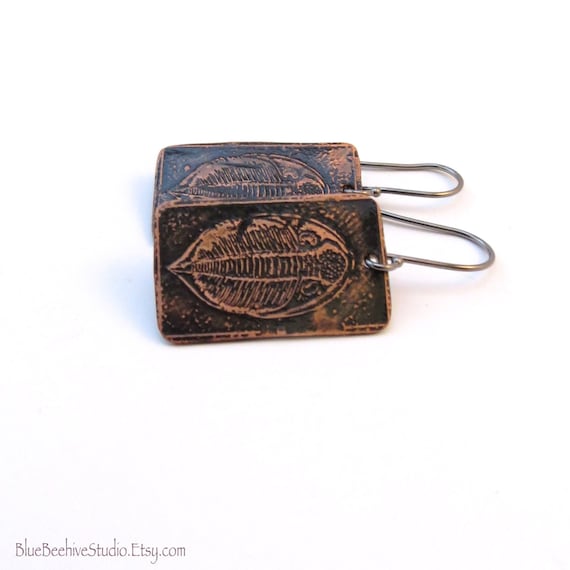
If you just feel like window shopping today, be sure to stop by The Blue Beehive. Despite being open since 2012, they only just now turned up in my latest sciart search on Etsy. They have a wonderful mix of sciart and just art, like these:

Etched copper trilobite earrings


and this:

Boho style single wrap bracelet

And as always, Twitter is chock full of sciart finds!


Wednesday, January 20, 2016

What I Read: Mrs. Dalloway


I originally read Mrs. Dalloway for my freshman year course on the history of the novel. That was ten years ago now -- well over my threshold for "reread material." Good news, because this was the selection for my Facebook book club! I also forgot I already featured this at the beginning of the month but I don't care. I took a lot of time to write these words, so I'm going to keep 'em!

That said, I also realized that I never touched on the first thing I read for this book club: We. It was somewhat obscure and bizarre Soviet dystopian sci-fi, so it's worth going into detail over it. But another day!

I will open with this: Mrs. Dalloway was definitely a contentious piece in our group. A lot of people ragequit it, and I can't blame them. Woolf's style can be rambling, difficult, and disjointed. But give the woman some credit: she was trying to fashion a whole new way of writing novels! So was James Joyce, and all due respect, but I think Dalloway ends up being the better novel.

So that was my first encounter with Dalloway: presented in the larger context of the evolution of the novel as a genre. It's really strange to think about, but we didn't always have novels. Sure, we had mythology, epics, and folk tales, but we didn't have much of a purely written tradition until around the 1600s. (In English, anyway.) People had to spend maybe a hundred and fifty years to figure out just what the hell a novel was or could be—the idea of  writing about a thing that happened to somebody one time was just a completely foreign concept. Not only that, but novels were long regarded as wastes of time at best (or gateway drugs into sinful debauchery and sloth) that were only suitable for....you guessed it, women.

Then we got the general gist of things in terms of structure and expectations, but they were on the whole quite rigid. The novel was, with a few notable exceptions, a very external thing. We understood characters from their actions, their words; if we were reading a journalistic or epistolary novel, there was a little more privileged insight into the narrator, but not much more than anyone else. I think this is why a lot of people find it hard to enjoy so many classics: novels today all offer an immediacy and intimacy with character, which makes them easier to read and makes them feel more real. By comparison, characters in Edwardian and Victorian novels can feel stiff and distant.

This is the mold that Woolf and her contemporaries were struggling against. Stream-of-consciousness was the Modernist tool for loosening up and enlivening their characters, for allowing the reader to get to know them the same way they would a person in real life.

Knowing that can maybe make you appreciate Woolf all the more, but it doesn't make it any easier to read. (For that, I would recommend reading some of the greats chronologically up to Mrs. Dalloway: Oroonoko, Robinson Crusoe, Pamela, any Dickens you like, and then Dalloway.)

With that out of the way, did I like reading it again? Generally, though I was not as blown away as I remember being in college. I think this is because I read Dalloway  fresh off the heels of Nightwood and holy shit anything is amazing after Nightwood! But I still liked it, and once I let myself relax and just go with the flow instead of trying to speed read it I really got lost in everything. This is a book that you really need to slow down and to really focus to be able to enjoy. You also need to be chill with semi-colons, because Woolf uses a lot of them. ;)

The other thing that makes Mrs. Dalloway notable is Clarissa Dalloway herself,  our protagonist (or one of them). As a woman well into her 50s, this kind of character is tremendously underrepresented in the canon. If you're invested in diversity and representation in the literature, this a book you've probably read already (and should if you haven't!).

So, with snowmaggedon coming up in a lot of parts of the US, now may be the time to check this out of the library to keep you busy for the next day or two.

Monday, January 18, 2016

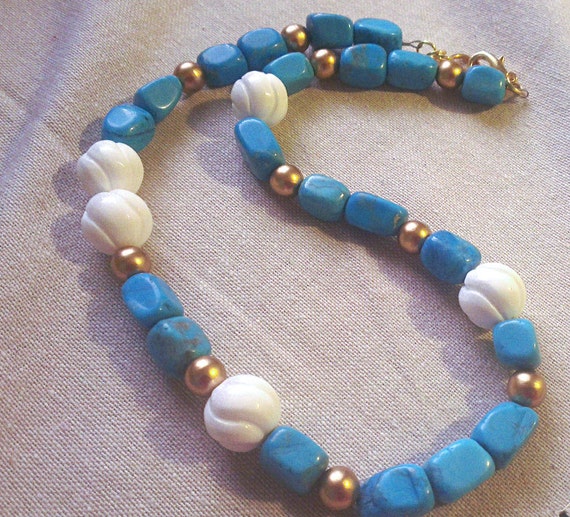
Newly Listed: Turquoise, White, and Gold Gravity Necklace

Today was a long Monday for me, so long that I'm actually technically posting this on Tuesday. But since I live in the future, it'll still go up on Monday in the US, where I suspect the vast majority of my readers are. :)

Today was long for two reasons. First, I had to go the immigration office in Solna, a municipality just outside Stockholm. For those of you who are just tuning in: I'm an American immigrant to Sweden. I've been here for just over two years (WHAT) and there are still things that need to be settled and finalized, like a completely worthless piece of plastic that cannot legally function as ID and has zero bearing on the legality of my stay here.

I should tone down the snark, though, because it's not that difficult to actually obtain. What it represents (one's permanent or temporary residence permit) is a little trickier—that requires lots of scans of pieces of identification and questionnaires and a not insignificant amount of money. But I finished that ages ago; I received the decision on my permanent residence permit in November. (Hooray!) But the email said "if we already have your picture and fingerprints, your card will arrive within a week," and it was the last push for NaNo, so I figured I'd wait and see if I got the card before booking an appointment at the immigration office. The week came and went, and I never got the card, but because I should really be more organized I didn't even remember that I needed new prints and a new picture until it was Christmas.

"Ugh, I'm not doing crappy bureaucracy stuff over Christmas," I thought, and put it out of my mind until the New Year. Last week I finally sat down and made the appointment (for today). And it was painless! I don't know why I have such an aversion to booking and showing up for bureaucratic appointments, but there it is.

Of course, today my bangs looked like hell and I had a huge pimple on my chin, but whatever. It's an card literally no one will ever see—I have the standard ID card that every other Swede has and that's what I'm supposed to use instead, so...whatever!

The other reason was that my Russian textbook is due back at the library this week. Yes, Russian! Like I mentioned in the last 5 Fandom Friday, living in Sweden (well, living in Sweden and having a Swedish personal ID number) means that I have access to free classes! In a lot of things! I finished Swedish last year and took a break, and now I've decided to start on Russian. But since the textbook is not free and is $100, I tried my best friend the library and they had it! But unfortunately, I can't renew this particular checkout so I'll have to return the book 3 weeks before the class is over (and it's only a 5-week course!). I'm doing as much work ahead as I can before it's due, so as soon as I got home from Solna I dove straight into Russian studies.

I'm glad I chose a language I'm fairly familiar with (even if it is in random patches); nearly everything so far has been more like a refresher than anything new. The only problem is that it's a distance course, so I have no chance to practice speaking or listening (downside of my best friend the library: the CD that came with the book is scratched beyond usefulness, even after trying to repair it).

That's why I'm not getting around to sharing one of my newest pieces with you until right now!

This one is only a couple of days old. I'm trying really hard to clean out the bead box, so this can definitely be filed under "stash-buster." That's the last of those turquoise nuggets!

Turquoise physics science necklace sciart teacher jewelry gift
Newtonian Constant of Gravitation Necklace by Kokoba

I guess I've been on a turquoise kick lately:


Red, turquoise, silver, and white speed of light bracelet is a unique STEM science physics sciart gift for scientists and teachers.
Speed of light in glass, aluminum, and waxed cotton thread. (Not yet listed)


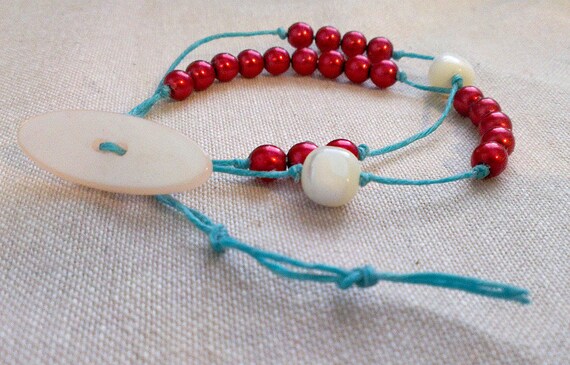
Red, turquoise, and white pi bracelet is a unique STEM math sciart gift for scientists and teachers.
Multistrand pi bracelet in glass and mother-of-pearl on waxed cotton


And I don't know why! I guess I'm just really, really done with winter? We're just coming out of the darkest time of the year here and I couldn't be happier. Then I remember that Stockholm is pretty far south in Sweden, relatively speaking; I don't know how anyone up in Norrland actually survives, honestly. Full-spectrum lighting and lots of coffee, I guess?

Anyway, this latest creation features the Newtonian constant of gravitation, a number I don't work with too often and have been trying to utilize more over the past few months. If I don't make a conscious effort to broaden my horizons, everything in the shop would just be math. Endless, endless pi. But when you look at my sales and keywords, people are buying a lot more than just math jewelry—and they're looking for more than that, too! So I've been trying to lean a little more physics recently.

The disadvantage to this particular number is that it's short: it's a physical constant, not an irrational, so it can't go on forever, and even compared to other physical constants I have less to work with it's rather brief:

Newtonian constant of gravitation: 6.67408: 31 or 32 beads for the digits (depending on the design), and 5 for spacers (if I decide to use them)

Speed of light: 2.99792548: 55 beads for the digits, and 8 for the spacers (depending on the design

Avogadro's number: 6.022140857: 35 or 36 beads (depending on the design) and 9 for spacers (also depending on the design)


so gravity is one of those that ends up being too long for a bracelet, but too short for a necklace (I guess I should start using the concise form, which ironically would be longer?). It's good anklet length but who wears those anymore?

Of course, the other option (which I've done on occasion) is to bead a focal piece and then add a chain on either side to make it a comfortable length. A fairly elegant hack, as this allows you to put the entire number on display instead of hiding the first and last few digits on the back of your neck. On the other hand, necklaces tend to slide a lot and so you'll probably end up having to adjust it a couple times a day, or just be cool with the focal point getting pulled halfway up your neck.

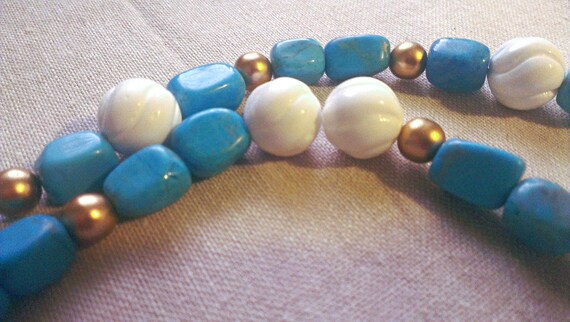
This was the rare case where I had beads large and chunky enough that just by themselves, they were a perfectly acceptable size for a necklace! And the colors are really eye-catching:

Turquoise gold white necklace sciart stem physics science jewelry teacher gift
Turquoise, white, and "gold" Newtonian constant of gravitation necklace: detail
So if you're with me in trying to beat the winter doldrums, treat yourself to a vibrant little turquoise pick-me-up! Or just browse #sciart. Whatever you do, I hope you all survived your Mondays!

Saturday, January 16, 2016

Science Saturday: Thesis Art

A blog that's been on my feed for ages now is The Finch and Pea. It's a science blog for everyone, but it's particularly been at the nexus of the recent (ish?) sciart movement. See, if you're not following The Finch and Pea, you might miss out on cool stuff like this thesis art.

"Beat Poetry" by Stephen Gaeta
I love this trend of word art (like, I'm sure I'm the last book nerd on the Internet to discover Litographs.com) and I appreciate how it's reminiscent of old plate engravings used for science illustrations back in the day. Very, very fitting!