Saturday, January 2, 2016

Skeptical Saturday: Why Your Resolution to Lose Weight is Doomed to Failure (And Also Bullshit to Begin With)

Natalie asked if this was going to become a regular feature on the blog, and I joked that if I were to do that, I'd probably give myself a coronary. But I guess the holiday season is just rife with things that piss me off, so here's another one a lot sooner than you should probably expect!

Why is my weight loss resolution doomed to failure?

From the best studies we have on the topic, around 95% of calorie-restrictive diets fail. The odds are stacked against you, especially if you're set on dropping anything greater than around 10% of your starting weight—that seems to be the highest amount you're likely to keep off.

There are freakshows, and there will always be freakshows, but you have a 5% chance of becoming one of them. Not only that, but the price of being that 5% freakshow is eternal fucking vigilance.

FreeIImages.com / Miguel Saavedra
Not just around food, but around exercise, too. You better learn to love the gym because you'll have to exercise an extra hour every day to maintain this new, smaller body compared to someone else who was always that size. Very few of us have the lifestyle to make that much exercise (since your job is probably something sedentary) a priority for the rest of our lives. If you read no other link in here, read the one in the previous paragraph ("The Fat Trap," New York Times). Or here, I'll quote what permanent, successful, significant weight loss entails:

Janice Bridge, a registry member who has successfully maintained a 135-pound weight loss for about five years, is a perfect example... 
Since October 2006 she has weighed herself every morning and recorded the result in a weight diary. She even carries a scale with her when she travels. In the past six years, she made only one exception to this routine: a two-week, no-weigh vacation in Hawaii. 
She always weighs everything in her kitchen. She knows that lettuce is about 5 calories a cup, while flour is about 400. If she goes out to dinner, she conducts a web search first to look at the menu and calculate calories to help her decide what to order. She avoids anything with sugar or white flour, what she calls her "gateway drugs" for cravings and overeating...She writes down everything she eats. At night, she transfers all the information to an electronic record...
Bridge also supports her careful regimen with an equally rigorous regimen of physical activity. She exercises from 100 to 120 minutes a day, six or seven days a week*, often by riding her bicycle to the gym, where she takes a water-aerobics class.
*Editor's note: For comparison, the American Heart Association's official recommendation is 30 - 50 minutes of cardiovascular exercise a day, three days a week, for optimal heart health.


So that's why you're doomed to failure! But there's good news: it was a bullshit goal to begin with. You were duped, and there's a better way.


Why was it bullshit?

A couple of years ago, I wrote up a post on the bogus science of BMI for NEDA's Eating Disorder Awareness Week. If you haven't read it already, go check it out now!

This is relevant here because you often hear about lower or higher BMIs being associated with this or that, when the truth is that BMI is a flawed model that was originally intended as a statistical tool in the 1800s and was appropriated by insurance companies (not doctors, not scientists, not knowledgeable health professionals) to decide who were and weren't high-risk customers—that is, customers more prone to having heart attacks.

Now we take BMI as medical gospel when nothing could be further from the truth. It basically renders all of those studies you hear about being "too fat" having something to do with this or that medical malady inherently flawed, because their criterion for "too fat" is inherently flawed.


"Okay," you argue, "I cede your point that BMI is a broken system that would be better replaced by more accurate measurements of muscle-to-fat ratios specifically. But we can all agree that having too much fat is, objectively, bad for you. You said yourself that we've known since the 1700s that larger people tend to die earlier, after all."

You know how when you hit puberty, your parents, teachers, and helpful books told you that you need to shower every day? Because it's good hygiene? Yeah, that's a marketing scam from soap companies in the beginning of the 20th century. Advertisers convinced people that they were just secretly stinky and that their friends were gossiping about them because of it, so it became "common sense" that you should bathe every day for the sake of hygiene. In actuality, your skin does a good job of handling bacteria and icky things, and once a week is usually enough to be healthy and hygienic, really—so long as you're not training for an Ironman or Tough Mudder every day, or handling sewage or hazardous waste.  (You should still brush and floss every day, and you should still wash your hands with soap and water before preparing food and after using the toilet. But that's something else entirely.)


It's that same kind of common sense (OR "COM-NONSENSE" AMIRITE????!!!) we're seeing with fat and obesity now. Everyone "just knows" that it's unhealthy to be fat, but any study that avoids the trap of using BMI as a sorting tool almost always fails to take into account social stigma and how that affects health. Really, you "just know" that being fat is unhealthy because everyone is mindlessly repeating it: advertisements, your clueless Facebook friends, Michelle Obama. (Advertisements especially. Do you realize how much bank companies like NutriSystem, Jenny Craig, and WeightWatchers make? Never mind gyms that deliberately overbook their memberships because they know that people will panic about being fat or unhealthy but then most likely not actually turn up? Books about this or that new fad diet?)

In reality, it's actually very difficult to tell if it's fat that makes you ill, or the stigma around being fat. If fat people are dying earlier, is it because they're fat, or because they put off going to the doctor, sometimes to the point that whatever medical intervention they receive is less effective? Is it because even when they go to the doctor, doctors often dismiss legitimate medical complaints as just being a result of their obesity?  Is it because we have no way of knowing which of these fat people haven't given into the pressure from society to lose weight, only to go and gain a whole bunch more back—a process called yo-yo dieting or "weight cycling" that can cause long-term damage? Is it because they can receive hundreds of messages a day from media, friends, and family that they are unhealthy, an Other, a less-than, leaving them in a state of perpetual semi-stressedness? Elevated stress hormones are demonstrably bad for you, and as long as we keep treating fat people like shit we'll never know if having fat elevates those hormones or if it's people being dicks (it's probably people being dicks, though).

Why were larger people keeling over from heart attacks 200 years ago? Who knows? Maybe it was too much food and not enough physical movement that did it—making fat a symptom of an underlying problem rather a problem and in and of itself. Maybe it was something they ate. Maybe it was stress. Maybe it was a direct result of too much body fat. Maybe it was just a huge coincidence.

The truth is that the fear of fat is a marketing tool designed to make you feel bad about yourself, no matter what. If you're already thin, the fear is of becoming fat. If you're average, the (misguided) fear is that you're already too fat. If you're actually fat, well, how could you not feel bad about yourself? A capitalist society wants people to be insecure and unsure of themselves because that's how companies can sell more items. (Remember that soap example I mentioned earlier?) This isn't tinhattery; this is how marketing works. This method is called "the halitosis method," after Listerine's unbelievably successful campaign to get people to start using mouthwash—by creating an imaginary enemy called "halitosis" and then selling you the solution.

If no one felt bad about their bodies, companies like Weight Watchers, Jenny Craig, and NutriSystem would be out of business. Most of the "casual gyms" across the country (as opposed to the hardcore bodybuilding gyms) would close their doors as well. We would no longer compulsively buy clothes and cosmetics we don't need in an attempt to look/feel beautiful (or that we need to buy because of endless yo-yo dieting and closet purges). Hell, how many blogs that you follow would suddenly have nothing left to sell or say? There are lots of people invested in you feeling like crap, and invested in you trying to "better yourself" according to society's impossible beauty standards and also moral health imperatives.

This is where I see a lot of people try to sidestep all of this. "I don't care how I look," they claim, "I just want to be healthier."

Who told you that you weren't already healthy? Who told you that you have a moral imperative to be healthy? Who told you that less of you means a healthier you? Who told you that being fit and athletically competent was a good barometer of health?

How do you feel?


How can we do this better?

If you're feeling sluggish, achey, or otherwise unwell, then yes: you might well benefit from moving more, or from making changes in your diet. If you're having a hard time keeping up with friends in your favorite physical hobbies, you would probably be happier if you invested in some more training.

Because there is nothing wrong with wanting to feel better. I picked up a lot of awful habits in college, but one good one was keeping an eye on my fiber intake because I learned that without it, I could be left in excruciating abdominal pain that wouldn't relent for days. Gallstones? Constipation? Lactose intolerance? Hell if I know, but I figured out a change that worked and I made it part of my adult life. Did I get thinner? Temporarily, only. But was I in less pain? Permanently. Did I feel better? Permanently.

People who have lost a lot of weight claim to suddenly feel better in a similar way. Is it because they've started moving and eating a more balanced, nutrient-rich diet, rather than because they're smaller? Is it a psychological thing about successfully belonging to the group? Most likely. Is it just because they're smaller? That the shrinking of their fat cells kickstarted some mysterious and positive metabolic process? Probably not.

If you make the resolution a habit, and you make it for its own sake rather than wanting to be smaller, you'll succeed. For more on creating and achieving habit-based goals, please read this series on habits at Power, Peace, and the Porch Gym. And don't do it as a mind hack to "win" at dieting. Very few people win at dieting, even with the "not a diet" diet. Do it because you will be stronger, sleep better, have more energy, or be in less pain. Do it because those are things that you value and want in your life. Not because you want to be smaller. Not because someone else told you that those are things you should value.

You are enough. Just as you are.

Friday, January 1, 2016

2016: The Women's Classic Literature Event: Check-In 1

I mentioned this a while back and then forgot it was happening. Mostly. There was definitely a reason I had in the back my brain when I picked up Nimona at SF Bokhandeln, though at the time I couldn't articulate it any better than: "I think I want to read that."

But 2016 is the year of the woman writer! According to who? Well, just me, I guess. And the good people over at The Classics Club. I have been quiet since I found the Classics Club a couple of years ago, and this year will change that. Love to book bloggers, but a lot of you have tastes that diverge almost completely from my own. That's okay; The Classics Club is there to fill in the gap.

My first read this year, as I just mentioned a couple days ago, is going to be Mrs. Dalloway. Lucky me, right, that my Internet book club's first book of the year is by a female author? First and second books, even!

Anyway, let's move on to the questions that this check-in post is supposed to answer:

Do you have a preset list?

Not for this particular event, no! I am always working on my TIME Top 100 list, and some of the remaining titles might in fact overlap with this one, but I'm not making much of a list. I'm totally cheating a bit and including contemporary graphic novels with stories and/or art by women, because I miss reading graphic novels. I do have a short list of titles I'd like to read in that genre, but it wouldn't be enough for a year's worth of reading.

Are you pulling to any particular authors or titles? Any particular genres or eras?

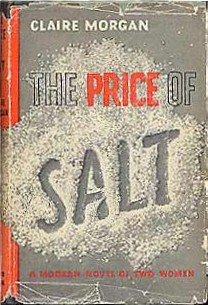
Not any particular titles or authors. The Price of Salt is the next book in my book club, so hopefully I can find that in time for February. I've also been eying Hannah Arrendt's Life of the Mind, which has finally come back into circulation at the Stockholm library! And, finally, Nimona is sitting patiently, waiting for me to dig into it.

As I mentioned before, I'm going to be focusing on the graphic novel/comics genre for this challenge, since I think it's better to promote and discuss and mindshare a living female writer than a dead one, and graphic novels are fairly contemporary. One day I would like to make a survey of the lesser-known 19th century women writers, but it remains to be seen if this is going to be the year.

Have you already begun your list, & if so, how much have you read?

Only in a very minimal way, as I described above. So far I'm still reading the introduction to Mrs. Dalloway.

I normally leave introductions and forwards for the end, but since I've already read Mrs. Dalloway, there's nothing that commentary can really spoil for me. And like a true English literature student, I'm always thirsty for commentary and insight on a text. It helps enrich my understanding of the novel and, ironically enough, to form my own opinions.

Any favorite titles?

We'll see! I know for a fact that I loved Mrs. Dalloway when I read it in college. But I was also bitterly disappointed by To the Lighthouse later on, so who knows? Are they drastically different books, or did my tastes change in the intervening years?

Are you EXCITED? 

HELL YEAH!!

WHAT IS YOUR PLAN?


Wednesday, December 30, 2015

What I'm Going to Read/Play/Watch in 2016

Since this is the last Wednesday of 2015, I thought it would be appropriate to vary my theme a little bit and focus on my media consumption hopes for the upcoming year!

Reading

First of all, without a doubt I am definitely going to read Mrs. Dalloway. I've been a member of a Facebook-based book club, founded by one of my bookish friends, since October and Mrs. Dalloway is January's book. I've already read this one in school, but it's been ten (!!) years since I read it and I liked it enough that I would read it again anyway.


February's book is The Price of Salt, which I very much want to read. The question is whether or not I'll be able to find an English language version at the library. It's a timely read, considering a film version was released last month!


Speaking of the library, my big book goal for the year (aside from the book club) is to finish the TIME Top 100 list. For realsies. There are only 14 left. According to my GoodReads records, I read 36 books this year (probably a little more, but GoodReads is wacky when it comes to tracking re-reads), so I should be able to finish this list once and for all. The books that are left are:


  • An American Tragedy, Theodore Dreiser (though I may substitute in Sister Carrie by the same author, as I have a free copy of that on my Kindle app)
  • The Berlin Stories, Christopher Ishwerwood
  • The Day of the Locust, Nathaneal West
  • The Death of the Heart, Elizabeth Bowen
  • Falconer, John Cheever (this might be one that gets bumped off for something else, judging by the summaries I've read elsewhere)
  • The French Lieutenant's Woman, John Fowler
  • Go Tell It on the Mountain, James Baldwin
  • Housekeeping, Marilynne Robinson
  • The Man Who Loved Children, Christina Stead
  • The Moviegoer, Walker Percy
  • Native Son, Richard Wright
  • Play it As it Lays, Joan Didion
  • Possession, A. S. Byatt

So hopefully they will turn up here on the blog next year!

Then I went on a WILD AND CRAZY BOOK-BUYING SPREE and came home from SF Bokhandeln (Stockholm's premiere SF/F bookstore) with a whopping two books. I know, I know, someone should stop me! But I am excited about what I picked up: Queen of Shadows and Nimona. I was not expecting Queen of Shadows to be such a door-stopper, so I doubt I'll finish it before the new year. But finish it I will!

Playing


I will definitely be playing a lot of Fallout: Lou Bega in the upcoming year, along with Fallout Shelter. Beyond that, it's hard to say. Will this be the year I woman up and beat Demon's Souls? (So I can move on to Dark Souls.) (I know that Demon's Souls and Dark Souls aren't related. Don't care. It's the principle of the thing.) My boyfriend also just bought the original Japanese Soul Calibur and Powerstone for his Dreamcast (holy shit does anyone else remember Powerstone????) so we might just spend a lot of video game time beating each other up. Virtually.

I never got around to finishing Papers, Please. And so unless I sit down and treat myself to a depressing, dystopian couple of days before the new year, I won't finish this until next year.

Otherwise the video game schedule in 2016 is wide open!

Watching

Hook & Ladder Firehouse Company. Photo by Philip Ritz
There is only one movie I care about seeing next year: Ghostbusters! I AM SO EXCITED I HAVE TO USE CAPS. If you're going to complain about Hollywood's endless sequels and reimaginings as opposed to new content, you have a point and I won't disagree. If you're going to whine about pandering to SJWs by making it an all-female version, I'm going to roll my eyes.

As far as television goes, I assume we can expect the new season of Mystery Science Theater 3000 to hit the airwaves in one form or another in 2016. I have a lot of feelings about this, which are probably best saved for another post.


Otherwise, my television viewing is largely behind the times: I'll probably watch a lot of Poirot and Columbo (holy shit y'all I fucking love murder mysteries) (also David Suchet as Poirot is essentially my uncle with a smaller and more fastidiously groomed mustache, it's crazy!). Maybe we'll figure out where we left off in Red Dwarf and finish it (in time for the new series coming out!). The only contemporary show I'll be following is Steven Universe, which is clearly the best thing coming out of Cartoon Network these days.


What's on your agenda for next year?

Tuesday, December 29, 2015

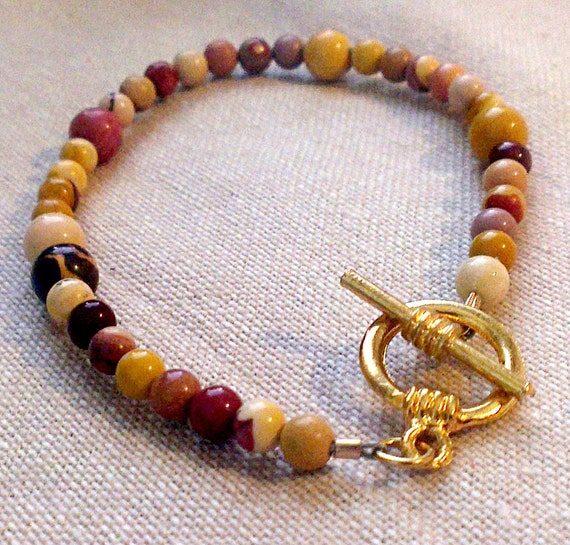
Newly Listed: Mookaite Gravity Bracelet

After I went on a little bit of a pi binge, I realized I needed to beef up the science sections of my shop. It's not just pi, after all!

This bracelet is in one of my favorite stones, mookaite. For some reason I hadn't really done much with it for a long time, but buying new beads (for SUPER SEKRIT PROJECT and otherwise) somehow inspired me to use other, completely unrelated items. I guess I just needed fresh inspiration.

I like how subtle this one is. Using just one stone for the whole piece has a really nice effect, especially with a stone as variegated and interesting as mookaite.

Sciart STEM gravity jewelry gift for physics fans
Mookaite Newtonian constant of gravity bracelet by Kokoba

The Newtonian constant of gravity (according to the latest CODATA values; physical constants are tricky things and are sometimes revised or updated) is 6.67408 × 10⁻¹¹ m–3 kg–1 s–2. Usually I try to photograph things so you read the number from left to right, but I goofed with this one. Oops! I also never use the scientific notation when I work with physical constants. It would just be overly long sections tacked on the end and that's not a look I really like.

If you like this beauty as much as I do, you can treat yo' self over at the store! There are also some lovely #sciart pieces over on Twitter. I'd also recommend adding The Science of Illustration to your blog feed for periodic science snippets (complete with illustrations).

Wednesday, December 23, 2015

What I'm Reading: Barabbas

I guess it's a little weird of me to be reading an Easter-themed story during Christmas, but it is what it is. I guess it does have a central theme of religion? Christ? I don't know, I got nothing.

Barabbas is a book that I've actually already read. I took a course in modern Swedish literature while I was in college—but it was a course specifically for international (read as: American) students, so everything we read was an English translation, even if we were studying Swedish at the time. Barabbas was one of those books.

Pä Lagerkvist is probably one of Sweden's preeminent writers, yet I fear he might be fading into literary obscurity. Apparently it's not hip to read him anymore; my Swedish teacher this year, while I was presenting another one of Lagerkvist's novels, said that if you conducted a survey of Swedes, maybe half of them would know Lagerkvist.

Tragedy!

Vintage Books, 1989
Finally, after years of searching for it, I finally found a copy of Barabbas (possibly one of my all-time favorite novels?) in Swedish. I try to do as much reading as I can in Swedish to keep my language up, especially now that I'm not in class, and an easy way to do it is to pick up books that I've already read in English. That way I don't get so stressed about understanding what's going on.

 For those of you who didn't grow up on a steady diet of church and Sunday school, Barabbas is the criminal who is set free (according to the dictates of mob rule and angry Pharisees) while Jesus Christ is condemned to be crucified. Lagerkvist's novel takes this Biblical footnote and places him front and center at the story, short and easy but nonetheless penetrating and illuminating. Disturbed by his encounter with Jesus first in the prison and then at Golgotha (where he watches the crucifixion from a distance), Barabbas sets out to learn more about the meek, strange figure who took his place on the cross.

On the surface this sounds like an awkward little Easter Sunday homily, something on par with The Pilgrim's Progress, but in reality it's a moving account of the search for faith and belief in the face of a bleak world utterly without miracles. I won't spoil the ending here except to say that it's an ambiguous one with many layers of interpretation.

As I mentioned earlier, I'm reading it in Swedish now, but originally read it in English. The translation I read was by Alan Blair, and as translations go it is an excellent one. (I have no idea if it's the only one available; it would make sense, because really it's a wonderful translation that won't need updating for a long, long time.) If you're browsing your favorite book place (library, bookstore, etc.) and stumble across this little gem, pick it up. Or read the whole thing online! (As far as novels go, it's a short one. No worries.) It's got something for everyone, regardless of faith (or lack thereof).

What are you reading for Christmas?

Monday, December 21, 2015

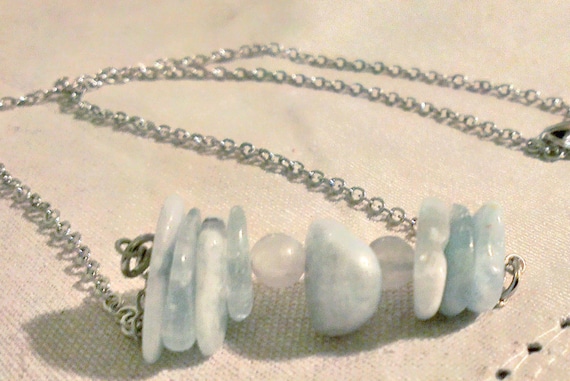
Newly Listed: Aquamarine Pi Necklace

Weeks later and I'm still in the zone, as they say. It's funny how just a handful of purchases suddenly get you thinking about your entire bead collection in an entirely new light. It looks like I'm going to have plenty of new items to list...just in time for the end-of-year holiday gift-buying bonanza to be over. The good news is that I'll have plenty lined up for next year's graduation gift-buying bonanza! Yes, I actually sat down with a spreadsheet (like a dork) and it turns out that I sell just as much in April/May as I do in November/December.

This necklace has actually been up in the shop for a few days, but whatever. It's still "newly listed" to you guys!

This aquamarine pi necklace would be perfect for STEM and sciart nerds.
Aquamarine pi necklace by Kokoba
You may recognize this pattern from a pair of pi earrings I featured here a couple of weeks ago. Each piece alone is stunning (IMHO) but together they would make a lovely set!

The necklace is also a great alternative to the earrings: the chips are large and, more importantly, heavy, which rules them out as earrings for at least a few people. But that same weight in a necklace isn't a problem, even for the daintiest of necks!

Aquamarine is a fascinating, beautiful stone. You can follow that link to learn more about it and feast upon the world's most stunning specimen, the Dom Pedro. Don't forget to also browse this week's collection of #sciart on Twitter. Some lovelies I've RT'd include:


And finally, you pick up this OOAK necklace in my Etsy store, if it speaks to you. TREAT YO' SELF.

Saturday, December 19, 2015

Skeptical Saturday: Bad Charity Facebook Infographic

I've seen this making the rounds in my personal Facebook feed recently:

And while the spirit of the post is right—before any large charitable donation, you'll probably want to think a bit and do some research before you donate—everything else is...questionable.

First and foremost, I want people to stop calling Salvation Army a charity. They're not. They're a religious proselytizing group who actively campaign against LGBTQ+ rights whenever possible. There's a good reason that noted queer rights supporter Macklemore didn't name drop the charity in his paean to secondhand clothes shopping. I refuse to even dignify it with any further discussion here.

But secondly, if you run this information via Snopes, you get something...interesting. Turns out it's...mostly outdated and inaccurate!

Anyway, here is what Charity Navigator has to say about all of the charities in this image:

Ronald McDonald House: 4 star rating; CEO receives no compensation.

Lions Club International: 4 star rating; CEO receives no compensation from the organization (but some from affiliates)

Veterans of Foreign Wars Foundation (what I assume that image means by "The Veterans of Foreign Wars"): 3 star rating; president receives no compensation from the organization (but some from affiliates, as does the former president). They get 4 stars for transparency but only 2 for financials.

St. Jude's Children's Research Hospital: 3 star rating; current CEO receives around $1.3 million compensation annually (accounting for just 0.13% of expenses) and CEO of ALSAC receives around $600,000 annual compensation (accounting for just 0.06% of expenses). They have a full 4 stars on transparency and 3 on financials.

World Vision: 2 star rating; president receives $447,000 in annual compensation (accounting for just 0.04% of expenses). The CEO tried to do a good and awesome thing by allowing Christians in same-sex relationships and marriages to work for them, but then chickened out after a whopping total of 48 hours, so...

Make-A-Wish Foundation: 4 star rating; president and CEO (same person) receives around $220,000 in compensation annually (accounting for 5.31% of expenses).

So most of the "good" charities are good. World Vision has a ding on Charity Navigator in their financial score, not in their transparency score.

Now, on to the baddies:

The image says UNICEF, but when you nose around a bit, the comment about "CEO having use of a Rolls-Royce" seems to point to the U. S. Fund for UNICEF specifically. It just so happens to have a 4 star rating on Charity Navigator and the organization actually dispels this Rolls-Royce and millionaire myth right on their damn page.

Anonymous emails claim that the U.S. Fund for UNICEF's CEO earns more than $1 million and has use of a Rolls Royce. These assertions are false. 
As President and CEO of the U.S. Fund for UNICEF, Caryl Stern earns $521,820. She does not have a company car; she drives a 2007 Prius which she purchased in 2009.

March of Dimes: 2 star rating; president receives around $500,000 compensation annually, which accounts for 0.24% of expenses. And while they have a full 4 stars for transparency, they have a 1 star rating on financial performance, which was the lowest financial score for any of the named organizations.

Again, the image is unclear, so I assume they mean United Way Worldwide. Otherwise there are hundreds of different United Ways in different cities listed on Charity Navigator, each with their own individual ranking. United Way Worldwide has a 3 star rating: 4 stars for transparency but only 2 for financials. The president and CEO (the same person) receives $764,000 annually for compensation (0.84% of expenses). However, there is a good chance that your local United Way has a different score. Many local ones have strong 4 star ratings.

The American Red Cross: 3 star rating; the president and CEO (same person) receives $562,000 annually in compensation (which accounts for 0.01% of expenses). 4 stars for transparency, 2 for financials.

Goodwill Industries: not listed on Charity Navigator, but they've also addressed this meme-ified accusation head-on:
The message then quotes erroneous information and salary figures for several nonprofit organizations’ chief executives, including a reference to a so-called “Goodwill CEO and Owner Mark Curran, who profits $2.3 million a year.”  Jim Gibbons is the CEO of Goodwill Industries International...
Goodwill Industries International earns $5 billion revenue per year, and we spend about 83 cents of every dollar on programs and services for people in need. This is a very healthy number in the nonprofit world, and a solid indicator of our commitment to good stewardship of your donations.
Should you think before you donate? Yes, absolutely. Should "thinking" involve a mindless image shared a thousand times over in your Facebook news feed? Probably not. While most of the good ones were certifiably good, not all of them were—and good organizations like Goodwill and the U. S. Fund for UNICEF were erroneously labeled as wasteful. And, if you want to talk about administrative costs, the Make-A-Wish Foundation's president and CEO takes the largest percentage of funds compared to anything else here—and this was considered a "good guy"!

The funny thing about data is that you can massage it to paint any picture you like. Like how the image up there lists CEO salaries: some of that information was inaccurate, but some was not, but it was all deliberately chosen to paint a certain picture. But when you take those salaries, some of which are quite generous, and compare them with the organizations expenses, that's something totally different.

What disturbs me a little in these smear campaigns is a distrust of secular or multinational groups, and an implicit trust in religious (Christian) and American ones. I don't fault the faithful for wanting to do good in the world (charity is probably one of the most universal tenets among religions) and for wanting to give to charities specific to their denomination, but if the organization you're donating to is continuing to fight against progress and tolerance, you might want to donate elsewhere. Or you might not! That would make us very different people, though.

What Facebook meme has really gotten on your nerves recently?