Wednesday, June 29, 2016

What I Read: Artificial Intelligence (Richard Urwin)

This is another freebie from NetGalley (so all the usual caveats about my opinions apply). There are a whole bunch of books with the title Artificial Intelligence, so I want to be clear that I'm talking about the book by Richard Urwin. And it's since been archived, so oop @ me for my pokey review—guess NetGalley is no longer giving out copies.

In a nutshell: Are you interested in artificial intelligence, but don't know a lot about the field? This is the book to start you off. Are you already an AI nerd? There's probably very little in here you don't already know.

Image courtesy Arcturus Digital


First of all, who is Richard Urwin? I think this might be him, but there are a quite a few Richard Urwins out there. Why does this matter? After all, I side-eyed another nonfiction book for getting too personal. (Oh, did I not mention that in the original review? Morgan starts off with an abridged life story that has nothing to do with her job but I did learn that she likes horseback riding, so...)

But at least with Above the Noise, you know enough to know that you're reading a book by an expert on the topic. Artificial Intelligence goes too far in the other direction, so that while it's a really informative and readable book, it's hard to know who, exactly, is "talking" to you.

Why should this matter? Because whenever you read non-fiction, you want to be sure that you're getting your information from a good source. What is this person's education? Their work background? Their areas of expertise? Arcturus included nothing about Urwin in the actual copy of the book, and his profiles on Amazon and GoodReads are similarly blank. I might not care about Morgan's love of horses but I do care that her bread and butter comes from digital PR management. And while Jo Marchant is a journalist, not a scientist or doctor (dammit Jim!), I can trust that her information is good because she gives us enough background information on her sources to render them credible and trustworthy. No matter how well-written and comprehensible an account something is, it is disconcerting to know nothing about the author—who he is, what he knows, what he's studied.

It's a little thing, but it bugged me. Fortunately, Urwin isn't really making any Kurzweil-esque fantastical claims, otherwise this would bug me even more. In fact, the book isn't really about predicting where we're going but about explaining how far we've already come. There isn't much that's controversial or contestable, since the vast majority is essentially "here's what we've already done." So the fact that I'm not entirely sure what Urwin's credentials are doesn't really matter.

This circles back to my nutshell review at the top. I picked up Urwin's Artificial Intelligence because I've always been interested in the field. But I'm just a curious layperson, so my knowledge is hardly very in-depth or technical. And while I know what Moore's Law is and could probably quote Turing's essay on machine intelligence in my sleep by this point, I'm less familiar with the nitty gritty of machine learning and neural networks (I know a little bit, thanks to my work in science editing, but not much).

In a lot of ways, Urwin's Artificial Intelligence reminds me of The Dark Net*, by Jamie Bartlett. I'm a digital native who's been plugged into technology and the Internet from a young age—I know about /b/ and pro-ana and The Silk Road, so the book didn't have stunning revelations for me. But like The Dark Net, I still enjoyed reading Artificial Intelligence and it certainly filled in a few details for me here and there. That's why I would recommend it as a solid popular introduction to AI and how it functions. If you already know a fair amount and are looking for something with depth (rather than with breadth), you should probably look elsewhere.

*I just realized I never put my review of The Dark Net up here. Oops...

Tuesday, June 28, 2016

Talky Tuesday: BURFDAY

I'm 30! That's crazy! I'm a full-blown adult now.

It doesn't feel so weird, though. I've been telling people I'm 30 since the beginning of the year just because. I've never been fussed about getting older or my lost youth or so on, so it's not much of a crisis for me.

I'm celebrating today by allowing myself to do nothing. JV is baking my favorite Swedish dessert, and then later this evening I'm heading to town to chat with some Meetup people about conspiracy theories and then get maybe a little toasted on some mead.

Most importantly, here is my birthday cake. Not my actual cake because JV is still working on it as I'm writing it, but a reasonable stand-in:

Image courtesy Erik Borälv
But Firewatch has finally finished downloading so if you'll excuse me, I have a game to play!

Wednesday, June 22, 2016

What I Read: Fangirl

Everyone I trust has been gushing about Rainbow Rowell, so when I saw an English copy of Fangirl available at Stadsbiblioteket's library sale, I thought, "Why not?" It was only 5 SEK (essentially 75 cents US) so if I didn't like it, no big deal. It would probably even make a great gift for a friend, or a giveaway item, since it was the super-fancy special edition with the Carry On preview, an interview with Rowell, and some (admittedly cute and charming) fanart.

Image courtesy Macmillan


I plunked down my 5 crowns and immediately dug in. I was at the library to return Possession, which is a very dense, very smart, very "heavy-lifting" kind of book, so I was in need of some lighter fare. YA? Fanfiction? You don't get much lighter fare than that!

If you follow me on Twitter then you already have a pretty good idea of what I thought of it. In summary:

1. I get the "Cath" and "Wren" / "Catherine" conceit but I well and truly hate it. I'm a Katherine with serious feelings about nicknames and "Kath"/"Cath" is probably right at the top of my list of most-hated. Is this completely arbitrary and on me? Yes. (Well, the artistic merit of the Cath/Wren joke is debatable, but my hatred for "Cath" specifically is 100% irrational and I recognize that.)

2. There were a few good moments of social anxiety but they were largely outnumbered by Cath being immature and irritating. I'm split on how the situation with her mother was handled—true, sometimes a parent is actually a bad parent, but the way Cath threw a fit every time the topic of maybe getting back in touch with her mother came up was not endearing, either. Realistic? Probably. And certainly a good character is a flawed character who is sometimes obnoxious and unlikable. I guess there was nothing for me to like about Cath; her tantrums about her mother weren't balanced out by her fanfiction prowess (for me) since I don't give a flying fuck about fanfiction. ¯\_(ツ)_/¯ I'm an anxious person and could relate to Cath's thought processes on that front, but actually like her? Meh.

3. I also feel like Rowell herself wasn't fair to their mother—we get all of this insight into Cath's social anxiety and we're supposed to sympathize with how she manages it, e.g. not going to a particular dining hall until her roommate (Reagan?) makes her. But then when Laura doesn't want to visit Wren in the hospital, it feels very much like we're supposed to take it as a True Definitive Sign that she is, in fact, a Shitty Mom. As if it would be totally out of character for an anxious person to 1) not be able to handle twins and a bipolar husband and 2) to not want to intrude on her daughter, a girl who is essentially still a stranger to her, in a very upsetting and stressful moment of crisis. No, Laura's just a selfish bitch! Save your sympathy for Cath!!

4. The fake Simon Snow extracts (and all the related faux Wikipedia/FF.net entries, as well as Cath's writing) contributed nothing at all to the story and I soon skipped over all of them because yawn. This is an interesting one to compare with Possession, a novel that is also very much about people reading and writing about fictional literature. Confession: I skipped over a lot of Byatt's poems as well. But I feel like Byatt's poetry was more essential to the rest of the story, or at least more interesting.

5. Can we talk about that scene where Cath meets a fan of hers in the library? (Or dining hall? Somewhere?) What is this completely needless Mary Sue moment....

6. Chalk this up to different universities, but my college only paired freshmen with other freshmen when it came to roommates. I spent a really long portion of the book confused about Reagan and Levi until Rowell made it clear that no, they're older and Reagan has to live on campus for Reasons and so on.

7. The subplot with Nick I don't understand at all. If it was supposed to serve as a mirror/foil/critique for Cath's fanfiction then I....didn't get it? Since Rowell seems to otherwise be portraying fanfiction positively? Or is it supposed to be "here's actual plagiarism, which is bad, and notice how it's not fanfiction!!!!!"?

8. Wren's arc blew. At the end of the day, the book seemed to lump characters into either "Simon Snow fans, whether enthusiastic or begrudging" or "non-fans," with non-fans providing the majority of the conflict. That kind of schema sets up a very specific moral map: "It's us geeks versus the world!" So while Wren is being antagonistic, she's too cool for Simon Snow. But as soon as she comes out of the hospital she does a total 180 and is back to being a fangirl. It makes reconciliation between her and Cath really easy and really boring.

Why couldn't Wren stay grown out of Simon Snow? A much more interesting conflict would have been what happens when someone you were close with once drifts away, or loses interest in the things you used to share together? That is a huge and painful part of growing up, but it feels like Rowell took the easy way out and just made Wren a geek again, the end!

9. The special attention lavished on Cath by her writing professor was a bit...much. Flirting with Mary Sue-ishness.

10. Also the banter with Reagan and Cath in the dining hall...ugh. I guess some people might actually have try-hard not-actually-funny conversations like that, especially in college, but instead of coming off as "ahh, remember those awkward try-hard years?" it felt like "LOOK HOW WITTY MY HEROINE IS!"

That said, there were a couple of bright spots.

1. I appreciate that Cath's writing arc did not involve converting her professor to the joys of fanfction. It would be a bit unrealistic to expect that to be the resolution, but as I read on it really felt like the book would really take that turn: Cath is a super speshul snoflaek and the world must learn to recognize and acknowledge that~~~ So thanks for resisting that temptation, Rowell.

2. Despite my numerous issues with the story, the writing itself was breezy and enjoyable. Rowell has a good ear for language, and while I doubt I'll ever try another one of her YA books, I might look into one of her offerings for older readers to see if things get any better.

Am I alone in really disliking the name "Cath"?

Friday, June 17, 2016

Five Fandom Friday: 5 Favorite Places to Read


Five Fandom Friday is a weekly meme hosted by The Nerdy Girlie and Super Space Chick. This week's topic was originally supposed to be favorite podcasts, but I don't do podcasts so I thought I'd revisit a prompt I missed: 5 favorite places to read!


Image courtesy Quicksandala
1. Public transportation

This is where I do a lot of my reading, especially with my Kindle app. I can travel up to an hour or so for work sometimes, which adds up to a lot of built-in reading time! Fortunately I don't really suffer from motion sickness when reading in moving vehicles. (Watching people play FPS games is another matter entirely, however.)


Image courtesy mconnors
2. In bed

Our couch isn't really the coziest. Sometimes I sit and read next to JV while he's playing a game, but it's not super comfortable and I usually end up distracted by the game anyway. So if I want to read at home, I usually read in bed. This is best paired with cuddle time: everything I love, together at last!


3. In bed (again)

Sometimes I have a tough time falling asleep. Like anyone else, I have a few brain weasels that can keep me up at night if I don't manage them well. The best way to deal with them at bedtime is to have JV read to me. Even if I"m not really interested in what he's reading, following the sound of his voice is calming enough for me to fall asleep. Sometimes this backfires and I'll become really interested in what he's reading. This most recently happened when he went digging through his collection of The Brothers Grimm and found some weird, weird stuff. We all love Cinderella and Snow White, after all, but what about The Bird, The Mouse, and the Sausage? But usually he chooses H. P. Lovecraft, one of his favorites but not mine, so he gets to read a story he loves and I get to fall asleep easily. 

Sometimes we just sit in bed together and he'll read to me, as in read a story I actually pay attention to. Right now we're working on Terry Pratchett's Truckers. I guess it's kind of weird to dodge this week's prompt about podcasts because I don't like them, but then spend so much time talking about how I like having my boyfriend read to me, but there it is! I guess I just don't like most people's voices all that much. But JV has the loveliest voice. ;)


4. On the farm

JV's parents have a small farm outside Uppsala, where they raise sheep and chickens. The Internet connection is always dodgy, so it's a great place to unwind and finish up all the reading you've been meaning to do. It's also really nice to be out in the country and away from our party-happy neighbors.


Image courtesy Arild Vågen
5. In libraries

First of all, I'd like to take a moment and show off. THIS IS ONE OF MY LIBRARIES! Or one of Stockholm's libraries, more precisely. I think the exterior of this particular branch (Stadsbiblioteket) is a butt ugly orange wedding cake, but the interior of the rotunda is just the most amazing thing. Maybe I should do a libraries of Stockholm series? Would that be interesting?

Anyway, back to the meme. There is something incredibly calming about the quiet of a library, whether it's hundreds of years old or brand new. The one pictured here is closing in on 90 or 100, if I remember my Swedish architecture course correctly. I think a cloister or a monastery would have that same respect for stillness. Whenever I read in a library, it's like I'm suspended in a bubble, far away from the stress of the real world. 


Where do you like to read? 

Wednesday, June 15, 2016

What I Read: The Invoice


I remember bloggers (not which ones, sorry! comment if it was you!) talking about Karlsson's The Room ages ago. At the time, I tried to find it in Swedish because I wanted to keep up with my Swedish reading and because it sounded kind of quirky and interesting. My efforts were fruitless and I ended up reading The House of the Spirits in Swedish instead.

Fast forward to now, and The Invoice turns up on NetGalley. The name Jonas Karlsson rings a bell, and I decide this will be a good way to take him for a test run before I try to hunt down Den perfekte vännen (the short story collection where Rummet was originally published; turns out it has no standalone Swedish edition).

Anyway, the premise for The Invoice is simple: everyone in the world is being billed for their happiness. The happier you are and the luckier you've been, the more you have to pay. Our narrator is a young slacker who has a tolerable, if dull, job (clerk at an independent video store) and is still stinging from the end of a painful love affair. He's also missed all the announcements about this new happiness "tax," and when the first bill arrives, he dismisses it as an advertisement: the cost is simply astronomical (5 million kronor, or around $600,000 US) and he knows he's never purchased anything that expensive.* But it quickly becomes apparent that this is for real. He calls the company and tries to negotiate his bill, since he has no means of paying it off. The story follows his meetings and negotiations with the company and with his handler/representative, Maud. Along the way we learn more about his interests, his accomplishments (or lack thereof), and his life.

The concept is cute and also patently Swedish—a bureaucracy devoted to reallocating wealth and resources to ensure that everyone is treated fairly? only in Sweden!—without being some heavyhanded morality play. Someone on Goodreads called it a satire but I don't agree. There's nothing in here being mocked, as the concept of the happiness tax is leveraged not to make fun of the Swedish system but as a way for the narrator to reflect on his life and for the author to posit what he believes is a happy life. Overall, it's quite sweet.

That said, it wasn't flawless.

Spelreglerna is now on my list of Swedish books to find, if only because I want to read this in the original language. Not just because I'm Team Original Language, but because the English translation felt clunky, somehow. Sometimes I read an English translation of something Swedish and it has flow and poetry and I just lose myself in it (for example, Doctor Glass). Other times I read an English translation of something Swedish and there is something tinny and I start to wonder more about how the original was probably phrased, or how I would have translated it, than about what's going to happen next. Like, I think I'd probably dislike The Girl With the Dragon Tattoo in either language, but I couldn't get over how weird the English translation was and put it down after 20 pages. The Invoice wasn't nearly as weird as that one, but it just felt choppy, and I wonder how choppy the original was.

This weirdness wasn't helped by a combination of US spelling and punctuation rules with UK terms: so the granite was "gray" and he talked to "Mr." someone-or-other, but he lived in a "flat" and rode up there in a "lift." I've asked around the editing neighborhood to see what professionals make of this, and it's apparently not unheard of for publishers to prefer this mix of styles. Others pointed out that the author has the final say, rather than the publisher, so now I don't know if I should be side-eying the translator (who I can't name because there is some formatting fuckery with my ebook edition, so that the "About the Author," book design, jacket design, jacket photography, and translation are all just "TK." Or is that some kind of publishing jargon I don't know about?), someone at Hogarth, or Karlsson himself. Or should I even be bothered by that at all? Am I just being way too picky? I think I would have noticed this mix if I'd read it elsewhere, but maybe not. (Now when I'm back in the US in October, I'll have to dig through my copies of Roald Dahl, C. S. Lewis, and Ian Fleming to see how they were handled.)

Putting aside questions of language, there was one thing about the actual story that bugged me, and that was the narrator's relationship with Sunita. The whole affair is introduced rather clunkily, with the narrator flipping through movies to sort and seeing one that reminds him of Sunita, "the love of [his] life." Much later on, Sunita comes up when he's trying to sort his accounts with the company billing him for his happiness and we hear the whole story, so introducing her so early and so obviously as his One Twoo Wuv seems kind of pointless. Or it would have been more frustrating to hear nothing about Sunita until he suddenly mentions her? I don't know. Ugh.

Thinking about this aspect of my issue with Sunita, I realized what's weird to me about the tone: the whole story reads like someone telling you about a thing that happened from their perspective, rather than you riding along with someone while something is happening. If we were riding along with the narrator, it would be really strange for the first-person flashback about Sunita to introduce her as "the love of my life." The narrator would obviously already know that. But if the narrator were sitting with us and telling us this story over a coffee, explaining who Sunita is like that makes more sense. But I don't know how much I care for that level of...narrative distance?

Anyway, back to Sunita. What is definitely off-putting about her is the way she's fetishized. Not a whole lot, but Karlsson goes to some lengths in describing how foreign and different she looks and dresses when a simple, "She was an international student from India." would have sufficed. To be fair, everyone in the book (except the narrator) gets a pretty lengthy visual description, so this moment isn't entirely out of place. It's a small thing, in the grand scheme of things, but I was still a bit put off by it.

 Anyway, to get to the point: The Invoice is a quick and cheerful read, perfect for flights or to break you out of a reading slump. And if you feel like you're an aimless slacker (like me!), then it'll probably help you feel a little (or a lot) better about your life choices. And, as always, I received a free copy from NetGalley in exchange for a review, but that made me no less honest in expressing my opinions.

*Fun fact: there is some bullshit company called Bolagsupplyssning that thinks it's cute to send advertisements that look like official forms or invoices. So when the narrator throws out the first bill, it's completely believable, because I've done the same thing (not before having a small heart attack first—fuck you, Bolagsupplyssning, for sending that out in the middle of tax season).

Monday, June 13, 2016

Newly Listed: Wood and Waxed Cotton Gravity Lariat Convertible Necklace

I tweeted about this a few days ago and now I get to share it with you!

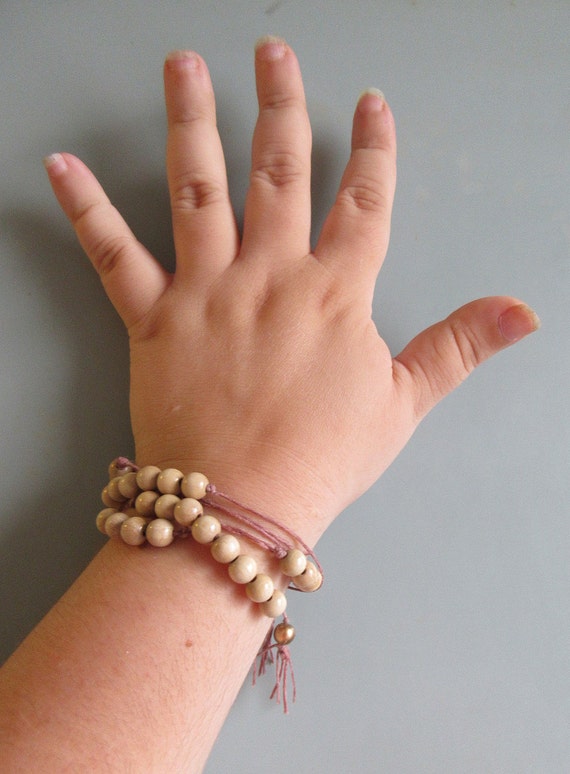
What happens when you need more necklaces, preferably featuring physics or chemistry, but are scraping the bottom of your bead barrel? You remember that you've been meaning to try your hand at lariat necklaces!

Lariat necklaces are named for their resemblance to actual lariats. Many are designed to be worn without clasps, which makes them naturally adjustable and versatile. You can simply wrap it around your neck a few times, or you can fold the length in half and slip the two ends through the loop (as pictured here).

Physics sciart jewelry gravity lariat necklace
Newtonian constant of gravitation lariat necklace by Kokoba

This one is light enough to be worn as a chunky bracelet or anklet! It's all in the wrapping.

Physics sciart jewelry gravity bracelet

I think the earthy brown colors are a great match for this 70s retro look, but I intend to bring out a few designs in metal chain as well. 

For simplicity's sake, I didn't do anything fancy with bead placement: the numbers are read from one end of the strong to another. Since people's necks are different sizes, and people have different ways of wrapping things, trying to space things so they'd be in the correct order when worn was not going to happen. That's okay; sometimes it's fun to be a little more subtle and abstract!

Saturday, June 11, 2016

Five Fandom Friday on Saturday: 5 Fandoms I Couldn't Get Into

Image courtesy Katelyn Jade
5 Fandom Friday is a weekly meme hosted by The Nerdy Girlie and Super Space Chick. This week's prompt is 5 Fandoms I Couldn't Get Into.

The short answer is all of them. In following lots of lovely people from different "geek blogger" groups, I've learned that I'm just not that much of a geek these days, or at least what seems to be the Internet's idea of one. There are a lot of reasons at play in that, but the biggest one is: I have less than zero interest in fandom. Fandom as a concept bothers me and has bothered me for years. It's not because I'm on the geek hate train, either. There's something inherently consumer capitalist about fandom and about how it makes the core tenets of someone's identity based around consuming, whether in a literal sense (collecting ALL THE THINGS) or in a more metaphorical sense (i.e. media), that puts me off.

But I can give a long answer, too! Be prepared: I probably hate everything you love.

1. Harry Potter

The breathless claim that "Harry Potter is getting kids to read again!!!!" was never true for me because I already read a lot. I only picked up the series at age 14 to see what the fuss was about, and walked away very thoroughly unimpressed. (This was in 2000, so my entire Harry Potter experience ends at Goblet of Fire.) That was when I learned I was allergic to hype, and I've only become more cynical as I've aged.

I wouldn't have even minded the series so much if I didn't hear endless gushing praise over it. What started as a dispassionate indifference—"It's just not for me."—became a burning hot rage of righteous indignation—"There is so much better fantasy out there! Why this one?"

This is the point where I will probably lose a chunk of what few readers I have, but I'm standing by my unpopular opinion: even if J. K. Rowling is a really cool, progressive person, she's a mediocre writer at best and Harry Potter deserves maybe a fraction of its accolades.


2. The Hunger Games

I had a lot of thoughts on this one.


3. Literally any superhero you can name

There is a soft spot in my heart for Batman, especially 1960s campy Adam West Batman, but otherwise I'll take a hard pass on traditional superheros and traditional superhero stories. Exception granted for experimental work or clever reimaginings, a la Mark Millar's Red Son or Grant Morrison's run on Doom Patrol. Otherwise: not my bag.

The ensemble superhero titles like Justice League or Avengers are even worse. I can buy one superhero, if you play your cards right. An entire cast? No way. At least X-Men has the "superpowers come from random genetic mutations" conceit, which makes sense and explains why there are so many. Also, at least X-Men has a history of being a morality story about acceptance and tolerance. I'm never going to get into the series, but I'll give Stan Lee credit where credit's due.


4. George R. R. Martin

Other people have picked apart both the original novels and the show for its treatment of women, so I'm not going to add anything. But I will say that Martin is a boilerplate, pedestrian writer and I gave A Game of Thrones my best shot (at the recommendation of people whose taste I trusted) and could. not. do it. Even if he were the best, most unproblematic progressive-minded author in the world, he would still be a dull-as-dishwater writer.


5. Joss Whedon

Every heroine he writes reminds me of the legend of Pygmalion: these are characters crafted not to be interesting or well-rounded, but because Whedon can't stop compulsively creating his own perfect vision of womanhood. Since she happens to be a ~~~strong female character, he gets heaps of praise for it. The Mary Sue covered it better than I could, because I can't bring myself to watch that much of anything Whedon.


What fandoms do you just not get?