Monday, September 29, 2014

Music Monday: Mendelssohn-Bartholdy

My music playlist for work (editing science articles) is largely classical (small-c classical, because there is a heaping helping of Baroque, Romantic, and Modern in there, as well as big-c Classical).

Today was an intense day of editing thanks to computer blow-ups and the only thing that took the edge off was Mendelssohn-Bartholdy's Overture to A Midsummer Night's Dream.


Have you heard it before? Probably not, unless you're a fellow orch dork/bando/whatever. You've heard the Wedding March from this set of pieces, for sure, though. Which is a shame, because the Overture is lovely and not half as overplayed.

Friday, September 26, 2014

Foodie Friday: Nutella Ramen

This post comes courtesy of my friend Breda, though Lord knows where she dug it up. Somewhere on the South Korean Internet.

I haven't tried this yet, but I'm keen to. Since you're only using the ramen noodles (NOT the ramen sauce), it's not that much different from a crepe or some other pastry except in terms of how it's arranged. 

Here is the original recipe from a Naver blog. My Korean isn't up to even the meager task of translating a recipe, and I don't feel like hounding my Korean-speaking friends about it, and of course the typical back-asswards Korean web design means I can't actually select any text to run it through Google translate. So your guess is as good as mine, because we're both working off the pictures here.

1. Heat milk on low, add Nutella. Stir until well-combined. NB I am down on my Korean enough to be 100% sure that this is milk (probably 1% or 2%) being used, not cream or something.


2a. Break your square of ramen noodles into a form suitable for dipping. Fry them to your liking (but let them cool before dipping.)
2b. Alternatively, prepare them as you normally would (i.e. with boiling water)  and then eat them + the Nutella sauce with chopsticks. 
3. (Optional.) Skewer some fruit of your choice. Serve with a white wine of your choice.

So it's more like a Nutella fondue than Nutella ramen, but "Nutella ramen" is just weirder and more eye-catching, don't you think?

We have oodles of noodles (and Nutella) in the kitchen. I think I'm going to give this a go sometime when JV isn't around to side-eye me for eating weird things. 

Thursday, September 25, 2014

Trek Thursday: Who Mourns for Adonais?

#54: Who Mourns for Adonais?


In case you forgot:  The Enterprise finds a class M planet without any intelligent life and investigates. Turns out this is the home of Apollo (and all the rest of the Greek pantheon), and he uses his electromagnetic powers to pressgang the crew into staying with him. Kirk won't have any of that and the Enterprise continues on its mission, sending yet another space species into space extinction. Good one, Jim.


Maybe it's just that this episode hasn't aged well. The "ancient astronauts" theory of old pantheons may have been something new and exciting back in the 1960s, but now it's just the punchline to an Internet meme.


This is also an episode Featuring a Female Crew Member and ugh, those episodes are always so, so painful to watch. It's like Sherlock: the best episodes are the ones where they don't have any women characters to write exceptionally poorly. Carolyn gets some good snarky lines in ("I could no more love you than I could a new species of bacteria!") but it's a day late and a dollar short.

Wednesday, September 24, 2014

What I'm Playing: 5 Back-to-School Tips for Habit RPG

I've mentioned Habit RPG before. I started playing about three weeks ago, and since then I've hit level 12, maybe even level 13 by the time this goes up. I've had a chance to really get a feel for how the site works and how to use it to motivate myself, so I figured I'd return to the topic in greater detail and give you some tips on how to best use the site to your advantage, especially now that many people are back in school.


1. Be Gentle With Yourself

I think there's a temptation, when the game (and the school year) is fresh and shiny in front of you, to add a whole slew of "dailies" and say, "Yeah, now I'm gonna stay on track!" For some people this works, but more likely than not you're going to hit a streak where you miss a couple. Before you know it, your HP has taken some critical blows but you don't have the 25 gold to pony up for a health potion. Then the temptation to cheat sets in, and you mark things done that you haven't done—or maybe you keep yourself honest, but you die (and lose a level and some equipment). That's not very encouraging, either.

In the beginning, don't overload your dailies. Keep them very low-key. Are you going to study French and calculus and art history one hour each every night? Well, good on you if you do, but it might be more prudent to have just one hour every night of studying something.

As you get better at life and school and studying, you can add more dailies and habits to keep yourself challenged, but you want to start out with attainable (though still important!) goals.


2. Schedule, Schedule, Schedule

When you add a task to your dailies, you have the option of selecting which days it applies. While most of my dailies are true dailies, I have some exceptions. I don't have any of my work-related dailies listed for the weekend; I have a weekly Monday and Thursday reminder to deposit money in my savings account and to post a Trek Thursday post, respectively. But "wash some dishes" and "drink 1 liter of water" are set to every day, because they need to be done every day.

When you add a new daily, by default it's set to seven days a week. If you want to edit anything about a daily, click the pencil in the upper right corner of that task's little rectangle. Then, select the days you want to be exceptions.

For example, maybe you have art history on Mondays, Wednesdays, and Fridays. Let's say you get assigned a reading on Monday with a reaction or worksheet due on Thursday (so that you can all discuss it in class on Friday). This is a pattern that repeats throughout the semester—so you can choose one day a week and make that assignment a recurring task to accomplish on that day. On Tuesday, let's say, so that you get it done in a timely fashion.

That way you don't have to remember to constantly add a new to-do item every week, and you keep yourself on track to stay on task.


3. One Step at a Time

Dailies and to-dos can be broken down into checklists for each task. Check lists are a great way to keep a big project from seeming overwhelming. Every time you successfully complete one item on a checklist, you get partial credit; when the whole thing is done, you get the whole shebang.

If you have to write a report on Charles de Gaulle for French class, you could add "Finish Charles de Gaulle project" to your to-do list. That's great, but it's kind vague. How should you begin such a project? How much work does it really entail? It helps to break the project down into steps, something like:

1. Read Wikipedia article on de Gaulle; decide what events and time periods you'd like to focus on. (Military career? Presidency? etc.)
2. Head to the library and find some relevant sources.
3. More reading; take notes.
4. Write first draft; send to professor for corrections and suggestions.
5. Rewrite.
6. Insert a couple relevant images.
7. Submit final copy.

Or however you like. By breaking down the project into small, bite-sized tasks, it goes from overwhelming and bewildering to achievable.


4. When in Doubt: Habit

By far, what I use the most often on HabitRPG are the habits. They're more forgiving than the dailies, and they're more flexible. These are the tasks that you want to do regularly, but don't always, or that you can do multiple times in a day. There are actually a lot of clever things to be done with habits.

For example, all of my exercise-related goals are habits, because some days I do a lot and other days I don't do any at all. I also have multiple habits for the same activity, in increasing chunks of time (i.e. cycling for 30 minutes is one habit, cycling for 35 minutes is another, and so on up until cycling for 50 minutes). That way, if I only feel like doing a bit, I still get a reward, but if I do a lot, I get extra rewards: if I cycle for 50 minutes, I get to check off every cycling habit from 50 minutes down to 30.

Let's say you have a stack of French vocabulary flashcards with words you know you'll need to know for the midterm. You could make "review French vocab" a habit. Some days you'll go through the stack three times (three clicks on the habit!), other times you'll go a couple days without reviewing at all because you have other things you're working on. If you start skipping too much, the habit will go from yellow to orange to red, and then you can see right away that oops, you should review your vocab before you start on that calculus homework!


5. Play With Friends

What's more fun than playing a game? Playing a game with your friends!

While it costs cash currency to buy gems and start a guild ($5 for 20 gems; 4 gems to start a guild), creating challenges is free. A challenge is simply a collection of habits/dailies/to-dos that someone else has created.Some challenges have an in-game reward for completion, others are their own reward. You could create a calculus challenge for your study group, maybe with just the habit of "complete a problem set." Anyone on the site can join a challenge, and you can see on the challenge's blurb how well everyone is (or isn't!) doing.

Challenges can be associated with a particular guild, too. If you decide to donate to the site for some gems and start a guild for your calculus study group, then you can flag the challenge with the name of your guild and make it easier for everyone to find. Plus, then you all have a space on the site to chat and ask questions and help each other out.

But if you don't feel like starting a guild or creating a challenge, just getting your friends to play is fun, too! JV and I both play, and we help hold each other accountable for our tasks and to-dos, and remind each other to get things done. You can also join up in a party and go on quests together! (Most quests you have to buy with gems, but there are some that come out during world events, or when you hit a particular level.)


Bonus: the game is what you make of it.

The point of HabitRPG isn't for you to achieve a game designer's goal of beating a final boss or getting the best ending. The point of HabitRPG is to make your life better. It should be motivating and encouraging you, not stressing you out. The game is what you make of it. For example, I only have a couple of "negative" habits (gaming on the couch [as opposed to while I'm on the exercise bike] and reading junk news), but I hardly ever click on them (even though I engage in them a lot!). I also have those bad habits set up as rewards, so I can opt to "punish" myself by buying them as rewards. The only time I click them as bad habits is when I don't have enough gold to buy them as rewards. All of the rest of my habits are positive only.

That's what works for me: I know that taking massive HP hits because I got sucked into Diablo 3 or had a snack attack isn't going to be rewarding. Other people are more aggressive in their self-improvement. It's all up to you.

Tuesday, September 23, 2014

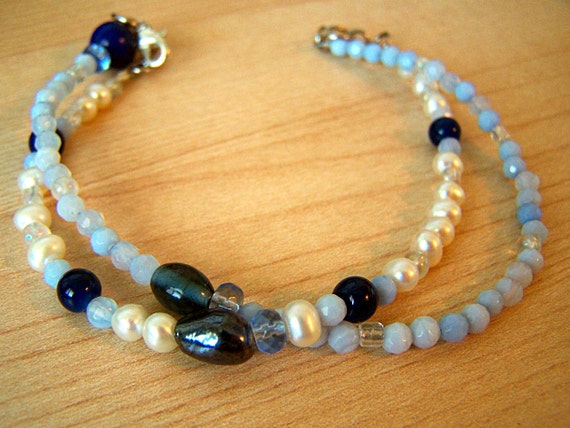
Custom Piece: William-Hazens Equation Bracelet/Anklet

This was a custom order from a long while ago. I swore that I had already written it up here, but apparently I never did. (This is before I started sinking my life and to-do lists into HabitRPG, I guess.) I know I put it off for a a week or two, as I consider it bad juju to blog about a gift before it reaches its giftee. I guess the craziness of a Swedish test at the time caught up with me.

Anyway!

Kris, who works at a small start-up, was tasked with shopping for a thank-you gift for their summer intern, a sustainable engineering student in Seattle (since she worked for them for free). Kris spotted one of my irrational memory wire cuff bracelets and sent me a message about the possibility of a custom order. I jumped at the chance because I love custom orders. I love the ideas other people have about math in jewelry and/or the challenge of working within a specific color palette. This piece had both.

As this intern had worked quite a bit with water pressure, Kris suggested the William–Hazens equation of pressure drop and shades of blue reminiscent of water. The equation actually worked out to a near-perfect bracelet length in both the numerator and the denominator—one of the constraints of using physical constants or ratios is that you don't have much wiggle room because you have very specific (and limited) numbers to work with, so I was relieved to see there wouldn't be much fudging with lengths. In addition to the blues, I added freshwater pearls as a neutral and also to reinforce the water theme.


If you care to check this against the above link, the strand with freshwater pearls represents the numerator (the three blue beads are the spacers between each digit). The strand with blue lace agate represents the denominator (Czech glass as the spacers).

The real fun in this piece came with representing variables. I've never had to do that before—usually I work with pure numbers. But the whole thing seemed empty without any variables, so I went a little more abstract with this piece. Those heretofore unexplained large glass beads represent those variables, and the faceted blue glass you see next to them function like carats, indicating the variable is raised to a power (a power spelled out by the rest of the beads). So (large bead)(faceted rondelle)(smaller beads) means: X (large) ^ (raised to the power of; faceted rondelle) 1.85 (smaller beads).

Hopefully that made some sense!

As I said earlier, things worked out to near-perfect length, but only near perfect. I know personal preference on this varies, but I cannot stand loosey-goosey bracelets. Lawyer Mom and I have wrists that are about the same size but anything I make for her is a good two inches longer than what I make for myself, and this came out more towards the Lawyer Mom end of the spectrum. I added a few links on the end so that it can be worn as a snug-fitting anklet or loose-fitting bracelet, whatever the mood and preference.

Fortunately everything in this equation is multiplied (except the ratio itself). As you all recall from math class, when two numbers are written next to each other (ideally in parentheses), then you should multiply them. I didn't have to come up with something else to represent addition or subtraction, and I think two strands is a great way to represent a fraction/division. Maybe I should invest in some neutrally-colored "+" and "–" beads in case of just such an emergency?

All in all, this was a fun project. While I don't know if I'll be revisiting the William–Hazens equation specifically, I'm definitely going to be cruising more equations and ratios to see what I can come up with!

Friday, September 19, 2014

Friday Find: LeftBrainRightBrain

I am an incorrigible book lover, and like many book lovers I have a fondness for vintage books in particular. The older the edition, the better—there's just something luxurious and timeless about them. That "old-timey" atmosphere plus the obvious love and appreciation for science is what appeals to me about the pieces in fellow Mad Scientist of Etsy Heidi's shop, LeftBrainRightBrain. They hearken back to an era when science textbooks were still trying to figure everything out.

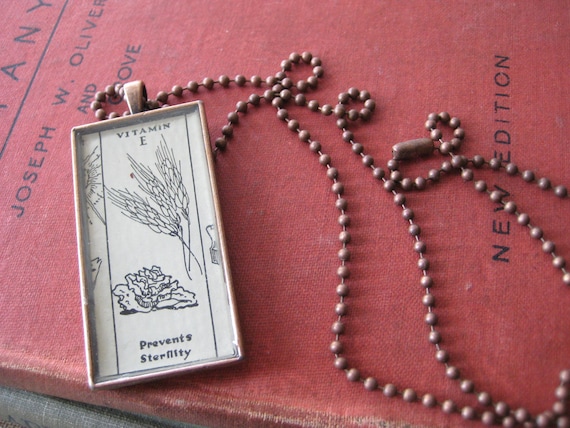
Vintage Vitamin E Illustration Pendant from LeftBrainRightBrain

In particular, I love the etchings used in the illustrations. There is something charming about an artist's rendition that a photo will never have, no matter how stunning the photograph may be.

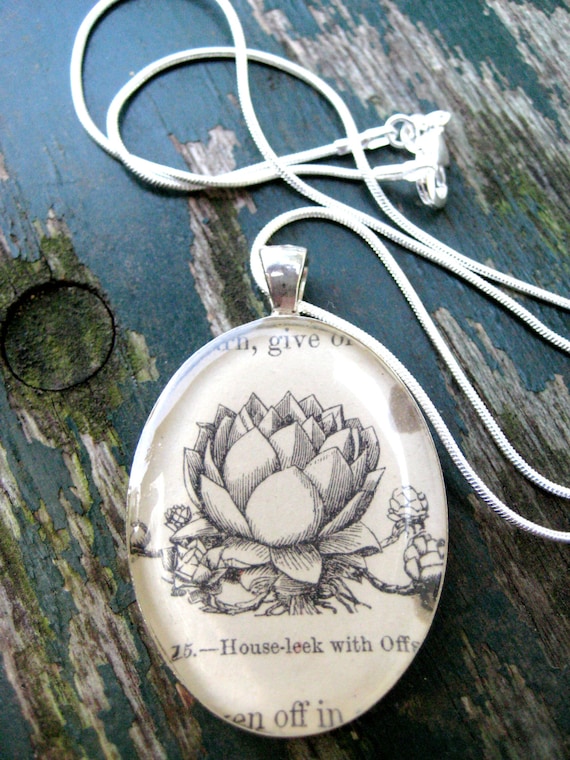
1920s Vintage Botany Lotus Pendant from LeftBrainRightBrain


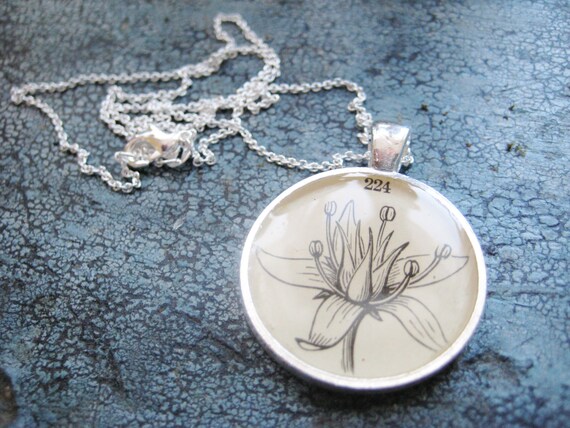
1896 Vintange Flower Anatomy Pendant from LeftBrainRightBrain

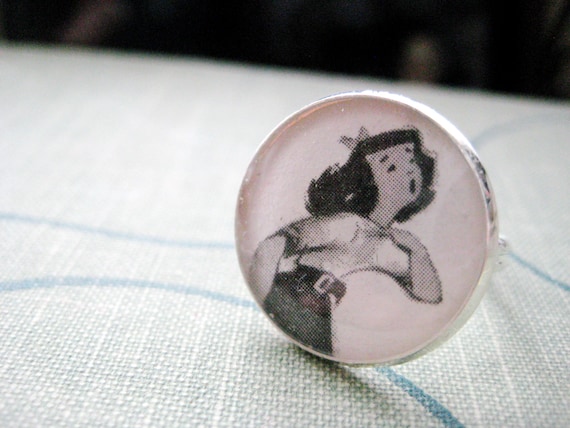
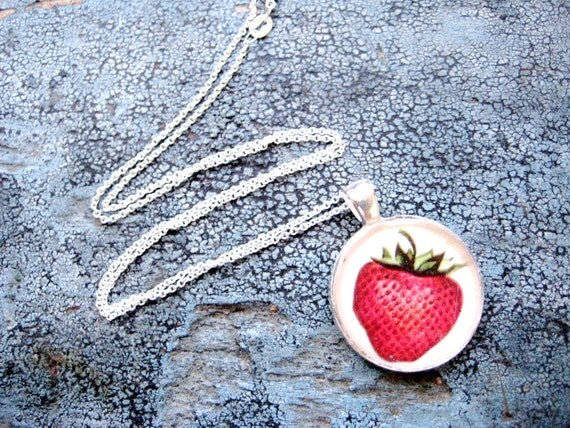
But Heidi carries a wider array of pieces than just ("just") science. Here and there you'll also find some cute retro illustrations.

1953 Vintage Singing Schoolgirl Ring from LeftBrainRightBrain

1960 Vintage Juicy Strawberry Illustration Pendant from LeftBrainRightBrain

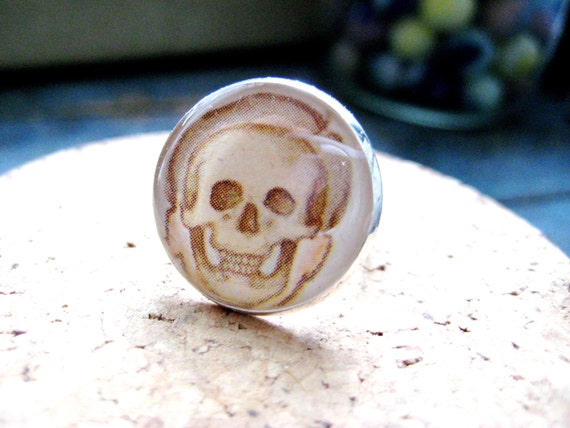
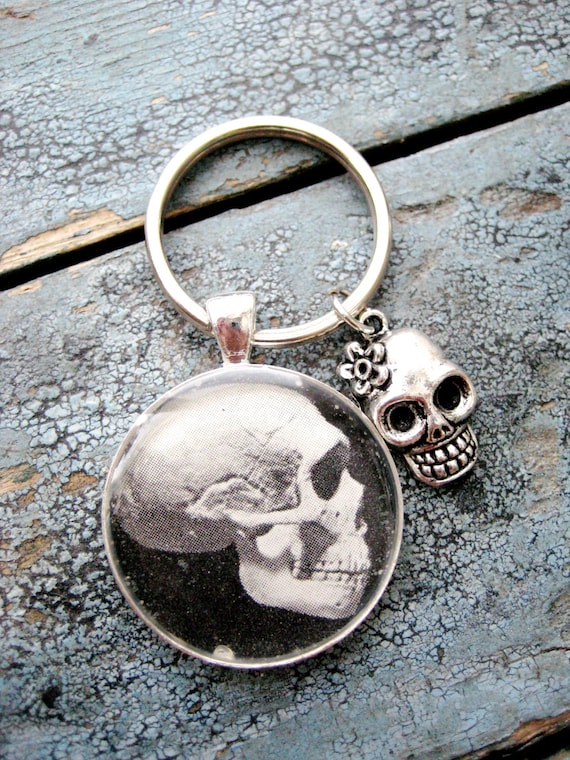
And some creepy ones. Halloween is coming, you guys!!

1953 Vintage Children's Skull Illustration Ring from LeftBrainRightBrain

Vintage Biology Textbook Skull Keychain from LeftBrainRightBrain

And for the believers among us, some more esoteric, alchemical ones.

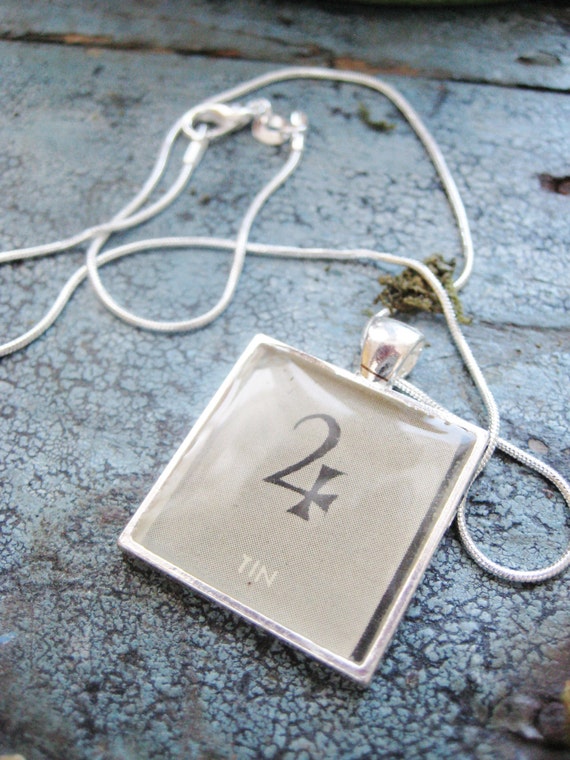
Vintage Chemistry Alchemical Tin Symbol Pendant from LeftBrainRightBrain

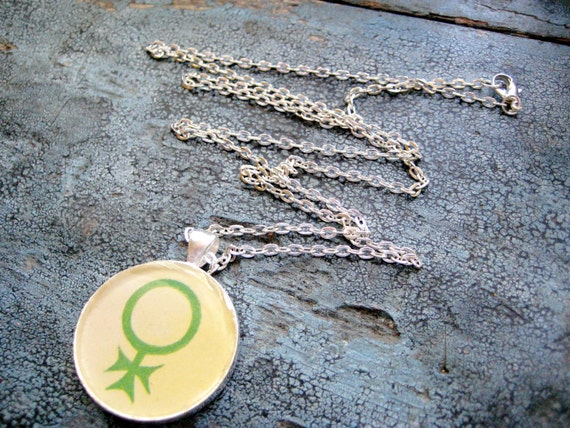
Vintage Chemistry Alchemical Copper Symbol Pendant from LeftBrainRightBrain

As you can see, Heidi caters to a wide variety of interests and fields in her shop! On the off chance there's nothing there that tickles your fancy, send her a convo—Heidi also does custom orders!

Thursday, September 18, 2014

Trek Thursday: The Gamesters of Triskelion

#55: The Gamesters Of Triskelion


In case you forgot: Uhura, Kirk, and Chekov are abducted by brains-in-cages that collect specimens for their own gladiatorial amusement.

Putting gladiator-style combat into a credible sci-fi scenario is more credible of an idea than just a parallel Earth stuck in Roman times. Not that I'm naming any episode in particular...

I think, in a lot of ways, this episode is pure Star Trek stereotype. You've got dopey fight choreography, aliens who have ~evolved beyond the need for their brains~, Kirk romancing a green-skinned (or green-haired, in this case) space babe, and Chekov's accent. But beyond the stereotypical trappings there's not a whole lot interesting or unusual going on here. It's certainly not an episode that merits rewatching.